
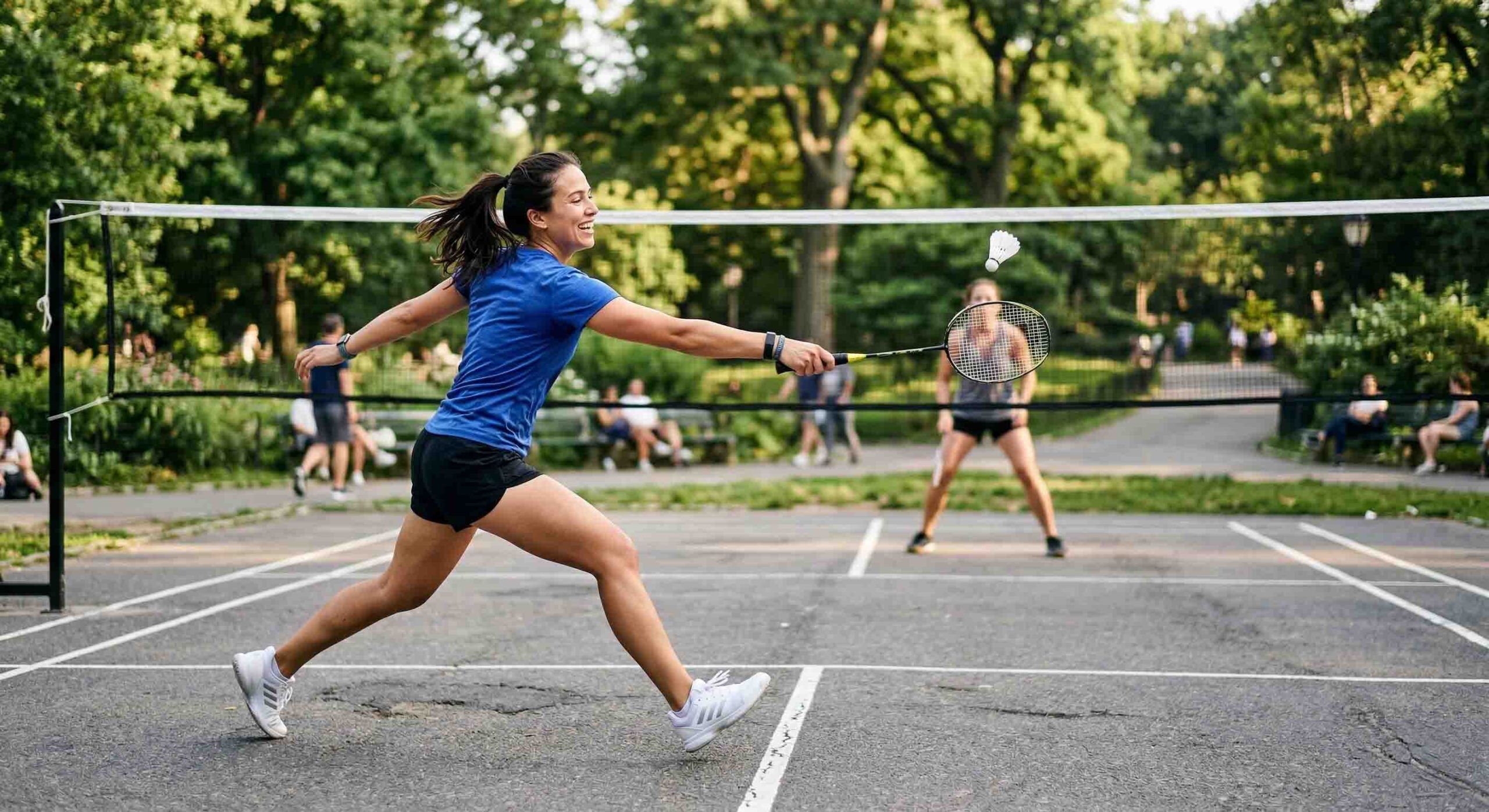
Badminton is one of the world’s most popular racket sports, offering a fantastic combination of speed, agility, strategy, and fun. Whether you’ve just picked up a racket for the first time or are looking to sharpen your foundational skills, this guide will walk you through everything you need to know to get started on the right foot.
From choosing the right equipment to mastering your first shots, the following tips are designed to help beginners build confidence, avoid common mistakes, and most importantly enjoy the game from day one.
1. Basics of Badminton
The Court & Scoring
A standard badminton court is 13.4 metres long and 6.1 metres wide for doubles (5.18 metres for singles). A net divides the court in half at a height of 1.55 metres at the edges. Before you step on the court, familiarise yourself with these key areas: the service courts, the tramlines (side boundaries), and the back boundary lines.
Badminton is played to 21 points, and a player or pair must win by at least 2 points. If the score reaches 29-29, the next point wins. Matches are typically best of three games. Knowing the scoring system early helps you understand the pace and strategy of each rally.
The Shuttlecock
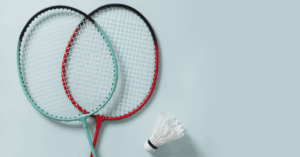
The shuttlecock (also called a ‘birdie’) is the projectile used in badminton. It consists of a rounded cork base with 16 feathers (or synthetic equivalents) arranged in a conical shape. Beginners should start with a nylon/plastic shuttlecock — they are more durable, less expensive, and perform consistently across different temperatures. Feather shuttlecocks, while preferred by advanced players, are fragile and sensitive to environmental conditions.
| 💡 Key Rule to Know The shuttlecock must not touch the ground during play. If it lands inside the boundary lines on your opponent’s side, you win the rally. If it lands out of bounds or hits the net, your opponent wins the point. |
2. Choosing the Right Equipment
Selecting a Beginner Racket
The racket is your most important piece of equipment. As a beginner, you don’t need to spend a fortune. Look for a racket with the following characteristics:
- Weight: Choose a lightweight racket (85–89g) to reduce arm fatigue and allow faster swing speed.
- Balance: An even-balanced or slightly head-light racket gives better control, which is ideal for beginners still developing their technique.
- Flexibility: A flexible or medium-flex shaft helps beginners generate power without requiring perfect technique.
- String tension: Factory-strung rackets (usually 20–22 lbs) are perfectly fine to start. Avoid high tension strings until your technique improves.
Popular beginner-friendly brands include Yonex, Victor, and Li-Ning. A good starter racket typically costs between £20–£60 / $25–$75 and will serve you well through your early months of play.
Footwear Matters More Than You Think
Never play badminton in running shoes. Badminton requires rapid lateral movements, sudden stops, and explosive lunges. Running shoes are designed for forward motion and provide inadequate support for the side-to-side demands of racket sports.
Invest in a proper pair of badminton or indoor court shoes. They offer:
- Non-marking rubber soles for grip on court surfaces
- Lateral support to protect ankles during quick direction changes
- Lightweight construction for faster movement
- Cushioning under the heel and forefoot for repeated jumping and landing
Clothing & Grip
Wear breathable, moisture-wicking sportswear that allows a full range of motion. A good grip or overgrip on your racket handle is also essential — sweaty hands lead to a loose grip, which drastically reduces control and increases the risk of injury. Replace your grip regularly as it wears down.
3. Mastering the Ready Position
The ready position is the foundation of good badminton. Before and after every shot, you should return to your ready stance. This positions you to react quickly in any direction.
Here’s how to set up a correct ready position:
- Stand near the centre of the court (the ‘base position’)
- Feet shoulder-width apart, with your non-dominant foot slightly forward
- Knees slightly bent — never stand with straight legs
- Weight on the balls of your feet, not your heels
- Racket held up in front of you, pointing slightly upward
- Body relaxed but alert, ready to spring in any direction
| 💡 Pro Tip for Beginners Many beginners neglect to return to their base position after hitting a shot. Make it a habit to always move back to centre after each stroke — this single habit can dramatically improve your court coverage. |
4. The Correct Grip Technique
Using the correct grip is critical. A poor grip limits your shot variety, reduces power, and can even cause long-term strain injuries. There are two primary grips in badminton:
The Forehand Grip
Hold the racket as if you are shaking hands with it. Your thumb and index finger should form a V-shape on the bevel of the handle. The grip should be firm but relaxed — gripping too tightly wastes energy and reduces wrist flexibility. This grip is used for most shots on your dominant side.
The Backhand Grip
Rotate your grip slightly so your thumb is placed flat against the back bevel of the handle. This thumb-up position allows you to generate power on backhand shots. Many beginners struggle with their backhand — dedicating extra practice time to this grip early on will pay dividends later.
| 💡 Common Mistake Avoid the ‘frying pan’ grip — holding the racket flat with the strings parallel to the floor. While it may feel natural to beginners, it severely restricts the range of shots you can play. |
5. Essential Shots for Beginners
You don’t need to master every shot immediately, but building a reliable foundation of key strokes will make you a competitive player much faster. Focus on these five core shots first:
The Clear
The clear is the most fundamental defensive shot in badminton. It sends the shuttlecock high and deep to the back of your opponent’s court, buying you time to recover your position. There are two types — the defensive clear (high, looping trajectory) and the attacking clear (flatter, faster). As a beginner, focus on the defensive clear using an overhead swing motion, contacting the shuttle at the highest point you can reach.
The Drop Shot
The drop shot is a deceptive offensive shot played from the back of the court, sending the shuttle steeply downward to land just over the net. The key is disguise — your preparation should look identical to a clear. Gentle wrist action at the point of contact slows the shuttle dramatically. This shot forces your opponent to sprint to the front of the court.
The Smash
The smash is badminton’s most powerful attacking shot — a steep, downward strike intended to end the rally. It requires good timing, a full overhead swing, and significant wrist snap at contact. As a beginner, don’t rush to smash. First develop your footwork and overhead technique with clears before adding power. A well-timed, accurate smash is far more effective than a hard but errant one.
The Net Shot
Played from close to the net, the net shot (or ‘tumbling net shot’) sends the shuttle just barely over the net with gentle forward or spinning motion. The aim is to make it as difficult as possible for your opponent to lift the shuttle high enough to attack. Use your fingers and wrist to guide the shuttle softly, rather than swinging the arm.
The Serve
In badminton, the serve must always be struck from below the server’s waist and from within the service court. There are two main serves:
- Short serve: A low, soft serve that lands just past the short service line. Used predominantly in doubles to prevent the opponent from attacking.
- Long/high serve: A powerful serve aimed deep to the back of the court. Primarily used in singles to push the opponent away from the net.
Consistent, controlled serving is often underestimated by beginners. Practice your serve regularly — it is the one shot in the game you have complete control over.
6. Footwork Fundamentals
‘Footwork is the foundation of badminton’ — this is a phrase you will hear from coaches and experienced players alike. The ability to reach the shuttle early and in a balanced position is what separates players of different skill levels. No matter how good your technique is, poor footwork will undermine every stroke.
The Chasse Step
The chasse (or shuffle step) is a sideways stepping motion used to move laterally across the court. Push off the foot closest to the direction you want to travel, then bring the trailing foot alongside before pushing again. This keeps your weight balanced and allows a quick change of direction.
The Split Step
Just as your opponent is about to strike the shuttle, perform a small hop to land with feet shoulder-width apart. This ‘split step’ loads your legs like springs, allowing you to push off explosively in any direction. It is one of the most important movement habits to develop.
The Lunge
When reaching for a shuttle near the net or in the corners, use a controlled lunge — stepping out with your racket-side leg while keeping your body balanced. The lunge allows you to extend your reach without losing control. Practice recovering from the lunge quickly by pushing back off your front foot.
| 💡 Footwork Drill for Beginners Set up four targets in each corner of the court. Start at the centre, move to touch each corner in sequence, then return to centre each time. Repeat this pattern for 2-minute intervals. This simple drill builds court movement patterns and cardiovascular fitness simultaneously. |
7. Strategy & Court Craft
Even as a beginner, understanding basic strategy will help you win more rallies and enjoy the game more. Here are the core strategic principles to start thinking about:
- Aim for the gaps: Try to hit the shuttle away from your opponent — to the corners and sides — rather than straight at them.
- Vary your shots: Don’t repeat the same shot repeatedly. Mix clears, drops, and net shots to keep your opponent guessing.
- Control the net: Whoever dominates the net area tends to control the rally. Move your opponent to the back of the court, then play a tight net shot.
- Target weaknesses: Most beginners have a weaker backhand. Probe your opponent’s backhand side consistently.
- Keep rallies going: In the early stages, consistency beats power. Focus on getting the shuttle back in play rather than going for outright winners.
Singles vs Doubles Strategy
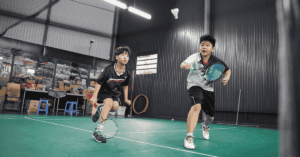
Singles and doubles are very different games. In singles, you must cover the whole court alone — fitness, court positioning, and shot placement are paramount. In doubles, communication with your partner is essential. A common formation is ‘front and back’ when attacking and ‘side by side’ when defending. As a doubles beginner, focus on clear communication, covering your designated area, and supporting your partner.
8. Physical Conditioning
Badminton is one of the most physically demanding racket sports in the world. At the elite level, players cover several kilometres per match and perform explosive movements every few seconds. As a beginner, building a basic fitness foundation will help you play longer, recover faster, and reduce injury risk.
- Cardiovascular fitness: Running, cycling, or skipping rope 2–3 times per week will build the endurance needed to sustain long rallies and matches.
- Leg strength: Squats, lunges, and calf raises strengthen the muscles used for jumping, lunging, and rapid direction changes.
- Core strength: A strong core improves balance, stability, and the rotational power behind every swing. Incorporate planks and rotational exercises into your routine.
- Flexibility: Stretch your shoulders, wrists, hip flexors, and hamstrings regularly. Flexibility reduces injury risk and improves your range of motion for overhead shots.
- Wrist strengthening: Your wrist is critical in badminton for generating power and controlling the shuttle. Wrist curls and resistance band exercises help build wrist endurance.
9. Common Beginner Mistakes to Avoid
Being aware of common errors can accelerate your improvement significantly. Watch out for these pitfalls:
- Watching the shuttle, not the opponent: Always be aware of where your opponent is moving — this tells you where they are likely to hit next.
- Hitting with your arm, not your wrist: Most of the power in badminton shots comes from wrist snap, not arm swing. Practice flicking your wrist explosively at the point of contact.
- Standing flat-footed: Always stay on the balls of your feet during play. Flat-footed players are slow to react and move.
- Not recovering to centre: After every shot, return to your base position in the middle of the court.
- Overcomplicating shots early on: Master the basics before attempting advanced techniques. Consistency and placement beat power at the beginner level.
- Neglecting the serve: Many beginners under-practice their serve. A poor serve puts you immediately on the defensive.
- Ignoring warm-up and cool-down: Always warm up with dynamic stretches and light movement before playing, and cool down with static stretches after. Skipping these is a fast track to injury.
10. Developing Good Practice Habits
Consistent, focused practice is the most reliable path to improvement. Here’s how to make your practice sessions count:
Shadow Footwork
Shadow badminton involves moving to all six corners of the court without a shuttle. This drills your footwork patterns, builds muscle memory, and improves your movement efficiency. Even 10 minutes of shadow footwork per session can yield significant improvements over weeks.
Multifeeder Drills
Work with a partner or coach who feeds shuttles to specific areas of the court while you practice a single shot type repeatedly. This deliberate repetition accelerates technical skill acquisition far faster than random rally play.
Play with Better Players
Don’t only play with people at your own level. Seeking out and playing with more experienced players forces you to move faster, react quicker, and play more precisely. Most badminton clubs welcome beginners and will be happy to rally with you.
| 💡 Practice Schedule for Beginners Aim for 2–3 sessions per week, each lasting 60–90 minutes. Split your time roughly as follows: 15 minutes warming up and footwork drills, 30 minutes on specific shot technique (e.g., clears and drop shots), 30 minutes of match play, 15 minutes cooling down. Structured sessions like this are far more productive than simply rallying for an hour. |
11. Joining a Club
One of the best decisions you can make as a beginner is to join a local badminton club. Clubs offer:
- Regular playing partners at a range of skill levels
- Access to proper indoor courts with consistent lighting and surfaces
- Coaching sessions, beginner workshops, and club nights
- A social community of players who share your enthusiasm for the sport
- Competitive opportunities through internal and external leagues
Many clubs offer beginner or pay-and-play sessions that require no membership commitment. This is an excellent way to experience the club environment before committing. Badminton England, Badminton World Federation (BWF), and national associations in most countries maintain searchable directories of registered clubs.
Final Thoughts
Badminton is a sport that rewards patience, consistency, and smart practice. The tips in this guide cover the essential building blocks — from equipment and grip technique to footwork, shot-making, and strategy. Don’t try to master everything at once. Pick two or three areas to focus on each week, and trust that small, consistent improvements compound over time into significant progress.
Above all else, enjoy the process. Badminton is fast, social, and enormously satisfying — and the skills you build in your early months will serve as the foundation for everything that follows. Welcome to the court!

Add comment