
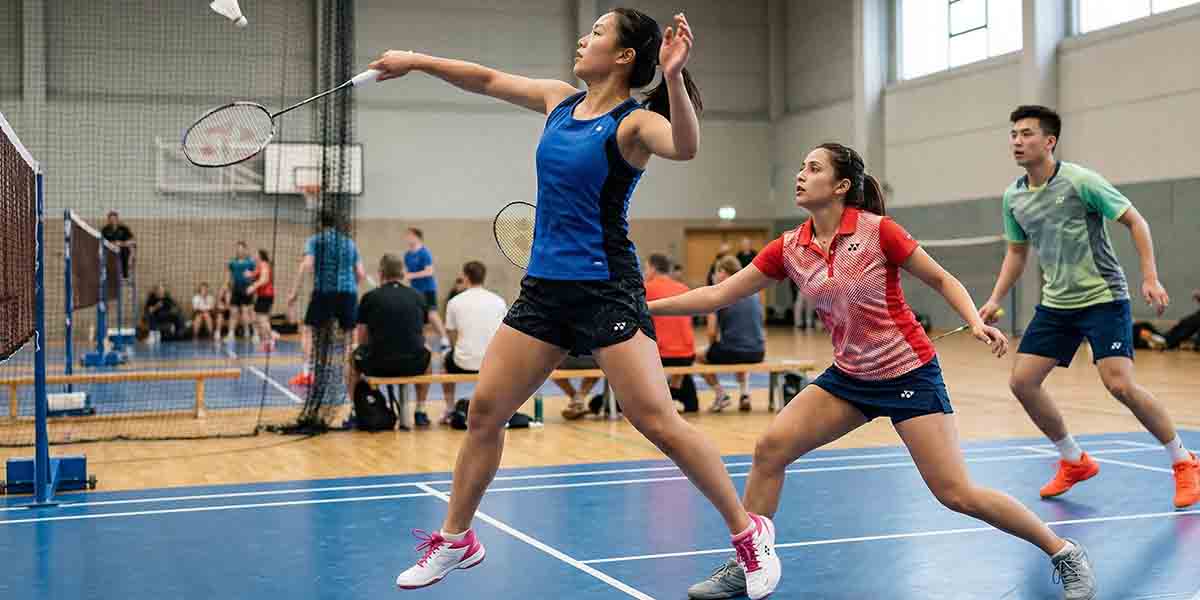
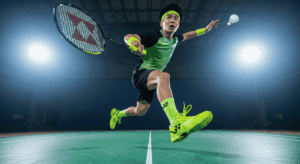
Badminton might look like a casual sport from the outside, but anyone who has played a serious match knows just how physically demanding it can be. You are constantly moving — lunging, jumping, twisting, and sprinting across the court.
In that kind of environment, what you wear is not just about looking the part. It directly affects how well you move, how comfortable you stay, and whether you can keep playing at your best without getting tired or injured.
A lot of recreational players show up in whatever workout gear they have lying around — old cotton t-shirts, baggy shorts, or running shoes from years ago. While this works fine for a casual knock-around, it becomes a problem when you start playing more frequently or competitively. The wrong clothes can slow you down, cause overheating, create unnecessary friction, or even lead to slips and ankle injuries.
This guide breaks down every element of badminton clothing — from the shirt on your back to the socks on your feet — so you know exactly what to look for next time you gear up.
Why Your Clothing Choice Actually Matters in Badminton
Before getting into the specifics, it helps to understand why clothing matters for this particular sport. Badminton is one of the fastest racket sports in the world. Shuttle speeds in competitive play can exceed 300 km/h off a smash, and players need to react and recover within fractions of a second. That kind of speed and agility requires clothing that moves with you, not against you.
Unlike outdoor sports where weather conditions play a major role, badminton is almost always played indoors. This means ventilation and moisture management become the main concerns rather than insulation or wind resistance. Courts are also often made of wood or synthetic flooring, which makes footwear a safety issue as much as a performance one.
With all of this in mind, every piece of badminton attire serves a specific purpose — and making the right choices adds up to a noticeably better game.
| 🎯 What Are You Looking For? | 👉 See Top Picks from Amazon |
|---|---|
| New to badminton? | ⭐ Best Beginner Rackets |
| Want powerful smashes? | ⭐ Best Head Heavy Rackets |
| Play aggressively? | Best Attacking Rackets |
| Prefer ultra-light rackets? | Best Lightweight Yonex Rackets |
| Curious what pros use? | Professional Players’ Rackets |
| Want premium gear? | Most Expensive Badminton Rackets |
| Loyal to Yonex Voltric? | Best Yonex Voltric Series |
The Shirt: Breathability is Everything
Your shirt is the piece of clothing doing the most work in terms of temperature regulation. During a match or training session, your core body temperature rises quickly, and sweat is your body’s way of cooling down. The fabric you wear will either help that process or hinder it.
Avoid Cotton for Serious Play
Cotton t-shirts are comfortable for everyday wear, but they are not well-suited for high-intensity sports. Cotton absorbs sweat and holds onto it, which makes the shirt heavy, clingy, and uncomfortable. In a warm gym, a soaked cotton shirt feels like wearing a wet towel, and the added weight and irritation can genuinely disrupt your focus and movement.
Go for Synthetic, Moisture-Wicking Fabrics
Most serious badminton players wear shirts made from polyester, nylon, or blended synthetic materials designed for athletic use. These fabrics pull sweat away from the skin and allow it to evaporate quickly — a process commonly referred to as moisture-wicking. The result is that you stay relatively dry and cool even when sweating heavily.
Many sportswear brands now produce badminton-specific shirts with mesh panels at the back and under the arms, which significantly improve airflow in the areas where heat builds up most. If your local climate is humid or the gym tends to run warm, these ventilation features are worth prioritizing.
Fit and Cut
The fit of your shirt matters too. Very loose shirts can get in the way during wide arm movements and can feel sloppy when you are moving fast. Very tight shirts restrict range of motion and can feel uncomfortable when you bend or reach. A semi-fitted athletic cut — not baggy, not compression-tight — tends to work best for most players. Sleeveless shirts and tank tops are also popular among club players in warmer environments.
Shorts and Skirts: Freedom of Movement First
Your lower body goes through a tremendous range of motion in badminton — deep lunges to retrieve drop shots, quick lateral shuffles, explosive jumps at the net. What you wear on your legs needs to support all of that without restriction.
Badminton Shorts
Dedicated badminton shorts are designed to be lightweight and allow full leg movement in all directions. They typically sit just above the knee and are made from the same moisture-wicking synthetic fabrics as the shirts. Look for shorts with a comfortable elastic waistband and ideally a drawstring so they stay in place during dynamic movements.
Avoid overly long basketball-style shorts or baggy cargo shorts. While these might feel comfortable, the excess fabric can catch on your racket or interfere with your footwork — two things you do not want happening mid-rally.
Skirts and Skorts for Women
Many female players prefer skirts or skorts, which are a popular choice in badminton as well as tennis. A well-made sports skort has a built-in shorts layer underneath for coverage and freedom of movement, while the skirt layer adds a bit more comfort and style. As with shorts, the key factors are lightweight fabric, good fit around the waist, and a length that does not restrict the legs.
Leggings and Compression Tights
Some players, particularly in cooler gym environments or during warm-up, wear compression leggings or tights. These provide muscle support and can reduce fatigue over long sessions. If you play in a cold hall or find that your legs feel stiff early in a session, compression tights under your shorts can be a worthwhile addition. Just make sure they are athletic compression material and not thick cotton or denim.
Footwear: The Most Critical Choice You Will Make
If there is one area where you should never cut corners when it comes to badminton clothing and gear, it is your footwear. The right shoes are not just about performance — they are about keeping you safe.
Why Running Shoes Are Wrong for Badminton
This is one of the most common mistakes beginners make. Running shoes are built for forward motion — they have extra cushioning in the heel and soles designed for impact over long distances. When you play badminton, you are moving in all directions constantly. Running shoes do not provide the lateral support needed for side-to-side movement, and their thick, curved soles can cause you to roll your ankle when you change direction quickly. On a smooth wooden court, they can also have the wrong kind of grip, causing you to either slip or stick at the wrong moments.
What to Look for in a Badminton Shoe
Purpose-made badminton shoes — or good-quality court shoes designed for squash, volleyball, or indoor courts — share a few key characteristics. They have non-marking rubber soles that grip smoothly finished indoor floors without leaving scuff marks. They sit lower to the ground, which improves stability and response during lateral movement. The outsole pattern is designed for multi-directional grip, and the shoe upper provides structured ankle support without being restrictive.
Several dedicated badminton shoe brands such as Yonex, Victor, and Li-Ning produce footwear engineered specifically for the demands of the sport. These often include reinforced toe caps to handle the wear from lunging, and cushioning systems tailored to the quick, frequent jumping and landing that characterises badminton rallies.
Fit and Sizing Tips
When buying badminton shoes, try them on with the socks you intend to wear for playing. Your foot should feel snug but not pinched, with about a thumbnail’s width of space at the toe. Shoes that are too large will cause your foot to slide inside during explosive movements, which leads to blisters and reduced control. Shoes that are too tight will become uncomfortable quickly and can affect circulation.
Socks: Underrated but Genuinely Important
Most people do not give socks a second thought, but in a sport where your feet endure constant impact and friction, the right pair makes a real difference.
Sports-specific socks — particularly those labelled for running, tennis, or court sports — are made with reinforced cushioning in the heel and ball of the foot, which reduces impact and prevents blisters. Look for socks with some moisture-wicking capability to keep your feet dry, since wet, sweaty feet are more prone to blisters and discomfort. Ankle-length or mid-crew socks are most common in badminton, providing enough coverage to prevent the shoe collar from rubbing the skin raw.
Avoid thin dress socks or worn-out athletic socks with thinning fabric. These provide minimal cushioning and are a recipe for blisters during longer sessions.
Inner Layers and Undergarments
While outer clothing gets most of the attention, your base layer matters more than many players realise.
Compression Shorts and Inner Shorts
Many badminton players — both men and women — wear compression shorts or snug inner shorts underneath their outer shorts or skirt. These serve several purposes: they reduce inner-thigh chafing during extended play, provide a bit of muscle compression that can reduce fatigue, and ensure comfort during the wide-legged movements the sport requires. For women wearing skirts, they also provide coverage and peace of mind.
Sports Bras for Women
A well-fitted sports bra designed for medium to high-impact activity is essential for female players. The constant jumping and quick directional changes in badminton mean you need proper support to stay comfortable and avoid discomfort. Choose a sports bra with moisture-wicking fabric and wide shoulder straps that will not dig in during shoulder movements — backhand and overhead shots involve a lot of shoulder rotation.
Wristbands and Headbands
These accessories might look like they are purely for show, but they serve a practical function — particularly in long matches or hot conditions.
A wristband absorbs sweat that would otherwise run down your arm and onto your racket grip. A slippery grip is a genuine problem — it reduces your control of the racket during shots and can even cause you to lose your grip mid-swing. Wearing a wristband on your playing hand keeps your grip dry and consistent.
A headband keeps sweat out of your eyes, which is especially helpful in intense rallies when you cannot afford any distraction. Even if you do not sweat heavily, a headband can keep longer hair out of your face more effectively than relying on a hair tie alone.
Glasses and Protective Eyewear
If you normally wear prescription glasses, playing with them on is not always practical or safe. Shuttles travel at speed and can occasionally come close to the face, and glasses frames can break on impact. Sports-specific prescription eyewear or contact lenses are a much better solution for regular players. Some players also wear clear protective sports goggles, which are common in racket sports and provide an added layer of eye safety.
While this is not clothing in the strict sense, it is part of your overall preparation and worth considering seriously.
Warm-Up and Cool-Down Layers
Before a match or training session, your muscles need to warm up gradually to work at full capacity and avoid injury. Having a warm-up layer that you can remove once you are playing is a sensible habit.
A light tracksuit jacket or zip-up hoodie worn during the warm-up keeps your muscles warm and reduces stiffness, particularly on cold days or in poorly heated halls. Many competitive players also have tracksuit bottoms they wear until the game begins. These are quickly removed when play starts and put back on during breaks or after the session to prevent muscles from cooling down too fast.
Look for lightweight, packable materials that are easy to layer and remove. Bulky fleece or heavy cotton jogging suits are not ideal — you want something that lets you move freely even when layered.
Colour and Club Kits
If you play recreationally, colour is entirely a personal choice. Badminton does not have the same strict all-white dress codes that traditional tennis once enforced, and most clubs are happy for players to wear whatever they like as long as it is appropriate athletic wear.
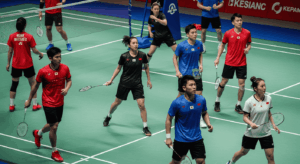
If you play for a club or in league competitions, you may be required to wear a team kit or match specific colour requirements. Club kits are usually provided or available for purchase from the club, and they are typically designed with the right fabrics and cuts for the sport. Playing in your club kit also helps build team identity and makes it easy for officials and opponents to identify teams on court.
For individual training sessions, darker colours show sweat less and are a practical choice if that matters to you. Light colours can feel cooler psychologically but may require more frequent washing.
Budget Considerations: Where to Invest and Where to Save
If you are just starting out, you do not need to buy the most expensive gear on the market. A reasonable approach is to prioritise your footwear and invest in proper badminton or court shoes from the beginning — this is where spending a bit more genuinely protects your health and performance. A good pair of badminton shoes from a reputable brand will typically cost more than general trainers, but they are worth it.
For clothing, mid-range sportswear from brands like Yonex, Victor, Li-Ning, Adidas, or even budget-friendly athletic ranges can give you perfectly functional moisture-wicking shirts and shorts at a reasonable price. You do not need branded badminton-specific clothing to play well — any good quality athletic wear in the right fabrics will serve you fine.
As your involvement in the sport deepens, you will naturally develop preferences for specific cuts, brands, or features. Many experienced players have strong opinions on which shoe provides the best grip or which shirt stays coolest — but getting to those preferences takes time and experience on the court.
A Quick Summary of What to Wear
Here is a practical recap:
- Shirt: Lightweight, moisture-wicking synthetic fabric; mesh panels preferred for ventilation; semi-fitted cut.
- Shorts/Skirt: Lightweight synthetic material; relaxed but not baggy; skorts suitable for women; compression shorts underneath are helpful.
- Shoes: Purpose-built badminton or indoor court shoes; non-marking soles; low profile for stability; proper ankle support.
- Socks: Sports socks with cushioning at the heel and ball of the foot; moisture-wicking; ankle or mid-crew length.
- Accessories: Wristband on playing hand to manage sweat; headband if needed; sports bra for women.
- Warm-up layer: Light tracksuit jacket and bottoms to keep muscles warm before and after play.
Getting your clothing right is one of the simplest ways to improve your experience on the court. Once you are wearing the right gear, you stop noticing it — and that is exactly the point. You want nothing pulling your attention away from the game itself. No shirt sticking to your back, no slipping shoes, no shorts riding up during a lunge. Good badminton clothing stays out of the way so you can focus entirely on your movement, your technique, and the shuttle.
Whether you are stepping onto a court for the first time or gearing up for competitive league play, taking your attire seriously is a step that pays dividends every time you pick up your racket.
| 🏸 Need Better Comfort & Performance? | 👉 Explore Top Picks from Amazon |
|---|---|
| Want better grip on court? | ⭐ Best Non-Marking Badminton Shoes |
| Just starting out? | Best Beginner Badminton Shoes |
| Carry gear like a pro? | Best Badminton Bags |
| Confused about string tension? | Best String Tension Guide + Top Strings |
| Need an all-in-one starter kit? | Portable Badminton Racket Sets |
| Protect your eyes during fast rallies? | Best Badminton Glasses |
| Upgrade your court style? | Comfortable Badminton Outfits |


Add comment