
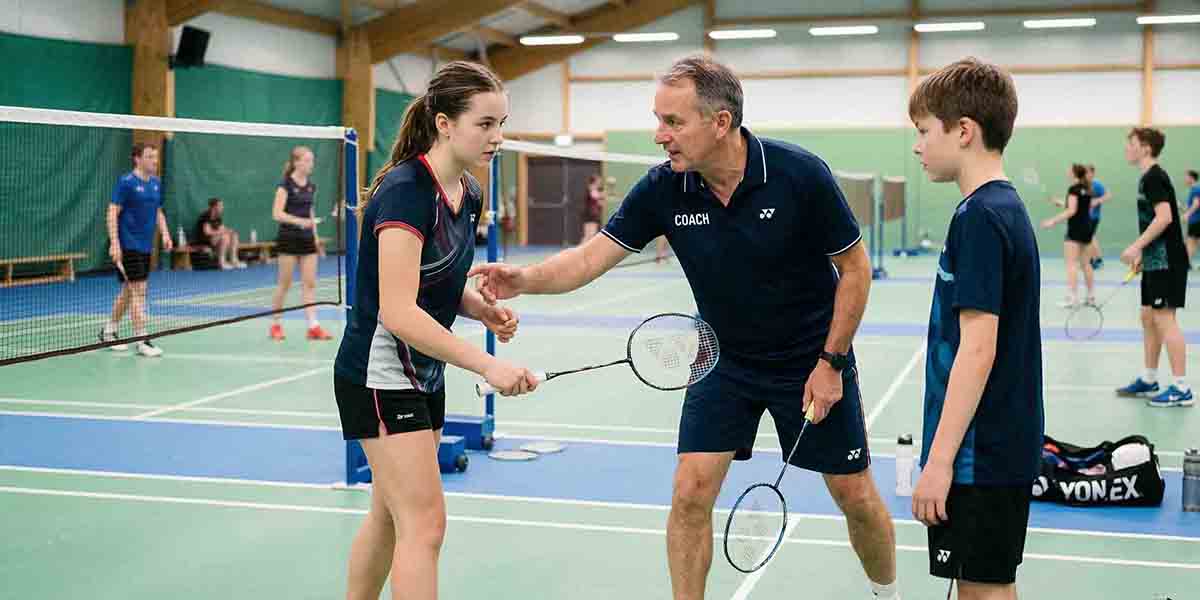
Badminton is one of the fastest racket sports in the world, demanding extraordinary athleticism, technical precision, tactical intelligence, and mental fortitude. Behind every great badminton player from club-level enthusiasts to Olympic champions stands a great coach and mentor. The role of a badminton coach goes far beyond demonstrating strokes; it encompasses building character, instilling discipline, developing strategy, and nurturing the complete athlete.
This comprehensive guide explores proven coaching tips, mentorship philosophies, and development frameworks that can transform players at every level. Whether you are a beginner coach, an experienced trainer, or a player seeking to understand the coaching process, this article offers actionable insights, practical frameworks, and expert wisdom to elevate your badminton journey.
1. Foundations of Effective Badminton Coaching
1.1 Understanding the Coach’s Role
A badminton coach wears many hats simultaneously teacher, motivator, analyst, psychologist, and role model. Great coaches understand that their primary job is not to create dependency but to build independent, thinking players who can solve problems on the court without constant direction.
The most effective coaches operate with a player-centered philosophy, meaning every decision from drill selection to tournament scheduling is made with the individual player’s needs, goals, and well-being at the forefront.
| 🏸 Core Coaching Principle “A good coach makes a player better. A great coach makes a player capable of coaching themselves.” The goal is self-sufficiency, not dependence. Teach your players to observe, analyze, and adapt. |
1.2 Essential Qualities of a Great Badminton Coach
Research across elite sports programs consistently identifies a cluster of qualities that distinguish exceptional coaches from average ones:
Technical & Tactical Qualities • Deep knowledge of stroke mechanics • Understanding of footwork systems • Tactical pattern recognition • Video analysis capability • Fitness & conditioning expertise • Knowledge of equipment & shuttles
People & Leadership Qualities • Empathy and emotional intelligence • Clear and effective communication • Patience and adaptability • Ability to motivate diverse personalities • Integrity and ethical conduct • Continuous learning mindset
1.3 The Coach-Player Relationship
Trust is the cornerstone of every successful coaching relationship. Players who trust their coach are more likely to take risks, push through adversity, and follow guidance during difficult periods. Building this trust requires consistency, honesty, and genuine care for the player’s development.
- Be consistent say what you mean and mean what you say
- Show genuine interest in players as human beings, not just athletes
- Maintain confidentiality when players share personal challenges
- Acknowledge your own mistakes openly to model accountability
- Celebrate effort and improvement, not just outcomes
| 🎯 What Are You Looking For? | 👉 See Top Picks from Amazon |
|---|---|
| New to badminton? | ⭐ Best Beginner Rackets |
| Want powerful smashes? | ⭐ Best Head Heavy Rackets |
| Play aggressively? | Best Attacking Rackets |
| Prefer ultra-light rackets? | Best Lightweight Yonex Rackets |
| Curious what pros use? | Professional Players’ Rackets |
| Want premium gear? | Most Expensive Badminton Rackets |
| Loyal to Yonex Voltric? | Best Yonex Voltric Series |
2. Technical Coaching: Mastering the Fundamentals
2.1 Grip and Racket Control
The foundation of all badminton skill lies in the grip. Many coaches underestimate how much a poor grip undermines every stroke, particularly at the advanced level. The two primary grips, the forehand grip and the backhand grip must become completely automatic, transitioning fluidly during rallies.
Key Grip Coaching Points:
- Teach the ‘handshake grip’ as the basic forehand – relaxed, not white-knuckled
- Emphasize the thumb placement for the backhand grip early in a player’s development
- Use ‘grip awareness drills’ where players close their eyes and identify their grip type
- Check grip pressure: players should hold the racket firmly but never tightly
- Correct poor grips immediately and consistently – bad habits calcify quickly
| ⚠️ Common Grip Mistake to Watch For Many beginners grip the racket too tightly, causing tension in the forearm and wrist. This reduces both power and control. Teach players to relax their grip between shots and only tighten at the moment of impact. |
2.2 Footwork: The Engine of Badminton
Elite coaches consistently agree: footwork separates good players from great ones. A player with superior footwork can reach any shuttle comfortably, recover quickly, and play their strokes from a balanced position. Poor footwork, conversely, forces rushed, off-balance shots regardless of technical ability.
The Six Corners Footwork System:
The most widely used footwork framework divides the court into six zones – front left, front right, mid left, mid right, rear left, and rear right. Training should systematically develop proficiency in all six directions and the combinations between them.
- Start footwork training without a shuttle to isolate movement patterns
- Use shadow footwork drills daily at the beginning of every session
- Emphasize the split step (ready position) before every movement
- Teach the ‘chasse step’ for sideways movements and ‘running steps’ for rear court
- Progress from single-direction drills to random multi-direction challenges
- Use cones, markers, or numbered zones to make drills precise and measurable
A critical insight for coaches: footwork must be practiced at game speed. Slow footwork drills build technique but not the explosive athleticism needed in competition. Incorporate both slow (technical) and fast (competitive) footwork phases in every session.
2.3 Stroke Development: A Systematic Approach
A structured stroke curriculum ensures that players develop a complete attacking and defensive game. Coaches should resist the temptation to teach advanced shots before basic strokes are consolidated.
Beginner Stroke Curriculum:
- High defensive clear (both forehand and backhand)
- Flat rally shot / drive
- Net lift from forehand and backhand
- Basic net push / tumbling net shot
- Overhead clear
Intermediate Stroke Curriculum:
- Attacking clear vs. defensive clear (tactical differentiation)
- Smash – power and placement focus
- Drop shot – slow drop and fast drop
- Net kill from both sides
- Backhand net shots and backhand clears
Advanced Stroke Curriculum:
- Slice and deception in drops and smashes
- Jump smash and jump drop
- Cross-court net shots and spinning net shots
- Attacking backhand shots from mid-court
- Third-shot attack patterns from service
3. Tactical Coaching & Game Intelligence
3.1 Teaching Tactical Awareness
Technical skill without tactical intelligence produces a player who can hit beautiful shots but cannot win matches. Tactical coaching is the art of helping players understand why to play certain shots, not just how. This requires developing pattern recognition, spatial awareness, and the ability to read an opponent’s game.
The best coaches teach tactics progressively: from basic shot selection rules at the beginner level, to complex patterns and real-time tactical adjustments at the elite level.
| 💡 Tactical Coaching Framework Use the ‘Three Questions’ method during tactical sessions: (1) Where is my opponent? (2) Where should I move them? (3) What shot creates the best opportunity? Train players to ask these questions automatically during every rally. |
3.2 Singles Tactical Principles
- Control the center: return to the T-position (center base) after every shot
- Create openings by moving opponents off the T before going for winners
- Vary pace: mix slow clears with fast attacks to disrupt rhythm
- Attack the backhand: most players are weaker on the backhand side
- Use the net as a weapon: tight net shots force weak lifts
- Play to patterns – identify opponent’s weaknesses early and exploit them
- Manage energy: avoid exhausting rallies when you can win points efficiently
3.3 Doubles Tactical Principles
Doubles requires exceptional teamwork and communication. Coaches must teach not only individual skills but also positional partnerships, communication systems, and rotational patterns.
- Establish attack and defense positioning systems clearly (side-by-side vs. front-back)
- Communicate with your partner using pre-agreed signals and verbal cues
- The attacking pair should be in front-back formation; defense in side-by-side
- Drive serves and returns down the middle to create confusion
- Develop a shared understanding of who takes cross-court shots
- Practice rotational transitions – shifting from defense to attack fluidly
3.4 Using Video Analysis in Coaching
Modern badminton coaching increasingly relies on video analysis to provide objective feedback that neither coach nor player can access in the heat of competition. Even basic smartphone recording can transform the quality of technical and tactical feedback.
- Record matches and training sessions from a fixed angle above the court
- Review footage with players within 24 hours while memory is fresh
- Use slow-motion playback to analyze stroke mechanics at impact
- Identify tactical patterns: which combinations lead to winning or losing points
- Let players self-analyze first before offering coach’s perspective – builds awareness
- Track improvement over time by comparing footage across weeks or months
4. Physical Training & Conditioning
4.1 The Physical Demands of Badminton
Badminton is one of the most physically demanding racket sports, combining explosive speed, agility, endurance, strength, and flexibility. Players at elite levels can cover over 6 kilometers per match, performing hundreds of explosive direction changes. A comprehensive conditioning program is not optional – it is essential for performance and injury prevention.
4.2 Key Physical Fitness Components
Primary Physical Qualities • Explosive speed & acceleration • Multi-directional agility • Cardiovascular endurance • Lower body power (jumping) • Core stability and strength
Secondary Physical Qualities • Upper body strength (smash power) • Wrist and forearm strength • Flexibility (especially hip & shoulder) • Balance and proprioception • Mental concentration & focus
4.3 Structuring Conditioning Sessions
Warm-Up Protocol (15–20 minutes):
- 5 minutes of light jogging or cycling to raise core body temperature
- Dynamic stretching: leg swings, hip circles, arm rotations, ankle rolls
- Sport-specific activation: shadow footwork at low intensity, racket swings
- Progressive intensity build: increase speed and range of motion gradually
Core Training Elements:
- Speed ladder drills for footwork agility – 3 sets, 30-second bursts
- Shuttle run sprints (court diagonals) for explosive acceleration – 6–8 reps
- Jump training: box jumps, jump squats, and lateral bounds – 3 sets
- Core exercises: planks, Russian twists, medicine ball throws – 15 minutes
- Endurance: continuous 20-minute court movement at moderate intensity
Cool-Down Protocol (10–15 minutes):
- 5 minutes of slow jogging to gradually lower heart rate
- Static stretching – hold each stretch 30–45 seconds
- Focus on hip flexors, hamstrings, calves, shoulders, and forearms
- Hydration and brief reflection on session performance
5. Mental Coaching & Sports Psychology
5.1 The Mental Game in Badminton
At the highest levels of badminton, where physical and technical abilities are closely matched, mental strength determines champions. Coaches who neglect mental skills training are leaving a crucial dimension of performance undeveloped. The good news: mental skills, like physical skills, can be trained and improved with consistent practice.
5.2 Core Mental Skills to Develop
Concentration & Focus:
- Train players to use pre-point routines to reset focus between rallies
- Practice ‘eyes on shuttle’ – full attention to the shuttle’s trajectory
- Use ‘focus cues’: single words or phrases to snap attention back during matches
- Include distractions in training to simulate competitive environments
Confidence & Positive Self-Talk:
- Replace negative self-talk with constructive alternatives (‘I can fix this’ not ‘I’m terrible’)
- Keep a personal highlight reel – moments of great play to review before competitions
- Teach the distinction between confidence (belief) and arrogance (entitlement)
- Use visualization of successful performance before sleep and before competing
Managing Pressure & Nerves:
- Teach controlled breathing: 4-count inhale, 4-count hold, 6-count exhale
- Practice high-pressure drills: sudden lead/deficit scenarios during training
- Normalize nerves – teach players that nervous energy is fuel, not weakness
- Develop a ‘process focus’ mindset: concentrate on execution, not score
| 🧠 Mental Coaching Insight The ‘5-second rule’ for emotional recovery: when a player makes an error or faces adversity, give them exactly 5 seconds to feel the frustration, then redirect their attention completely to the next point. This structured acknowledgment prevents both suppression and rumination. |
5.3 Goal Setting with Players
Effective goal setting is one of the most powerful coaching tools available. Well-structured goals provide direction, motivation, and a framework for measuring progress. Use the SMART goal framework as a foundation.
- Specific: ‘Improve my backhand net shot accuracy’ not ‘Get better’
- Measurable: Track win rates, shot success percentages, or consistency counts
- Achievable: Set goals that stretch but do not overwhelm the player
- Relevant: Goals should align with the player’s stage of development and priorities
- Time-bound: Set deadlines – ‘By the end of this month’ creates urgency
Distinguish between outcome goals (winning a tournament), performance goals (executing a specific tactic), and process goals (performing a pre-point routine). Process goals are the most actionable and most under the player’s direct control.
6. Mentorship in Badminton: Beyond the Technical
6.1 What Mentorship Means in Sport
Mentorship is a deeper, more personal relationship than coaching. While coaching focuses primarily on performance improvement, mentorship encompasses the holistic development of the person – their character, values, life skills, and long-term well-being. The best badminton coaches are also mentors, creating players who are not only skilled competitors but also resilient, ethical, and self-aware individuals.
6.2 The Mentor’s Responsibilities
- Provide honest, constructive feedback that serves the player’s long-term development
- Share personal experiences, including failures, to normalize challenge and setbacks
- Help players navigate transitions: juniors to seniors, amateurs to professionals
- Connect players with networks, opportunities, and further learning resources
- Model the behaviors and values you wish to see in your players
- Support players through personal difficulties that affect their performance
- Maintain appropriate professional boundaries while building genuine connection
6.3 Mentoring Junior Players
Young players are in the most formative stage of their development, where the coach-mentor’s influence can shape attitudes toward sport, competition, and life for decades. This is both a great privilege and a serious responsibility.
Principles for Coaching Juniors:
- Prioritize love of the game above all else – early specialization pressure destroys long-term enjoyment
- Focus on skill mastery over winning during the foundational years (under 12)
- Create a psychologically safe environment where mistakes are welcomed as learning opportunities
- Involve parents constructively while maintaining clear coach-player-parent role boundaries
- Monitor signs of burnout: declining motivation, chronic injury, or anxiety around competition
- Celebrate character qualities – sportsmanship, effort, respect – as much as athletic performance
| 👦 Junior Development Philosophy Research in youth sport development consistently shows that early enjoyment, broad athletic development, and intrinsic motivation predict long-term excellence far better than early specialized training and early winning. Build players who love badminton first. |
6.4 Mentoring Adult & Recreational Players
Adult players present different challenges and opportunities. They often have established habits, limited training time, and intrinsic motivations tied to enjoyment and social connection as much as performance. Effective coaches of adult players adapt their communication style, respect autonomy, and align their coaching to the player’s personal goals.
- Ask about goals before assuming what the player wants from coaching
- Acknowledge and leverage existing life experience and transferable skills
- Be flexible about training schedules and recovery time
- Focus on a smaller number of changes – adults can feel overwhelmed by too much correction
- Connect technical improvements directly to personal enjoyment and outcomes
7. Session Planning & Program Design
7.1 Structuring an Effective Training Session
A well-designed training session has clear objectives, appropriate progression, and intentional variety. The best coaches plan sessions with outcomes in mind – not just activities – and adapt in real time based on player response.
A standard 90-minute badminton coaching session can be structured as follows:
| Phase | Duration | Content & Purpose |
| Warm-Up | 15 min | Dynamic stretching, shadow footwork, light rally – physiological & mental preparation |
| Technical Focus | 25 min | Isolated skill practice with coach feedback – new stroke or technique correction |
| Multi-Feed Drills | 20 min | Coach or partner feeds multiple shuttles – develop consistency and automaticity |
| Tactical Practice | 15 min | Conditioned games or pattern training – apply technique in game-like context |
| Match Play | 10 min | Free play or conditioned game – consolidate learning in competitive context |
| Cool-Down | 5 min | Static stretching, hydration, brief session review |
7.2 Long-Term Athlete Development (LTAD)
Elite badminton programs use long-term development models to guide training priorities at each stage of a player’s career. Rushing players through developmental stages – particularly by overemphasizing competition before skill mastery – is one of the most common and costly mistakes in youth coaching.
- Fundamentals (ages 6–9): Basic movement skills, enjoyment, multi-sport participation
- Learning to Train (ages 9–12): Core badminton skills, footwork fundamentals, basic tactics
- Training to Train (ages 12–16): Fitness development, consolidating technique, team dynamics
- Training to Compete (ages 16–21): Competition-specific training, advanced tactics, mental skills
- Training to Win (ages 18+): Elite performance optimization, peaking for major events
- Active for Life: Recreational participation, health, and enjoyment for lifelong players
8. Communication Skills for Coaches
8.1 The Art of Giving Feedback
Feedback is the primary vehicle through which coaches transfer knowledge to players. The quality of feedback – its timing, specificity, emotional tone, and framing has enormous impact on how effectively players learn and how they relate to their coach over time.
The Feedback Sandwich vs. Direct Feedback:
The traditional ‘feedback sandwich’ (positive → corrective → positive) can be effective with younger or less confident players but can feel patronizing to experienced players. Adapt your feedback style to the individual: some players prefer blunt, direct feedback; others need it softened. Ask players directly how they prefer to receive feedback.
Principles for Effective Feedback:
- Be specific: ‘Your racket face was open at contact, causing the shot to go too high’ – not ‘bad shot’
- Be timely: give feedback as close to the performance as possible
- Be balanced: acknowledge what is working alongside what needs improvement
- Be actionable: always provide a clear correction, not just an observation
- Ask questions: ‘What did you feel on that shot?’ builds self-awareness
- Use demonstration: showing is often more powerful than telling
8.2 Communicating with Parents
For junior coaches especially, parent communication is a critical and often challenging part of the role. Parents who are well-informed and appropriately involved strengthen the program; parents who are over-involved or uninformed can undermine it.
- Establish expectations early: hold a parent orientation meeting at the start of each season
- Be proactive with communication share progress updates before problems arise
- Clearly define the coach-player-parent triangle and boundaries within it
- Address concerns privately and respectfully, never in front of other parents or players
- Educate parents about the development philosophy- why you prioritize skill over winning
9. Coaching for Competition
9.1 Pre-Tournament Preparation
Preparing players for competition is both a science and an art. Physical preparation, tactical scouting, mental readiness, and logistical planning must all come together in the week before a major event.
- Reduce training volume but maintain intensity in the final week before competition
- Review opponent footage with the player – identify patterns and develop a game plan
- Conduct a brief pre-competition practice that mirrors match conditions
- Ensure players are well-rested, well-fueled, and hydrated
- Help players establish their pre-match mental routine
- Focus conversations on process and execution, not outcomes and rankings
| 🏆 Tournament Mindset Tip Teach players the ‘performance mindset’: their job in competition is to execute what they have trained, not to prove themselves. Pressure decreases dramatically when players focus on process rather than results. ‘Play your game’ is a powerful coaching cue. |
9.2 Courtside Coaching During Matches
In many badminton competitions, coaches are permitted to advise between games. The quality of courtside coaching can directly influence match outcomes. Effective courtside communication is brief, clear, calm, and actionable.
- Assess quickly: identify the key tactical problem before speaking
- Prioritize: give no more than 2–3 specific points – overwhelming players with information helps no one
- Manage your body language – stay calm, composed, and confident regardless of the score
- Ask questions to activate the player’s thinking: ‘What is their weakness tonight?’
- Address physical state: check hydration, energy, and physical discomfort
- End every interval with a positive, clear directive: ‘You’ve got this — attack the backhand’
10. Continuous Development for Coaches
10.1 The Reflective Coach
The coaches who have the greatest long-term impact on the sport are those who treat their own development with the same rigor they apply to their players. Reflection — systematic thinking about what worked, what didn’t, and why – is the most powerful self-improvement tool available.
- Keep a coaching journal: document session plans, outcomes, and key observations
- Conduct regular self-assessments against a coaching competency framework
- Seek feedback from players, peers, and mentors regularly
- Record your own coaching sessions and review them critically
- Set personal development goals each season alongside your players’ goals
10.2 Professional Development Resources
Badminton World Federation (BWF), national associations, and leading sports universities offer a rich ecosystem of coach education resources. Proactive engagement with these resources distinguishes dedicated coaches from casual ones.
- Complete formal coaching certifications through your national badminton association
- Attend coaching seminars, workshops, and international coaching conferences
- Study allied disciplines: sports psychology, exercise physiology, and biomechanics
- Build a peer coaching network – observe other coaches and share insights
- Follow elite players and their coaches to study high-performance techniques
- Engage with coaching research publications and sports science journals
Conclusion
Badminton coaching and mentorship is one of the most rewarding and multidimensional roles in sport. The best coaches combine deep technical knowledge with genuine human understanding, creating environments where players can develop not just as athletes but as complete individuals.
From mastering the fundamentals of grip and footwork, to designing intelligent training programs, to providing meaningful mentorship through the challenges of competitive sport – every dimension of coaching matters. The players you develop will carry your influence forward in their own careers, their own coaching, and their lives long after the last shuttle is struck.
Commit to continuous learning, invest in your relationships with players, stay curious about the game, and never stop developing yourself alongside the athletes you serve. The greatest reward in coaching is not the trophies your players win it is the people they become.
| 🏸 Need Better Comfort & Performance? | 👉 Explore Top Picks from Amazon |
|---|---|
| Want better grip on court? | ⭐ Best Non-Marking Badminton Shoes |
| Just starting out? | Best Beginner Badminton Shoes |
| Carry gear like a pro? | Best Badminton Bags |
| Confused about string tension? | Best String Tension Guide + Top Strings |
| Need an all-in-one starter kit? | Portable Badminton Racket Sets |
| Protect your eyes during fast rallies? | Best Badminton Glasses |
| Upgrade your court style? | Comfortable Badminton Outfits |



Add comment