
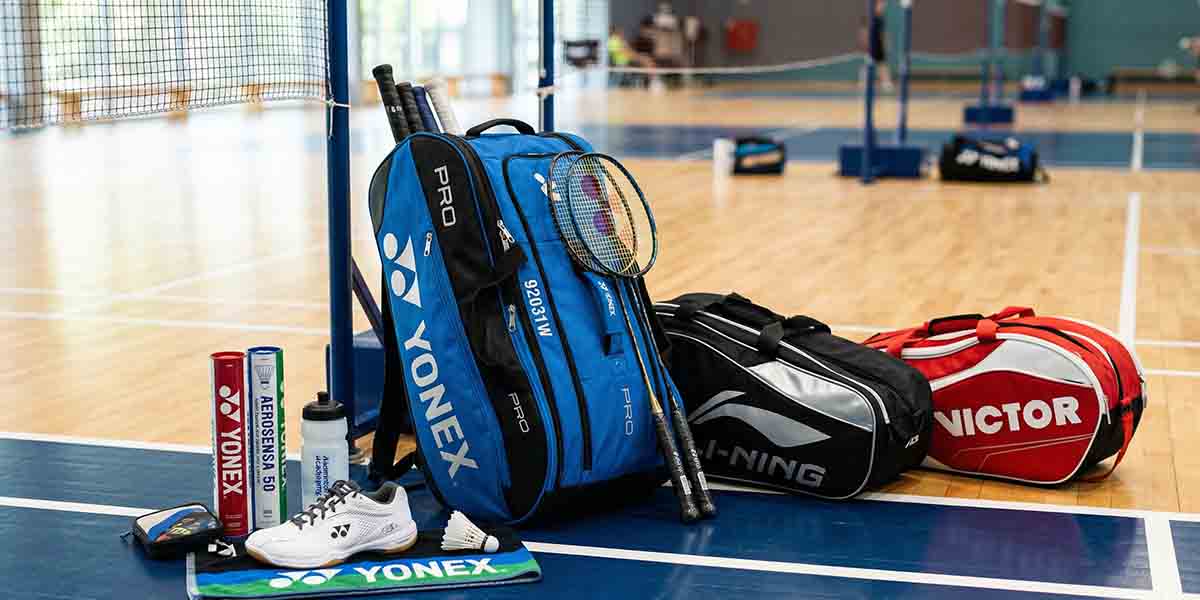
If you play badminton regularly, you already know the struggle. You show up to the court juggling rackets under your arm, shuttlecocks bouncing out of a plastic bag, shoes tucked under your elbow, and a water bottle somehow balanced on top of it all. It is not a great look, and more practically, it is not great for your gear either.
A proper badminton bag changes all of that. It keeps your rackets protected, your shoes separate from your clothes, and everything organised so you can get on the court faster and leave without hunting around for a lost grip or a spare shuttle.
This guide covers the best badminton bags and kits available right now, what to look for when buying one, and how to figure out which option actually fits your game and your lifestyle. Whether you are a weekend club player or someone who trains five times a week, there is something here for you.
Why Your Bag Matters More Than You Think
Most people treat their badminton bag as an afterthought. They spend a good chunk of money on rackets and shoes, and then shove everything into a cheap backpack from a sports store clearance rack. This works for a while, until a racket frame cracks because it was pressed against a hard corner, or the strings on two rackets tangle and one of them gets pulled out of shape.
Dedicated badminton bags are designed with compartments that keep rackets upright and padded, separate your wet shoes from your dry clothes, and give you easy access to shuttles, grips, and accessories without digging around.
Beyond practicality, if you play at a club or in leagues, carrying a proper bag signals that you take the sport seriously. It might seem like a small thing, but it does make a difference in how you present yourself on and off the court.
Types of Badminton Bags
Before getting into specific product recommendations, it helps to understand the main types of badminton bags on the market, because they are not all built the same way.
Backpack Style
Badminton backpacks are the most popular option for casual and intermediate players. They are compact, easy to carry on public transport, and usually hold two to three rackets. Most feature a dedicated shoe compartment at the bottom, a main pocket for clothes and accessories, and a front pocket for smaller items like shuttles and grips. They sit comfortably on your back during a bike ride or commute, and they do not take up much space in a locker.
The downside is capacity. If you play frequently, carry multiple rackets, or need space for a full change of clothes and training gear, a backpack can feel limiting fairly quickly.
Kitbag or Duffel Style
Kitbags offer a step up in terms of storage. They are shaped more like a traditional sports bag, worn over the shoulder or carried by a handle, and can typically hold four to six rackets. There is usually more room for clothing, extra shoes, and accessories. They are a good choice for players who train regularly and need to carry a fair amount of gear.
They are bulkier than backpacks, which can be inconvenient on busy public transport, but if you travel by car to your club, this is rarely a problem.
Tournament or Pro Bags
At the top end, you have tournament-level bags. These are large, structured bags that can hold anywhere from six to twelve rackets, along with multiple compartments for shoes, clothes, equipment, and personal items. Some are designed as backpacks with moulded frames, while others are wheeled for easy transport through airports and sports halls.
These bags are built for serious competitive players who travel to tournaments and need everything with them in one place. They are an investment, but for the right player, they are worth every rupee.
Racket Covers and Sleeves
A step below full bags, racket covers and sleeves are slim protective cases designed to carry one or two rackets. They are not a replacement for a proper bag if you carry a lot of gear, but they are useful for players who travel light or want extra protection for a premium racket inside a larger bag.
| 🎯 What Are You Looking For? | 👉 See Top Picks from Amazon |
|---|---|
| New to badminton? | ⭐ Best Beginner Rackets |
| Want powerful smashes? | ⭐ Best Head Heavy Rackets |
| Play aggressively? | Best Attacking Rackets |
| Prefer ultra-light rackets? | Best Lightweight Yonex Rackets |
| Curious what pros use? | Professional Players’ Rackets |
| Want premium gear? | Most Expensive Badminton Rackets |
| Loyal to Yonex Voltric? | Best Yonex Voltric Series |
What to Look for in a Badminton Bag
Racket Capacity
Think about how many rackets you actually carry. Most recreational players manage fine with two or three. Club players who switch between rackets for different match situations might want four to six. Tournament players often carry eight or more, including backup rackets strung at different tensions.
Do not overbuy here. A huge bag that holds twelve rackets when you only ever carry two is unnecessary bulk. Match the bag to your actual habits.
Padding and Protection
The racket compartment should have adequate padding, especially if you are carrying expensive rackets. Look for bags where the racket slot is reinforced at the head end. This is where most of the stress occurs when a bag is tossed around or placed heavily on the floor.
Thermal lining in the racket compartment is a feature worth looking for if you play in hot climates or leave your bag in a car. High temperatures can loosen glue joints and damage strings, and a thermal compartment adds meaningful protection.
Compartment Layout
A well-designed bag separates your gear logically. At minimum, you want rackets away from shoes, and shoes ideally in a ventilated compartment so they do not make your kit smell. A dedicated pocket for shuttlecocks keeps them from getting crushed. Small pockets for phones, wallets, keys, and grips save you from digging through the whole bag every time you need something.
Build Quality and Materials
Zippers are the first thing to fail on cheaper bags. Look for bags with smooth, chunky zippers that do not feel flimsy. The stitching at stress points, particularly at strap attachments and handle bases, should be reinforced. The outer material should be water-resistant enough to handle light rain or a spilled drink without immediately soaking through.
Polyester and nylon are the most common materials at this price point. Nylon tends to be slightly lighter and more durable, while polyester is generally cheaper but still performs adequately for most players.
Comfort and Carrying Options
If you walk or cycle to your club, padded shoulder straps or backpack straps make a real difference over time. A padded back panel helps on backpack-style bags. For kitbags, a padded shoulder strap with a non-slip grip keeps the bag from sliding off your shoulder mid-walk.
Some bags can be carried as both a backpack and a shoulder bag, which gives you flexibility depending on how you are travelling on a given day.
Best Badminton Bags by Category
Best Overall: Yonex Active Backpack
Yonex is the gold standard in badminton equipment, and their Active Backpack is the bag most coaches and experienced club players reach for when asked to recommend something. It holds two to three rackets comfortably, has a separate shoe compartment with ventilation holes at the bottom, a generously sized main compartment for kit and clothes, and a front pocket that fits shuttles and accessories without feeling cramped.
The straps are padded and adjustable, and the bag sits well even when fully loaded. Build quality is genuinely solid. Zippers run smoothly after months of heavy use, and the fabric holds up to the kind of rough treatment bags inevitably get when thrown into lockers and piled on top of each other.
It is available in several colour options and comes at a price point that feels fair for what you get. For most players reading this guide, the Yonex Active Backpack is probably the right answer.
Best for Serious Club Players: Li-Ning ABJS019 Kitbag
Li-Ning has been making inroads in the badminton world for good reason. Their ABJS019 kitbag is a well-thought-out option for players who need more space than a backpack offers. It holds up to six rackets in a padded main compartment, with a separate large pocket for shoes and clothing.
The shoulder strap is cushioned and has an anti-slip pad, which matters when you are carrying a heavy load. There is a side water bottle pocket, which sounds like a small thing but is genuinely useful when you need a drink without opening the whole bag.
The outer material has good water resistance, and the overall finish looks and feels premium. Li-Ning bags tend to run slightly cheaper than equivalent Yonex models, which makes them worth serious consideration.
Best Budget Option: Victor BR3609 Backpack
Victor is a Taiwanese brand with a strong following among club players who want decent quality at a lower price point. The BR3609 is a compact backpack that holds two rackets, has a bottom shoe compartment, and comes with enough pockets for the essentials.
It is not trying to be a premium bag, and it does not pretend to be. The zippers are functional, the straps are padded, and the material is water-resistant enough for most situations. For a player who is newer to the sport or does not want to spend a lot on a bag, this is a reliable pick.
It comes in several colours, fits easily on a locker shelf, and holds up well to regular use. You are not getting bells and whistles here, but you are getting solid fundamentals at an accessible price.
Best for Tournament Players: Yonex Pro Tournament Bag
For players who compete seriously and need to carry a full complement of gear, the Yonex Pro Tournament Bag is a step above everything else in this list. It is a large bag that can hold nine or more rackets in a dedicated compartment with thermal lining to protect strings and glue joints from heat. There are separate large pockets for shoes and clothing, multiple smaller pockets for accessories, and the whole thing is built with the kind of materials and stitching that suggest it will still be in good shape years from now.
It can be carried as a backpack or over the shoulder, which is useful when navigating crowded sports halls. The back panel has enough foam to make carrying a heavy load reasonably comfortable over longer distances.
This bag is an investment, and it is not for everyone. But if you are playing in national or state-level competitions and your kit is getting scattered across multiple bags, this solves the problem properly.
Best Mid-Range Pick: Apacs D-2018 Kitbag
Apacs is a Malaysian brand that has built a reputation for offering good quality at competitive prices, and the D-2018 is a strong example of that approach. It is a medium-sized kitbag that holds four to six rackets, with a padded racket compartment, a main kit pocket, and a shoe section that is properly ventilated.
The stitching is tidy and the zippers operate smoothly. It is the kind of bag that feels better in person than it looks in photos, which is a good sign. For players who want something better than a basic backpack but are not ready to commit to a premium price, this sits nicely in the middle.
What a Good Badminton Kit Should Include
Some manufacturers sell complete badminton kits, and it is worth knowing what a genuinely useful kit looks like versus what is just bundled together for marketing purposes. If you are buying a kit for yourself or as a gift, here is what should be in it.
- Racket or rackets: At minimum, one intermediate-level racket rather than a cheaply made starter one. Better kits include two rackets, which is useful for beginners who are still learning to control the shuttle.
- Shuttlecocks: A tube of feather shuttles or high-quality nylon shuttles. Kits that come with six plastic shuttles of no specified speed are a red flag.
- Grip tape: Replacement grips matter more than most beginners realise. Rackets come with a basic grip, but having a spare means you can replace it when it gets worn or sweaty.
- Wristband or headband: Not essential, but a wristband is practically useful for keeping sweat off your grip during long rallies.
- Bag: A proper bag to carry and store everything listed above. Some kits include a backpack, others come with a drawstring bag, which is less useful.
Kits from Yonex, Li-Ning, and Victor tend to include quality across the board. Kits from lesser-known brands sometimes pair a decent bag with poor rackets or unusable shuttles, so it is worth reading what is actually in the box before buying.
Branded vs. Generic: Is the Brand Name Worth It?
There is a real debate in any sport about whether brand names justify the price premium, and badminton bags are no exception. The honest answer is that it depends on how seriously you play.
For a beginner or someone who plays once a week for fun, a generic bag that costs less and holds your two rackets is perfectly adequate. You are not going to notice the difference in zipper quality or strap padding in your first year of playing.
For intermediate and advanced players, the differences become more noticeable. The thermal lining on a Yonex bag versus no lining on a generic bag genuinely matters if you leave your rackets in a hot car. The durability of branded zippers versus budget ones shows up after six months of daily use when the cheap bag starts fraying and getting stuck.
Victor sits in an interesting spot here. It is a proper badminton brand with a genuine following, but it prices its bags lower than Yonex and Li-Ning. If budget is a concern but you still want a purpose-built badminton bag from a company that understands the sport, Victor is probably your answer.
How to Care for Your Badminton Bag
A few simple habits will extend the life of your bag significantly. After playing, take out any wet clothing or damp towels immediately. Leaving moisture inside an enclosed bag is the fastest way to develop mildew, which is difficult to get rid of and unpleasant to deal with.
Wipe down the exterior occasionally with a damp cloth. Most bag materials clean up easily this way. Avoid leaving your bag in direct sunlight for extended periods, particularly if it contains rackets, as UV exposure can fade the material and heat can affect strings and glue.
If a zipper starts sticking, a little zipper lubricant applied carefully usually fixes the problem without damaging the coil. Do not force a stuck zipper, as that is how the pull tab eventually breaks off.
Quick Recommendations by Player Type
Just starting out: Victor BR3609 Backpack. Inexpensive, practical, and more than enough for two rackets and your essentials.
Regular club player: Yonex Active Backpack. The right balance of quality, capacity, and price for someone playing two to four times a week.
Training seriously and carrying more gear: Li-Ning ABJS019 Kitbag or Apacs D-2018. Both offer more space and smart organisation at a fair price.
Competitive tournament player: Yonex Pro Tournament Bag. Built for players who need everything in one place and cannot afford equipment failures on match day.
Final Thoughts
Choosing the right badminton bag is less about spending the most money and more about understanding what you actually need. Most recreational players are perfectly served by a good backpack that holds two or three rackets and keeps their shoes away from their kit. Competitive players need more, and there are excellent options at that level too.
The key things to prioritise are racket protection, sensible compartment layout, durable zippers and stitching, and comfortable carrying options for how you actually travel to the court. Everything else is secondary.
If you are still unsure, the Yonex Active Backpack is genuinely hard to go wrong with for the majority of players. It has earned its reputation because it does all the basics well, holds up over time, and comes from a brand that has been making badminton equipment long enough to understand what players actually need.
Pick something that fits your game, take care of it, and spend the rest of your mental energy on what actually matters: getting on the court and improving.
| 🏸 Need Better Comfort & Performance? | 👉 Explore Top Picks from Amazon |
|---|---|
| Want better grip on court? | ⭐ Best Non-Marking Badminton Shoes |
| Just starting out? | Best Beginner Badminton Shoes |
| Carry gear like a pro? | Best Badminton Bags |
| Confused about string tension? | Best String Tension Guide + Top Strings |
| Need an all-in-one starter kit? | Portable Badminton Racket Sets |
| Protect your eyes during fast rallies? | Best Badminton Glasses |
| Upgrade your court style? | Comfortable Badminton Outfits |







Add comment