
Why Fitness Is the Hidden Half of Badminton
Most recreational players spend the majority of their practice time hitting shuttles. Technique matters, of course, but there comes a point in almost every club game when the better athlete wins, not the prettier stroke-maker. A crisp backhand clear falls short in the third set because the lungs gave out two sets ago. A perfectly timed smash becomes a weak dink by the time fatigue has taken the snap out of the wrist and shoulder.
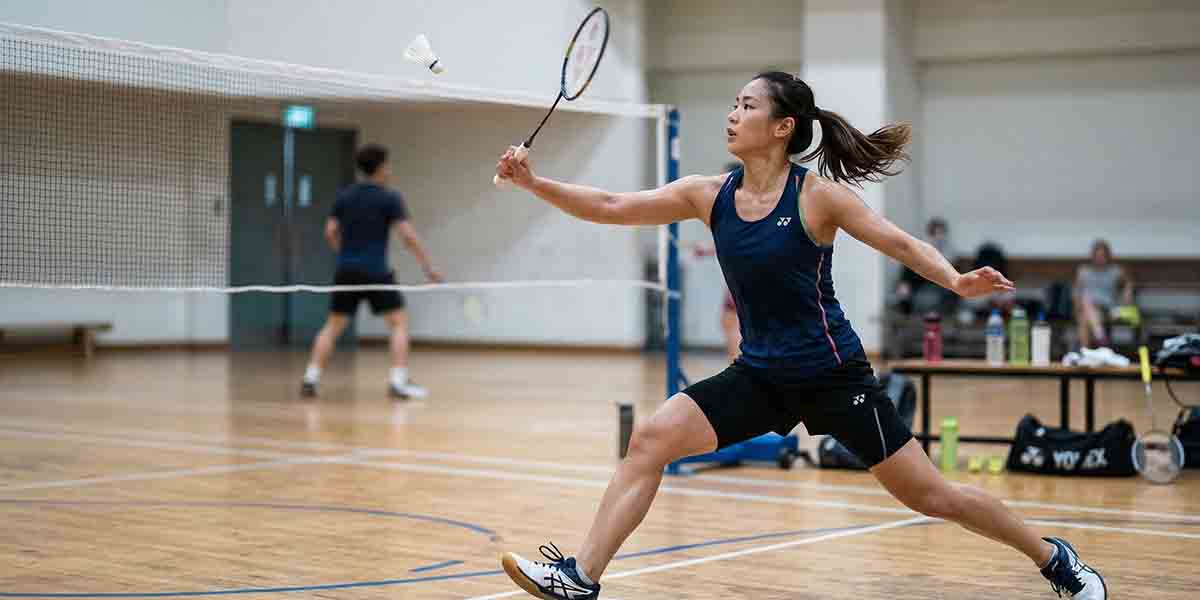
Badminton is one of the most physically demanding racket sports in the world. Studies measuring elite match play have recorded players covering over six kilometers in a single match, changing direction more than 350 times, and sustaining heart rates above 85 percent of their maximum for extended periods. Even at the club level, a competitive doubles match demands explosive acceleration, rapid deceleration, lateral agility, and the ability to repeat that cycle for an hour or more.
This guide is written for players who want to take their physical preparation seriously — whether you are a weekend warrior trying to outlast your opponents or a competitive junior working toward national selection. The principles are the same regardless of level. What changes is the intensity, the volume, and the specificity of the work.
We will cover every physical quality that the game demands: speed, endurance, strength, flexibility, and the often-overlooked area of injury prevention. By the end, you will have a clear picture of what your body needs to perform at its best, and practical tools to start building it.
Understanding the Physical Demands of Badminton
1.1 Energy Systems at Work
Badminton sits at a fascinating intersection of energy systems. Each rally — lasting anywhere from two seconds to over a minute — is powered almost entirely by the anaerobic system. The rest periods between rallies allow partial recovery, which means the aerobic system plays a crucial role in how quickly you replenish energy stores and clear metabolic waste between points.
Think of it this way: your anaerobic system is the engine that fires every explosive movement, but your aerobic system is the mechanic that keeps the engine running throughout the match. Players with a poorly developed aerobic base find that their explosive qualities fade rapidly as the match progresses. Players who have developed both systems sustain their performance from the first rally to the last.
1.2 Movement Patterns and Muscle Groups
The six corners of the court define the movement demands of the game. Players must reach all six positions — two at the net, two mid-court, two rear-court — from a central base position, often in less than a second. This requires:
- Explosive first-step acceleration from the ready position
- Lateral shuffle steps to reach the sides of the court
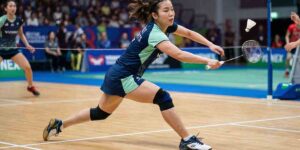
- Forward lunge patterns for front-court shots
- Crossover steps and backpedaling for rear-court strokes
- Rotational power through the trunk for smashes and drives
- Fine motor control in the forearm and wrist for net play
The lower body bears the majority of the physical load. The quadriceps, hamstrings, glutes, and calves work together in almost every movement pattern. The hip flexors and adductors play a less obvious but equally important role in controlling the wide lunges that reach for shuttles at the extremes of the court.
The upper body generates racket speed through a kinetic chain that starts at the hips and runs through the trunk, shoulder, elbow, and wrist. Weakness or tightness at any point in this chain limits power output and increases injury risk.
| 🎯 What Are You Looking For? | 👉 See Top Picks from Amazon |
|---|---|
| New to badminton? | ⭐ Best Beginner Rackets |
| Want powerful smashes? | ⭐ Best Head Heavy Rackets |
| Play aggressively? | Best Attacking Rackets |
| Prefer ultra-light rackets? | Best Lightweight Yonex Rackets |
| Curious what pros use? | Professional Players’ Rackets |
| Want premium gear? | Most Expensive Badminton Rackets |
| Loyal to Yonex Voltric? | Best Yonex Voltric Series |
1.3 Key Physical Qualities Required
| Physical Quality | Why It Matters in Badminton | Priority Level |
| Speed & Agility | Reaching the shuttle before it bounces; covering court quickly | Critical |
| Anaerobic Power | Generating explosive smashes and rapid rallies | Critical |
| Aerobic Endurance | Sustaining performance through long matches | High |
| Muscular Strength | Driving footwork, supporting joints, generating power | High |
| Flexibility & Mobility | Reaching wide shots, injury prevention | High |
| Coordination | Timing footwork with shot execution | Medium-High |
| Core Stability | Transferring power from legs to racket arm | High |
Warm-Up and Cool-Down Protocols
2.1 The Purpose of a Proper Warm-Up
A warm-up is not just five minutes of gentle jogging before stepping onto the court. Done properly, it raises core body temperature, increases blood flow to working muscles, improves joint lubrication, activates the neuromuscular patterns you are about to demand, and mentally prepares you to compete.
The research on warm-up is consistent: a structured warm-up improves performance and reduces injury rates. The most common mistake recreational players make is skipping it entirely or treating it as optional. If you only take one piece of advice from this guide, let it be this: never step onto a badminton court cold.
2.2 The Dynamic Warm-Up Routine (15 Minutes)
Phase 1: General Elevation (5 Minutes)
Begin with five minutes of light aerobic work to raise body temperature. This could be a brisk walk or slow jog around the court, skipping, or light shadow footwork. The goal is simply to get the blood moving and the body temperature up. You should feel warm but not breathless by the end of this phase.
Phase 2: Dynamic Mobility (7 Minutes)
Move through each of the following exercises, performing 10 to 15 repetitions of each:
- Leg swings forward and back — holding a wall for balance, swing each leg through its full range of motion
- Lateral leg swings — swing the leg across the body and out to the side
- Hip circles — hands on hips, draw large slow circles to mobilize the hip joint
- Knee drives — drive the knee up toward the chest while walking forward
- Walking lunges with trunk rotation — lunge forward and rotate toward the lead leg
- Lateral shuffle steps — ten steps each direction at increasing speed
- Arm circles — small to large, forward and backward
- Wrist rotations and finger extensions — often neglected but important for racket grip
Phase 3: Sport-Specific Activation (3 Minutes)
Finish with movements that directly replicate the demands of play: shadow footwork to each of the six court positions, a few light overhead throws or shadow smash movements, and net lunge patterns. These prime the exact neuromuscular pathways you are about to use.
2.3 The Cool-Down Routine (10 Minutes)
After a match or training session, the cool-down is your opportunity to begin the recovery process. Stopping abruptly after intense exercise allows blood to pool in the working muscles and slows the removal of metabolic byproducts. A proper cool-down reduces post-exercise soreness and improves your readiness for the next session.
Spend five minutes walking or doing very light shadow footwork, then move into static stretching. Hold each stretch for 30 to 45 seconds. Focus particularly on:
- Hip flexors — lunge position with the rear knee on the ground, sink the hips forward
- Hamstrings — seated or standing forward fold
- Quadriceps — standing single-leg quad stretch
- Calf and Achilles — wall stretch with a straight and then bent knee
- Shoulder cross-body stretch — draw one arm across the chest
- Forearm flexor and extensor stretches — wrist flexion and extension against resistance
Footwork Training — The Foundation of Court Coverage
3.1 Why Footwork Is the Most Undervalued Skill
World-class badminton players are not faster than ordinary athletes because they have quicker legs in isolation. They are faster on court because they have internalized movement patterns that allow them to reach any position with fewer steps and better balance. Every extra step to the shuttle is wasted energy. Every time you arrive off-balance, the quality of your shot drops.
Footwork training is not just about speed. It is about efficiency, balance, and the ability to recover back to base position after each stroke so you are ready for the next one.
3.2 The Six-Corner Shadow Drill
The six-corner shadow drill is the single most important court-specific fitness exercise for badminton players. Set up six cones or markers at each of the six court positions. Starting from a central base position, move to each corner in sequence using correct badminton footwork, touch the cone, and recover back to base before moving to the next.
Progressions:
- Beginner: Walk through each corner focusing on footwork patterns, rest 60 seconds between sets
- Intermediate: Execute at 70-80% speed for 30 seconds, rest 90 seconds, repeat 6 to 8 times
- Advanced: Maximum effort for 20 seconds, rest 40 seconds (2:1 work-to-rest ratio), repeat 10 to 12 times
3.3 Ladder Drills for Foot Speed
Agility ladders develop the rapid foot repositioning that underlies all court movement. Three to four sets of each of the following, performed two to three times per week, will show measurable improvements in foot speed within six weeks:
- In-in-out-out — both feet land in each rung, both feet land outside
- Lateral two-step — side-on to the ladder, two feet in each rung moving laterally
- Single-leg hops — hop on one foot through each rung, switch legs on the return
- Ickey shuffle — in-in-out pattern moving forward with a rhythm focus
Keep the rest periods generous in the early weeks. Ladder drills should be performed at maximum speed with full mental focus. Fatigued ladder work teaches sloppy patterns rather than fast ones.
3.4 Reaction and Agility Training
Badminton footwork must respond to an opponent’s movement, not a planned sequence. Reaction training bridges the gap between a drill and a real game situation. Some practical methods:
- Partner feeds: A partner points to a corner and you shadow-move there immediately
- Color or number cones: Call out a color, the player touches that cone as fast as possible
- Return-of-shuttle sprints: Feeder tosses shuttles to random positions, player retrieves each one
Cardiovascular Conditioning for Badminton
4.1 Building the Aerobic Base
The aerobic base is what allows you to train hard day after day, recover between rallies during a match, and maintain your sharpness in the third game when your opponent is visibly wilting. Building it requires sustained, moderate-intensity work over a period of weeks and months.
Three to four sessions of aerobic conditioning per week, each lasting 30 to 45 minutes, is an appropriate volume for most competitive club players. The intensity should allow you to hold a conversation but feel genuinely challenged. Heart rate monitors are useful here: aim for 65 to 75 percent of your maximum heart rate.
Suitable aerobic conditioning activities for badminton players include:
- Running (outdoor or treadmill)
- Cycling (road, stationary, or interval cycling)
- Swimming — particularly good for active recovery as it is low impact
- Rowing machine — develops the upper body aerobic system as well
- Extended rally practice or multi-court feeding sessions
4.2 Interval Training for Badminton Specific Fitness
Interval training mimics the stop-start nature of rallies and has been shown to improve both aerobic capacity and anaerobic threshold simultaneously. The following three formats are particularly well-suited to badminton players:
Format 1: Classic Shuttle Runs (Beep Test Style)
Mark two lines 10 meters apart. Shuttle between them at increasing pace in time with audio cues, or simply sprint, touch the line, sprint back, and repeat for 30 to 45 seconds followed by 30 to 45 seconds of recovery. This directly replicates the court distances and turn patterns of a rally.
Format 2: 30-20-10 Protocol
This protocol, developed in Scandinavian sports science research, alternates between 30 seconds of jogging, 20 seconds of moderate running, and 10 seconds of all-out sprinting. One cycle takes 60 seconds. Perform four to six cycles, rest three minutes, and repeat two to three times. Players who follow this protocol for eight weeks consistently show large improvements in both VO2 max and time to exhaustion.
Format 3: Court-Based Intervals
Use the court itself as the training space. Sprint from the back line to the net and back twice (approximately 13 meters each way), then shadow all six corners in rapid succession, then sprint to the net and back once more. That is one interval. Rest 90 seconds. Repeat eight times. This develops aerobic capacity while keeping the mind and body in a badminton-specific context.
| Training Type | Duration | Frequency / Week | Goal |
| Steady-state aerobic run | 30-45 min | 2-3x | Build aerobic base |
| 30-20-10 intervals | 20-25 min | 1-2x | Improve VO2 max |
| Court-based intervals | 15-20 min | 1-2x | Sport-specific endurance |
| Active recovery (swim/walk) | 20-30 min | 1x | Enhance recovery |
Strength and Power Training
5.1 Why Badminton Players Need Strength Work
There is a persistent misconception among racket sport players that lifting weights will slow them down or make them bulky. This is not supported by evidence. Appropriate strength training increases tendon resilience, improves joint stability, enhances power output, and reduces injury rates. It does not make athletes slow unless they train exclusively for maximum strength at the expense of speed.
The goal for badminton players is functional strength — specifically, the ability to generate force quickly and in the movement patterns that the game demands. This is achieved through compound movements, plyometric training, and core stability work.
5.2 Lower Body Strength Exercises
Squats
The back squat and goblet squat develop the quadriceps, glutes, and hamstrings that power every lunge and jump on court. Aim for three to four sets of six to ten repetitions twice weekly during the off-season, reducing to maintenance volumes during the competitive season.
Romanian Deadlifts
The Romanian deadlift targets the posterior chain — hamstrings and glutes — which is often underdeveloped relative to the quadriceps in badminton players. This imbalance is a significant risk factor for hamstring strain. Three sets of eight to twelve repetitions with controlled eccentric lowering.
Bulgarian Split Squats
With one foot elevated on a bench behind you, lower into a single-leg squat. This movement closely replicates the deep lunge position used to reach front-court shots and builds the unilateral leg strength that is directly transferable to court performance. Three sets of eight to ten repetitions each leg.
Calf Raises (Single Leg)
The calf and Achilles complex absorbs and generates force in almost every push-off movement. Single-leg calf raises performed with a slow three-second lowering phase build the tendon resilience that protects against Achilles injuries. Three sets of 12 to 15 repetitions each leg.
5.3 Upper Body Strength Exercises
Upper body strength for badminton is not about raw pressing or pulling power. It is about the rotational control, shoulder stability, and wrist strength that support high-speed racket movements.
- Shoulder external rotation with resistance band — three sets of 15 repetitions each arm
- Rows (cable or dumbbell) — three sets of 10-12 repetitions to strengthen the mid-back and rear shoulder
- Push-ups and incline push-ups — three sets of 12-15 repetitions for general pushing strength
- Wrist curls and reverse wrist curls with light dumbbells — two sets of 20 repetitions each direction
- Pallof press — anti-rotation core exercise that specifically develops the ability to resist rotational forces through the trunk
5.4 Plyometric Training for Explosive Power
Plyometrics develop the ability to rapidly store and release elastic energy — the quality responsible for explosive first steps and powerful jumping smashes. Begin plyometric training only after a four to six week base of strength training. The nervous system needs a foundation of strength to absorb landing forces safely.
- Box jumps — 3 sets of 6 to 8 repetitions, focusing on fast push-off and soft landings
- Lateral bounds — jump sideways from one foot to the other, covering as much horizontal distance as possible, 3 sets of 8 each direction
- Depth drops — step off a low box (20-30 cm) and absorb the landing with controlled flexion, then immediately jump upward, 3 sets of 6
- Medicine ball rotational throw against a wall — stand side-on, rotate explosively and throw the ball off the wall, 3 sets of 8 each side
Core Stability and Rotational Power
6.1 Why the Core Is More Than Sit-Ups
The core is not just the abdominals. It is a cylinder of muscle that wraps around the trunk, including the deep abdominals (transverse abdominis), the obliques, the muscles of the lower back, the pelvic floor, and the diaphragm. Together these muscles create a stable platform from which the arms and legs can generate and express force.
In badminton, the core performs two related jobs. First, it transmits the power generated by the legs and hips up through the body to the racket arm. Second, it resists unwanted rotation and side-bending so that force is channeled efficiently rather than leaking out as sloppy movement. A player with a weak core loses power at the transfer point and compensates by overworking the shoulder and elbow — a common precursor to injury.
6.2 Core Training Exercises for Badminton Players
Anti-Extension: Plank Variations
The standard plank is an anti-extension exercise — you are resisting the tendency for the lower back to arch. Hold for 30 to 60 seconds. Progress to plank with arm reach (alternate reaching each arm forward without rotating the hips), and then to the RKC plank (squeeze everything simultaneously for a shorter, more intense hold).
Anti-Rotation: Pallof Press
Attach a resistance band to a fixed point at chest height. Stand sideways to the anchor, hold the band at your chest, and press it straight out in front of you. Resist the pull of the band toward the anchor point. Hold for two seconds at full extension, return, and repeat for 12 repetitions each side. This directly develops the anti-rotational stability that protects the lower back during smashes.
Anti-Lateral Flexion: Suitcase Carry
Hold a moderately heavy dumbbell in one hand and walk 30 meters. Resist the temptation to lean toward the weight. Switch hands and repeat. This exercise develops the quadratus lumborum and obliques in a functional way that directly transfers to the demands of reaching wide for low serves and net shots.
Rotational Power: Cable or Band Rotation
Set a cable or band at shoulder height. Stand sideways to the anchor, hold the handle with both hands, and rotate explosively away from the anchor. Control the return. This is the most direct transfer to the rotational mechanics of overhead shots. Three sets of 10 to 12 repetitions each side.
Flexibility and Mobility
7.1 The Difference Between Flexibility and Mobility
Flexibility refers to the passive range of motion available in a muscle. Mobility refers to the ability to actively control movement through a range of motion. Both matter for badminton players, but mobility is arguably more important because court performance requires you to move through ranges of motion under load and at speed, not just passively stretch to a position.
7.2 Key Areas to Address
Hip Mobility
The hip joint is the engine of badminton footwork. Tight hips limit lunge depth, reduce the length of your step to wide shots, and transfer load inappropriately to the lower back and knees. The 90-90 hip stretch (sitting with both legs at 90-degree angles in different planes), the pigeon pose variation, and the cossack squat (deep lateral squat alternating sides) are three of the most effective exercises for developing hip mobility.
Ankle Dorsiflexion
The ability to bend the ankle forward (dorsiflexion) determines how deeply and safely you can lunge. Poor ankle dorsiflexion forces compensations at the knee and hip. Spend five minutes before each session doing ankle circles, heel-to-toe rocks, and kneeling ankle stretch against a wall.
Thoracic Spine Extension and Rotation
The thoracic spine, the middle portion of the back, needs to rotate freely to support the overhead and rotational movements of badminton. Many players are stiff through this region from sitting at desks. Thoracic extensions over a foam roller and seated rotational stretches, holding for five deep breaths, address this directly.
Shoulder External Rotation
The overhead smash requires the arm to rotate externally and then rotate internally at high speed through ball contact. If the external rotators are tight, the shoulder compensates in ways that damage the rotator cuff over time. Arm circles, band pull-aparts, and the classic sleeper stretch all help maintain healthy shoulder range of motion.
7.3 Daily Flexibility Routine (10 Minutes)
| Stretch / Mobility Exercise | Duration | Focus Area |
| 90-90 hip stretch | 45 sec each side | Hip external/internal rotation |
| Kneeling hip flexor stretch | 45 sec each side | Hip flexors / quads |
| World’s greatest stretch | 30 sec each side | Full body mobility |
| Ankle dorsiflexion against wall | 30 sec each leg | Ankle and lower calf |
| Foam roller thoracic extension | 1 min | Mid-back mobility |
| Shoulder cross-body stretch | 30 sec each arm | Rear shoulder |
| Wrist flexor / extensor stretch | 30 sec each direction | Forearm and wrist |
Injury Prevention for Badminton Players
8.1 The Most Common Badminton Injuries
Badminton has a relatively high incidence of lower limb injury compared to other racket sports, primarily because of the explosive change of direction demands and the deep lunge positions required for net play. The shoulder and elbow are the most frequently injured upper body areas. Understanding the mechanisms of common injuries helps you train to prevent them.
Ankle Sprains
The lateral ankle sprain is the most common acute injury in badminton. It typically occurs during a sideways lunge when the foot rolls inward on landing. Prevention focuses on strengthening the peroneal muscles on the outside of the lower leg, improving proprioception through single-leg balance work, and ensuring that footwork technique keeps the landing foot flat rather than rolled.
Single-leg balance exercises on an unstable surface (a foam pad or wobble board) performed for three sets of 30 to 45 seconds each leg, three times weekly, significantly reduce the risk of ankle sprains. Resistance band exercises for ankle eversion also strengthen the muscles that prevent inward rolling.
Patellar Tendinopathy (Jumper’s Knee)
The repeated jumping and landing in badminton places significant load on the patellar tendon. Tendinopathy develops gradually when the tendon is loaded faster than it can adapt. The most effective treatment and prevention is heavy slow resistance training of the quadriceps, particularly eccentric squats performed on a declined board. Three sets of 15 repetitions, slow and controlled, on each leg.
Rotator Cuff Problems
The overhead smash is one of the most demanding movements for the shoulder rotator cuff. Problems develop over time through a combination of poor technique, insufficient shoulder stability, and lack of adequate rest between sessions. Prevention involves dedicated rotator cuff strengthening (internal and external rotation with resistance bands, Y-T-W raises lying prone) and ensuring the shoulder is properly warmed up before any overhead work.
Achilles Tendinopathy
The Achilles tendon is vulnerable in badminton because of the repeated push-offs and the sudden acceleration demands of the sport. Eccentric calf raises — specifically the Alfredson protocol of three sets of 15 repetitions with a slow three-second lowering phase, performed twice daily — have a strong body of evidence behind them for both treatment and prevention.
8.2 Load Management: The Most Underused Injury Prevention Tool
The majority of overuse injuries in sport result from increasing training load too quickly. The body adapts to stress, but it needs time to do so. A simple guideline: do not increase your total weekly training volume by more than ten percent from one week to the next. If you have had a break from training due to illness, holiday, or other commitments, do not jump straight back to your previous volume. Rebuild gradually.
Rest days are not optional extras. They are when adaptation happens. Every hard session creates microscopic damage in the muscles and connective tissues. Sleep and rest allow the body to repair and rebuild stronger structures. Players who train intensely seven days a week without rest do not improve faster than those who train four or five days. They break down faster.
Nutrition and Hydration for Badminton Performance
9.1 Fueling for Training and Competition
Badminton training and match play draw heavily on carbohydrate stores. Carbohydrates are the body’s preferred fuel for high-intensity intermittent exercise and should form the foundation of a badminton player’s diet. Whole grains, rice, potatoes, pasta, oats, and fruit are all excellent sources.
Protein supports muscle repair and adaptation following training sessions. Players engaged in regular strength training should aim for 1.6 to 2.0 grams of protein per kilogram of bodyweight per day, spread across three to four meals. Chicken, fish, eggs, legumes, dairy, and soy are reliable sources.
Fats should not be avoided. They support joint health, hormone production, and the absorption of fat-soluble vitamins. Focus on unsaturated sources: oily fish, nuts, seeds, olive oil, and avocado. Minimize processed trans fats and excessive saturated fats.
9.2 Match Day Nutrition
The meal eaten two to three hours before a match should be rich in carbohydrates, moderate in protein, and low in fat and fiber (which slow digestion and can cause discomfort during play). A good example: rice with grilled chicken and steamed vegetables, or pasta with a light tomato sauce and some protein.
During a long match or a day with multiple matches, consume 30 to 60 grams of carbohydrate per hour from drinks, gels, or small snacks. Bananas, energy gels, and sports drinks are all practical choices. Avoid heavy solid foods that require significant digestion during play.
9.3 Hydration
Dehydration of even one to two percent of bodyweight measurably impairs reaction time, decision-making, and aerobic performance. On a court, where a hundredth of a second can determine whether you reach the shuttle, this matters.
Drink 400 to 600 milliliters of water in the one to two hours before play. During play, sip 150 to 200 milliliters every 15 to 20 minutes. After play, replace 150 percent of the fluid you lost (weigh yourself before and after if precision is important: each kilogram lost represents approximately one liter of sweat).
In hot and humid conditions or during extended match days, plain water may not be sufficient. Add a small amount of salt or use an electrolyte tablet to replace the sodium lost in sweat. Cramps during long matches are often a sign of sodium depletion as much as dehydration.
Recovery Strategies
10.1 Sleep: The Underrated Performance Tool
No recovery method is more effective than sleep, and none is more consistently sacrificed by modern athletes. During sleep, growth hormone is released, muscle protein synthesis occurs, neural pathways are consolidated, and inflammatory markers drop. Seven to nine hours per night is the target range for most athletes. Consistent sleep schedules, a cool dark room, and avoiding screens in the hour before bed improve sleep quality significantly.
10.2 Active Recovery
On rest days, gentle movement promotes blood flow, reduces muscle stiffness, and maintains aerobic capacity without adding to training load. A 20 to 30 minute walk, an easy cycle ride, or a slow swim are ideal active recovery activities. These should feel comfortable and enjoyable, not like training.
10.3 Ice, Heat, and Contrast Therapy
Ice applied to acutely injured or swollen areas within the first 24 to 48 hours after injury reduces swelling and pain. Beyond that initial window, its benefits for general recovery are less clear. Heat increases blood flow to stiff muscles and can improve range of motion before a session.
Contrast therapy — alternating between cold and warm water immersion — is used by many professional badminton players to manage the recovery demands of tournament play. Typically: one minute cold (12 to 15 degrees Celsius) alternated with three minutes warm (38 to 40 degrees), repeated three to four times. The evidence base is mixed but the anecdotal reports from high-level players are consistently positive.
10.4 Foam Rolling and Massage
Foam rolling is a form of self-myofascial release that helps reduce muscle tension and improve range of motion. Spend two to three minutes rolling through the quadriceps, hamstrings, calves, and upper back after sessions. Roll slowly, pause on tender spots, and breathe through the discomfort rather than tensing against it. It is not a substitute for mobility work but complements it well.
Periodization — Structuring Your Fitness Year
11.1 What Is Periodization and Why Does It Matter?
Periodization is the systematic planning of training over time to peak for competition and allow adequate recovery. Without it, players tend to train at a similar intensity year-round, which leads to stagnation, chronic fatigue, and injury. With it, fitness builds progressively, peaks at the right time, and is maintained through the competitive season.
11.2 The Three-Phase Year for Badminton Players
Phase 1: Off-Season Foundation (8 to 12 Weeks)
The off-season is the time to build the physical qualities that on-court play cannot easily develop: aerobic base, maximal strength, and flexibility. Training volume is high but intensity is moderate. This is when to do your long runs, your heavy strength work, and your extended mobility sessions. Court time is reduced to allow the body to adapt to increased training loads.
Phase 2: Pre-Season Conversion (6 to 8 Weeks)
As the season approaches, training shifts from general physical development toward sport-specific fitness. Strength training transitions from heavy compound lifts to power-focused work: plyometrics, medicine ball work, and faster-tempo strength exercises. Running transitions from steady-state to intervals. Court time increases and becomes more intense.
Phase 3: In-Season Maintenance (Throughout Competition Season)
During the competitive season, the priority is to maintain the fitness built in the previous phases while ensuring fresh legs for matches. Training volume drops significantly. Strength training continues at reduced volume (one to two sessions per week) to prevent deacclimation. Flexibility and recovery work are prioritized. Court practice and match play provide the specific stimulus.
| Phase | Duration | Key Focus | Training Volume |
| Off-Season Foundation | 8-12 weeks | Aerobic base, strength, flexibility | High |
| Pre-Season Conversion | 6-8 weeks | Power, speed, court-specific fitness | Moderate-High |
| In-Season Maintenance | Competition period | Freshness, skill, maintenance | Low-Moderate |
| Transition / Rest | 2-4 weeks | Full rest and recovery | Minimal |
Sample 8-Week Training Programme
Overview
The following programme is designed for an intermediate club player who trains badminton two to three times per week and wants to add a structured fitness component. Each week contains four additional sessions: two court-based fitness sessions, one strength session, and one active recovery day.
Weeks 1 to 4 focus on building the aerobic and strength foundation. Weeks 5 to 8 introduce higher intensity intervals and more sport-specific power work.
Weeks 1 to 4: Foundation Phase
| Day | Session | Duration |
| Monday | Strength: Squats, Romanian Deadlifts, Rows, Core work | 45-50 min |
| Tuesday | Badminton (club session) — focus on footwork accuracy | 60-90 min |
| Wednesday | Aerobic run or cycle at 65-75% max HR | 30-35 min |
| Thursday | Active recovery: walk or easy swim | 20-30 min |
| Friday | Court fitness: six-corner shadow drills + ladder work | 35-40 min |
| Saturday | Badminton (club session or match play) | 60-90 min |
| Sunday | Complete rest + flexibility routine | 10-15 min |
Weeks 5 to 8: Development Phase
| Day | Session | Duration |
| Monday | Power strength: Box jumps, Split squats, Medicine ball rotation, Core | 45-50 min |
| Tuesday | Badminton (club session) — push intensity through sets | 60-90 min |
| Wednesday | Interval training: 30-20-10 protocol x 3 sets | 25-30 min |
| Thursday | Active recovery + extended flexibility work | 30-40 min |
| Friday | Court intervals: max effort shadow drills + reaction work | 35-40 min |
| Saturday | Badminton (competitive match or high-intensity practice) | 60-90 min |
| Sunday | Complete rest + foam rolling | 10-15 min |
Conclusion: Building a Body That Serves Your Game
There is no shortcut to badminton fitness. The players who move best, last longest, and recover fastest are the ones who have put in consistent work over months and years, not the ones who found a magic exercise or a two-week blitz programme.
The framework laid out in this guide works because it addresses every physical quality that the game demands. Speed without endurance fades by the second game. Strength without flexibility leads to injury. Aerobic fitness without power produces players who can run all day but never quite reach the shuttle. All of these qualities need to be developed together, in proportion to each other, and in a way that fits around the demands of actual on-court practice.
Start where you are. If you have been training with no structured fitness work at all, even adding two sessions per week of targeted physical preparation will produce noticeable improvements within four to six weeks. If you are already training regularly, the periodization principles and phase-specific programming in this guide will help you build more effectively and peak when it matters.
The court is where the game is won. But the gym, the park, the track, and the physio table are where the body that wins it is built. Treat your fitness with the same seriousness you give to your technique and tactics, and the results will follow.
| 🏸 Need Better Comfort & Performance? | 👉 Explore Top Picks from Amazon |
|---|---|
| Want better grip on court? | ⭐ Best Non-Marking Badminton Shoes |
| Just starting out? | Best Beginner Badminton Shoes |
| Carry gear like a pro? | Best Badminton Bags |
| Confused about string tension? | Best String Tension Guide + Top Strings |
| Need an all-in-one starter kit? | Portable Badminton Racket Sets |
| Protect your eyes during fast rallies? | Best Badminton Glasses |
| Upgrade your court style? | Comfortable Badminton Outfits |


Add comment