
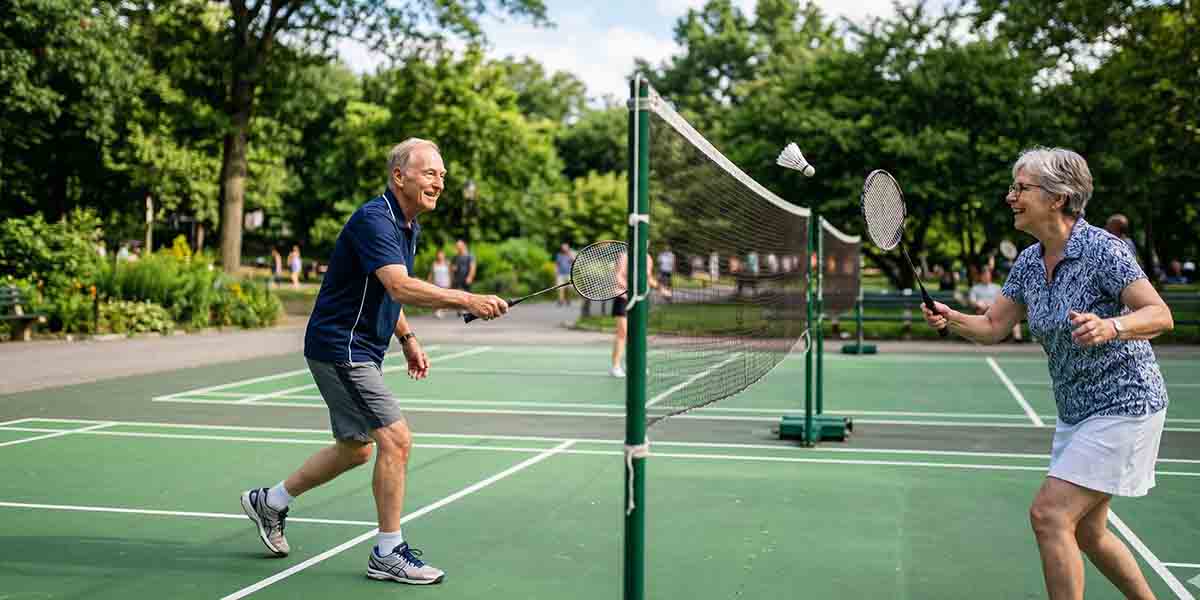
There is something refreshingly simple about badminton. You do not need a gym membership, a personal trainer, or any expensive equipment to get started. A racket, a shuttlecock, and a little open space — that is really all it takes. For older adults looking for a sport that gets the heart pumping without wrecking the knees, badminton has become one of the most recommended activities by doctors and fitness coaches around the world.
Millions of people over the age of 60 play badminton regularly, and not just at a casual, leisurely pace either. Senior badminton competitions are held internationally, with players well into their 70s and 80s competing with impressive agility and skill. Whether you are picking up a racket for the first time or returning to a sport you loved decades ago, this guide covers everything you need to know — from health benefits and safety tips to equipment choices and where to find other players.
Why Badminton Works So Well for Older Adults
Badminton sits in a sweet spot that few other sports occupy. It is vigorous enough to provide real cardiovascular benefit, yet gentle enough on the joints that most people with mild arthritis or stiff knees can still play. Compare it to running, which pounds the joints with every stride, or tennis, which demands explosive lateral movement and powerful swings that can strain shoulders and elbows. Badminton, by contrast, involves shorter rallies, lighter equipment, and movement patterns that the body tends to handle more graciously as it ages.
The sport also carries a strong social element that is often underestimated. Doubles play — which is by far the most popular format among senior players — keeps you connected to other people, provides constant conversation between points, and creates a sense of community that solo exercise simply cannot replicate. Loneliness and social isolation are real health concerns for many older adults, and a regular badminton game with a group of friends addresses that in a way that walking on a treadmill never will.
| 🎯 What Are You Looking For? | 👉 See Top Picks from Amazon |
|---|---|
| New to badminton? | ⭐ Best Beginner Rackets |
| Want powerful smashes? | ⭐ Best Head Heavy Rackets |
| Play aggressively? | Best Attacking Rackets |
| Prefer ultra-light rackets? | Best Lightweight Yonex Rackets |
| Curious what pros use? | Professional Players’ Rackets |
| Want premium gear? | Most Expensive Badminton Rackets |
| Loyal to Yonex Voltric? | Best Yonex Voltric Series |
Health Benefits Backed by Research
The physical advantages of playing badminton regularly are well documented, and they are particularly meaningful for people in their 60s, 70s, and beyond.
Heart Health
Badminton is classified as a moderate-to-vigorous aerobic activity. Even a relaxed game of doubles gets the heart rate up into a range that strengthens the cardiovascular system over time. Studies have consistently shown that regular aerobic exercise reduces the risk of heart disease, lowers blood pressure, and improves cholesterol levels. For seniors, whose cardiovascular risk tends to climb with age, this is not a minor benefit — it is potentially life-extending.
Balance and Fall Prevention
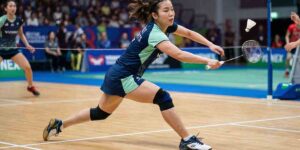
Falls are one of the leading causes of injury and death among older adults. Badminton demands constant small adjustments in balance — stepping sideways to reach a shot, lunging forward for a drop, pivoting to cover the back court. Over time, this kind of movement trains the stabilising muscles around the ankles, knees, and hips, and sharpens the body’s proprioceptive sense (the internal awareness of where your limbs are in space). Many physiotherapists specifically recommend court sports for fall prevention for exactly this reason.
Bone Density
Weight-bearing exercise helps maintain and even build bone density, which is a growing concern for older adults — especially women after menopause. While badminton is not as high-impact as running, the weight-bearing movement involved in playing on a court still provides enough stimulus to support bone health over time.
Mental Sharpness
The mental demands of badminton are often overlooked. Reading an opponent’s body language, anticipating where a shuttlecock will land, deciding in a fraction of a second whether to go aggressive or play safe — these decisions happen continuously throughout a game. This kind of rapid cognitive engagement is excellent for brain health. Research into sports that combine physical activity with decision-making suggests significant benefits for memory, executive function, and even long-term dementia risk.
Mood and Mental Wellbeing
Exercise releases endorphins. That is not news. But the social nature of badminton adds another layer of psychological benefit that purely solo exercise does not. The laughter, the friendly banter, the shared frustration when a shot hits the net — these human moments matter enormously. Many senior players describe their weekly badminton sessions as the highlight of their week, not because of the sport itself, but because of the people they share it with.
Getting Started Safely
Before picking up a racket, a little preparation goes a long way — especially if you have been inactive for a while or are managing a health condition.
Check with Your Doctor First
This advice is given so often that people tune it out, but it genuinely matters here. If you have uncontrolled high blood pressure, a recent cardiac event, significant joint problems, or any other serious condition, a quick conversation with your GP can help you understand what intensity level is appropriate and what to watch for. Most doctors will be enthusiastic about the idea — badminton is exactly the kind of moderate, social exercise they usually encourage.
Warm Up Properly
Muscles that have spent decades in a body tend to need a little more time to get going than they did at 25. Spend at least ten minutes warming up before you start playing. A brisk walk, some light jogging in place, shoulder circles, hip rotations, and gentle calf stretches are a good starting combination. The goal is to get blood flowing to the muscles and to lubricate the joints before you start putting them through their paces.
Start Slow and Build Up
There is no shame in starting with short sessions — 20 to 30 minutes is plenty when you are beginning. It is far better to finish a session feeling good and wanting more than to push through exhaustion and spend the next three days unable to walk properly. Increase your playing time and intensity gradually over weeks and months as your fitness improves.
Listen to Your Body
There is a difference between the healthy discomfort of working muscles — a mild burn, a bit of breathlessness — and the warning signals that mean you should stop. Chest pain, dizziness, sharp joint pain, or difficulty breathing are not things to push through. Stop play immediately and rest. If symptoms do not pass quickly, seek medical attention. Knowing the difference between ordinary exertion and genuine warning signs is one of the most important things any senior athlete can learn.
Choosing the Right Equipment
Good equipment does not have to be expensive, but it does need to be appropriate for your body and your level of play. Making the right choices here can mean the difference between a comfortable, enjoyable experience and one that leads to unnecessary strain or injury.
Racket Selection
For senior players, a lightweight racket is almost always the better choice. Rackets are generally categorized by weight, and opting for a lighter model (in the 80–85 gram range) reduces the strain on your wrist, elbow, and shoulder during play. A racket that is too heavy for extended use is one of the most common causes of tennis elbow and rotator cuff irritation in recreational players.
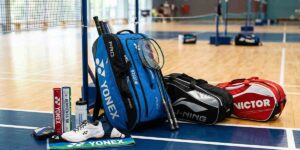
Flexibility matters too. Rackets with a more flexible shaft are generally more forgiving — they absorb some of the shock of impact and require less raw power to generate a decent shot. This makes them particularly well-suited to players who may not have the wrist snap or arm strength they had in their youth. Medium-flex or flexible shaft rackets from reputable brands such as Yonex, Victor, or Li-Ning in the mid-price range offer good quality without requiring a significant investment.
Grip Size and Overgrip
The grip of the racket handle should feel comfortable in your hand without requiring a tight, tense squeeze to hold it securely. If the grip is too thin, you tend to over-grip, which tires the forearm muscles and contributes to elbow problems. Many players add an overgrip — a thin, slightly tacky wrapping — to their handle to get the right feel and to absorb sweat during play. These are cheap, widely available, and worth trying.
Shuttlecocks
Shuttlecocks come in two main varieties: feather and synthetic (plastic). Feather shuttles are used in competitive play and are prized for their flight characteristics, but they are fragile and expensive. For recreational senior play, nylon shuttlecocks are a far more practical choice. They last much longer, perform consistently across different temperatures, and cost a fraction of the price. Look for shuttles rated for medium speed, which is appropriate for most indoor environments.
Footwear
Do not underestimate how much your shoes matter. Running shoes are not appropriate for badminton — they are designed for forward motion, not the lateral cutting and quick stops that court sports demand. A proper pair of court shoes (badminton or squash shoes work well) has non-marking soles with good lateral support and cushioning. They grip the floor properly without being sticky, and they protect your ankles during the side-to-side movement the game requires. Given the role footwear plays in preventing ankle sprains and knee stress, this is one area where it is worth spending a little more.
Adapting Your Game as You Age
Competitive badminton at the senior level is not the same as the game played by 20-year-olds, and it should not try to be. Adjusting your approach to match your body’s current capabilities is not giving up — it is playing smart.
Play Doubles
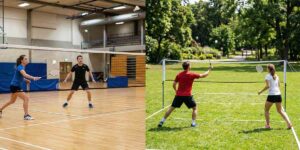
Doubles is the natural choice for most older players. Covering half a court instead of the full court dramatically reduces the amount of running required, and having a partner makes the game more social and more forgiving. The rallies in doubles also tend to be longer and more strategic than in singles, which appeals to players who have developed their reading of the game over many years even if their raw speed has slowed.
Focus on Placement, Not Power
One of the genuine pleasures of playing badminton at an older age is that the game rewards guile and placement over raw athleticism. Learning to drop the shuttle just over the net, to vary the pace of your clears, to disguise your shots at the last moment — these skills take years to develop and do not diminish with age the way pure speed does. Experienced older players can and often do outthink and outmanoeuvre younger opponents who rely too much on physical dominance.
Use the Mid-Court More
Staying close to the mid-court rather than being drawn into extreme positions at the net or back court reduces the distance you need to travel to cover most shots. Working with your partner to control the mid-court and force your opponents into difficult angles is a highly effective tactical approach for senior doubles players.
Rest Between Points
There is no rule saying you need to rush to serve the next point. Taking a moment between rallies to catch your breath, slow your heart rate, and refocus is perfectly normal at any level of play. Senior athletes often find that managing their energy across the full duration of a game is more important than any individual rally. Pace yourself, and the game becomes more enjoyable.
Common Injuries and How to Avoid Them
Badminton is a relatively low-injury sport, but older players do need to be aware of a few recurring problems and take steps to minimise their risk.
Lateral Epicondylitis (Tennis Elbow)
Despite the name, this condition is very common among badminton players and involves pain on the outside of the elbow caused by overuse of the forearm muscles and tendons. Using a racket that is too heavy, gripping too tightly, or playing too much too soon are the most common causes. Choosing a lighter, more flexible racket, relaxing your grip, and building up your playing volume gradually all reduce your risk significantly.
Rotator Cuff Problems
The shoulder is the most complex joint in the body, and overhead sports like badminton place real demands on the rotator cuff muscles. Warming up the shoulder thoroughly before play, avoiding overly forceful smashes until your shoulder strength is well established, and incorporating basic rotator cuff strengthening exercises into your routine will help keep this area healthy.
Knee Pain
The lunging movements required to reach low shots can strain the knee, particularly if the quadriceps and hamstrings are weak or if the player’s technique involves locking the knee rather than bending it properly. Strengthening the muscles around the knee through exercises like squats and leg presses, and learning to lunge with a bent, stable knee rather than a straight one, makes a significant difference.
Ankle Sprains
Sudden changes of direction are inherent to badminton, and ankle sprains can happen even on well-maintained court surfaces. Proper court shoes are your first line of defence. Some players also benefit from ankle supports or braces, particularly if they have a history of ankle problems. Calf stretching and ankle strengthening exercises done outside of play also reduce vulnerability significantly.
Complementary Exercises to Improve Your Game
The fitter and stronger you are off the court, the better and more safely you will play on it. A few targeted exercises done a couple of times a week can make a noticeable difference to your game and your resilience to injury.
- Squats and wall sits: Strengthen the quadriceps, hamstrings, and glutes, which are the primary engines of movement on a badminton court.
- Calf raises: Build strength in the lower leg for push-off power and ankle stability.
- Shoulder rotations and band exercises: Maintain healthy shoulder function and reduce rotator cuff injury risk.
- Core exercises (planks, bird-dog): A strong core improves balance, protects the lower back, and transfers power more efficiently through your shots.
- Yoga or Pilates: Both improve flexibility, balance, and body awareness in ways that translate directly to court performance.
- Swimming or cycling: Excellent low-impact cardiovascular conditioning that supplements your badminton fitness without adding joint stress.
Finding Other Players and Local Clubs
One of the most common barriers people face when wanting to start badminton is simply not knowing where to play or who to play with. The good news is that badminton has a thriving recreational scene in most countries, with active senior communities in many areas.
Local Badminton Clubs
Most towns and cities have at least one badminton club, and many of these have specific senior sessions or welcome players of all ages and abilities. The national badminton association in your country (Badminton England, Badminton Canada, Badminton World Federation-affiliated bodies in other countries) usually maintains a club finder on its website. Clubs are almost always welcoming to beginners and to people returning after a long break.
Community and Leisure Centres
Local leisure centres and community sports halls often run drop-in badminton sessions that do not require any club membership. These tend to be informal, friendly, and inexpensive — often just a small court hire fee. They are a great way to start playing without any commitment, and many people find their regular playing group through exactly these kinds of sessions.
Online Communities and Apps
Sports networking apps and websites allow you to find other players in your area who are looking for a game. Posting in local Facebook groups or neighbourhood platforms can also be surprisingly effective. Senior-specific sports programmes through local councils or government health initiatives are another avenue worth exploring, as these often subsidise the cost of participation to make it more accessible.
Competitive Play for Seniors
If you have a competitive streak, badminton absolutely caters to it. Senior badminton competitions exist at every level, from friendly club tournaments to regional and national championships, all the way up to international events organised under the Badminton World Federation’s senior umbrella.
Most competitive senior badminton divides players into age brackets — typically 35+, 40+, 45+, 50+, 55+, 60+, 65+, and 70+ — so that you are competing against others of a similar age. The standard of play across these categories is genuinely impressive. Watching senior international badminton is a reminder that athletic competition does not end at 40.
Even if you have no interest in formal competition, the existence of a competitive pathway in senior badminton is worth knowing about. It means the sport takes its older players seriously, invests in their participation, and provides a clear structure for those who want to measure themselves against others. That sense of purpose and goal-setting has its own motivational value, even for those who simply watch from the sidelines.
Nutrition and Hydration for Senior Players
Playing a physical sport at any age requires some attention to what you are eating and drinking, and this becomes more important as the body’s recovery mechanisms slow down.
Stay Hydrated
Older adults are more susceptible to dehydration than younger people, partly because the sensation of thirst diminishes with age and partly because kidney function changes over time. Do not wait until you feel thirsty to drink water. Bring a water bottle to every session and sip from it regularly throughout your game. In hot environments, consider a drink containing electrolytes to replace what is lost through sweat.
Eat to Support Recovery
Protein becomes more important with age for maintaining and repairing muscle tissue. Ensuring adequate protein intake — from sources such as eggs, fish, lean meat, dairy, legumes, or plant-based alternatives — supports recovery from exercise and helps preserve the muscle mass that playing badminton depends on. Eating a small meal or snack containing both carbohydrates and protein within an hour or two of playing is a simple, effective recovery strategy.
A Sport That Grows With You
Perhaps the most remarkable thing about badminton is its longevity as a sport you can genuinely enjoy. The learning curve never fully flattens — there is always a new shot to master, a tactical wrinkle to explore, a clever opponent who teaches you something you did not know before. That depth keeps the game interesting across decades of play.
Many players who pick up a racket for the first time in their 60s are astounded by how quickly they progress and how much they enjoy it. The sport’s forgiving nature — shorter courts in doubles, lighter equipment, the emphasis on skill over strength — means the entry barrier is low and the ceiling is high. You do not need to be particularly athletic to start. You just need to start.
And once you are in — once you have found your regular group, settled into a rhythm, and started feeling those small improvements from week to week — badminton has a way of becoming part of the fabric of your life. For your health, your social connections, your mental sharpness, and frankly just for the fun of it, few things a senior can take up offer the same combination of benefits.
So if badminton has been on your mind — if you have watched a game and thought ‘I could do that’ or remembered playing as a young person with a flicker of nostalgia — take that thought seriously. Find a local court, borrow a racket, and give it a go. Your body, your mind, and your social life will very likely thank you for it.
This article is intended for informational purposes. Always consult a qualified medical professional before beginning a new exercise programme, particularly if you have existing health conditions.
| 🏸 Need Better Comfort & Performance? | 👉 Explore Top Picks from Amazon |
|---|---|
| Want better grip on court? | ⭐ Best Non-Marking Badminton Shoes |
| Just starting out? | Best Beginner Badminton Shoes |
| Carry gear like a pro? | Best Badminton Bags |
| Confused about string tension? | Best String Tension Guide + Top Strings |
| Need an all-in-one starter kit? | Portable Badminton Racket Sets |
| Protect your eyes during fast rallies? | Best Badminton Glasses |
| Upgrade your court style? | Comfortable Badminton Outfits |


Add comment