
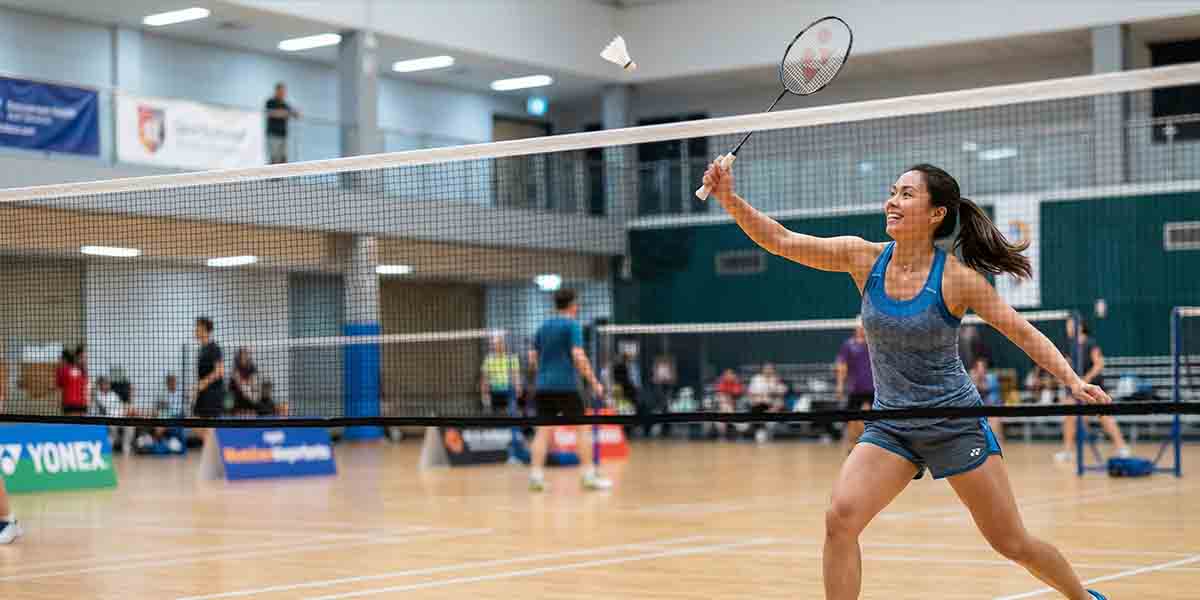
Walk into any park in Asia on a weekend morning and chances are you will spot a group of people locked in a fast, sweaty game of badminton. Pick up a sports science journal from almost any country, and you will find researchers praising the sport for what it does to the human body. Badminton is deceptively demanding.
From the outside, it can look like a gentle pastime — two people swatting a shuttle back and forth over a net. But step onto that court yourself and within minutes your heart is racing, your legs are burning, and your mind is working hard to track a projectile that can travel faster than most cars on a motorway.
The sport has been played competitively since the nineteenth century, but its roots go back even further through traditional games played across Asia and Europe. Today, badminton is one of the most widely played recreational sports in the world, with hundreds of millions of people picking up a racket regularly. And for good reason — the health rewards of playing badminton are substantial, cutting across physical fitness, mental wellbeing, social connection, and long-term disease prevention.
This article walks through the major health benefits of playing badminton, explaining what happens to the body and mind during a session on the court and why those effects matter over the course of a lifetime.
1. A Serious Cardiovascular Workout
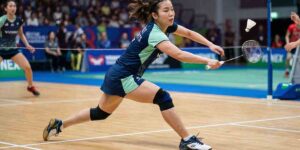
One of the most significant things badminton does for the body is push the heart and lungs to work hard. The game is played in bursts of intense movement separated by brief pauses, which is the format that exercise scientists call high-intensity interval training, or HIIT. You sprint to reach a drop shot at the net, recover for a second as the shuttle is served, then lunge to your backhand corner. This pattern repeats throughout a match and keeps the cardiovascular system operating at an elevated level for extended periods.
Studies tracking recreational badminton players have found that an average match keeps the heart rate between 60 and 85 percent of its maximum for the majority of playing time. That range sits squarely in the aerobic training zone, meaning the heart muscle itself is being strengthened with every session. Over weeks and months, a stronger heart pumps blood more efficiently, which translates to a lower resting heart rate and reduced strain on the cardiovascular system throughout the day.
Regular aerobic exercise of this kind is well established as one of the most powerful tools for reducing the risk of heart disease, stroke, and high blood pressure. The World Health Organization consistently lists cardiovascular disease as the leading cause of death globally, and physical inactivity as one of the primary drivers of that problem. Badminton offers a form of cardiovascular conditioning that most people find far more enjoyable than running on a treadmill, which matters enormously when it comes to whether someone actually keeps doing it.
| 🎯 What Are You Looking For? | 👉 See Top Picks from Amazon |
|---|---|
| New to badminton? | ⭐ Best Beginner Rackets |
| Want powerful smashes? | ⭐ Best Head Heavy Rackets |
| Play aggressively? | Best Attacking Rackets |
| Prefer ultra-light rackets? | Best Lightweight Yonex Rackets |
| Curious what pros use? | Professional Players’ Rackets |
| Want premium gear? | Most Expensive Badminton Rackets |
| Loyal to Yonex Voltric? | Best Yonex Voltric Series |
2. Full-Body Muscle Engagement
Badminton is not a sport that lets any part of the body sit idle. The legs are in almost constant motion, stepping, lunging, jumping, and recovering. The core muscles stabilise every stroke and every change of direction. The shoulders, arms, and wrists drive the racket through smashes, clears, and drops. Even the back muscles work during overhead shots. Very few sports recruit such a wide range of muscle groups in such a natural, varied pattern of movement.
The legs take on particularly heavy duty. The quadriceps and hamstrings power the lunges and jumps, while the calves absorb the force of landing and pushing off repeatedly. Over time, consistent play builds leg strength and muscular endurance that carries over into everyday activities — climbing stairs, walking longer distances, and maintaining balance as you age. The glutes also get significant work during the side-to-side movement patterns that the sport demands.
The upper body benefits are equally genuine. The wrist and forearm muscles develop from the repetitive racket movements, and the shoulder stabilisers grow stronger from the constant overhead work. This kind of functional strength — built through real movement rather than isolated machine exercises — tends to hold up better in daily life and reduces the risk of joint injuries over time.
3. Weight Management and Calorie Burning
Badminton burns a substantial number of calories per hour, particularly because the intensity fluctuates rather than staying constant. Conservative estimates suggest that recreational singles play burns somewhere between 450 and 550 calories per hour for an average adult, while competitive play can push that figure considerably higher. For comparison, that figure sits comfortably above what most people burn during a brisk walk and is broadly comparable to jogging at a moderate pace.
What makes badminton particularly effective for weight management is the combination of calorie burning during exercise and the metabolic effects that follow. High-intensity interval exercise has been shown to raise the resting metabolic rate for several hours after the session ends, meaning the body continues burning more calories than usual even after the game is over. For people who are trying to manage their weight, a sport that is genuinely enjoyable makes a far more sustainable long-term strategy than exercise they dread.
4. Improved Flexibility and Agility
The movement patterns required by badminton push the body through a wide range of motion repeatedly during every session. Reaching for a shuttle in the back corner requires a deep lunge and a stretched shoulder. Diving for a net shot at the front demands a split that would challenge many gym-goers. Playing the game regularly, over time, genuinely increases flexibility in the hips, hamstrings, shoulders, and ankles because the body adapts to meet the demands placed on it.
Agility — the ability to change direction quickly and efficiently — is one of the physical qualities that badminton develops most directly. The game requires constant lateral movement, sudden direction changes, and rapid transitions from forward to backward movement. These demands improve the neuromuscular coordination that underlies agility, which matters not just for sport but for day-to-day life. People who maintain good agility tend to be more sure-footed as they age, which is one reason that regular sport participation is associated with lower rates of falls and fall-related injuries among older adults.
5. Bone Density and Joint Health
Bone density is one of the less glamorous health topics, but it is an enormously important one. Bones respond to the mechanical stress of weight-bearing exercise by becoming denser and stronger, and this protective effect is most pronounced during childhood and adolescence when bones are actively growing. Adults who participate in regular weight-bearing sport maintain their bone density better than sedentary people, and this becomes critically important as the body ages and bone loss becomes a risk.
Badminton qualifies as a weight-bearing sport. The repeated jumping, landing, and direction changes load the bones of the legs and spine in ways that stimulate bone formation. Research into racket sports more broadly has found that players tend to have greater bone mineral density than sedentary controls, particularly in the bones of the playing arm and the lower limbs.
Joint health is a related consideration. While any sport carries some risk of injury if played carelessly or without proper warm-up, badminton is relatively low-impact compared to sports involving direct physical contact or very high landing forces. The knees and ankles do take some stress during lunging and jumping, but regular play also strengthens the muscles and connective tissues that support these joints, meaning that over time the overall effect on joint health tends to be positive rather than damaging.
6. Mental Health and Stress Relief
The mental health benefits of regular physical exercise are well documented, and badminton delivers these benefits with some additional advantages that come from its social and competitive nature. Exercise of moderate to high intensity triggers the release of endorphins, dopamine, and serotonin in the brain. These neurochemicals are associated with improved mood, reduced anxiety, and a general sense of wellbeing. Many regular badminton players describe leaving the court feeling noticeably lighter and calmer than when they arrived, regardless of whether they won or lost.
Stress relief during a badminton session also comes from the nature of the game itself. The pace and concentration required to track a fast shuttle and respond to an opponent’s shots leaves very little mental bandwidth for dwelling on work problems or personal worries. In this sense, badminton functions as a form of active mindfulness — the mind is fully absorbed in the present moment for the duration of the match. Many people who struggle to meditate in the traditional seated sense find that high-focus sports like badminton give them the same mental clearing effect.
There is also evidence that regular sport participation reduces the long-term risk of depression and anxiety disorders. The mechanisms are partly neurochemical, partly hormonal — exercise regulates the body’s stress response systems over time — and partly social, because playing with others provides connection and a sense of belonging that are powerful buffers against mental illness.
7. Cognitive Function and Brain Health
Badminton makes heavy demands on the brain as well as the body. Reading an opponent’s body language to anticipate the next shot, deciding in a fraction of a second whether to smash or drop, adjusting tactics based on what is and is not working — these are cognitively complex tasks performed under physical stress. Sports scientists refer to this combination of physical and cognitive demand as dual-task performance, and there is growing evidence that training in this mode has lasting benefits for brain function.
The specific cognitive skills that badminton develops include reaction time, hand-eye coordination, spatial awareness, pattern recognition, and decision-making speed. These are not trivial skills — they underpin the kind of sharp, responsive thinking that supports performance in many areas of life. Research on older adults suggests that sports requiring this level of cognitive engagement may help preserve these functions as the brain ages, potentially offering some protection against cognitive decline.
Children who play badminton regularly show improvements in attention, concentration, and processing speed that extend into the classroom. For older players, the maintenance of quick reflexes and sharp spatial reasoning has practical safety implications as well — people who stay physically and cognitively active through sport tend to maintain their independence for longer.
8. Social Connection and Community
Health is not purely a physical or even psychological matter — social connection is one of the strongest predictors of both longevity and quality of life. Loneliness and social isolation have been shown in multiple large studies to carry health risks comparable to smoking or heavy drinking. Sport, and badminton in particular, offers a very natural way to build and sustain social bonds.
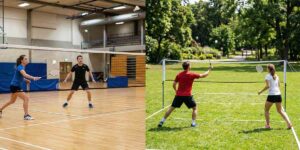
Badminton is inherently a social game. Even at its most solitary — practicing against a wall or playing singles — it typically happens in a shared space alongside other players. Doubles play, which is very common at recreational level, requires real teamwork and communication. Club badminton, which is accessible in most towns in many countries, creates a regular social gathering around shared activity. The friendships formed through weekly court time can be some of the most durable and sustaining social connections in a person’s life.
The sport is also notably inclusive. Badminton can be played by people of a very wide age range, and the doubles format allows players of different ability levels to compete together in a satisfying way. This inclusivity means that badminton can sustain social connections across generations and across different stages of physical capability.
9. Diabetes Prevention and Blood Sugar Management
Type 2 diabetes is one of the fastest-growing health problems in the world, and physical inactivity is one of its most significant risk factors. The kind of sustained moderate-intensity exercise that badminton provides plays a direct role in improving insulin sensitivity — the efficiency with which the body’s cells respond to insulin and absorb glucose from the bloodstream. Poor insulin sensitivity is the underlying mechanism in type 2 diabetes, and exercise is one of the most effective tools for improving it.
For people who already have type 2 diabetes or who are at high risk due to weight or family history, regular badminton play can make a measurable difference to blood sugar control. The muscles at work during a match are large calorie consumers, and during exercise they draw on glucose from the bloodstream directly — temporarily lowering blood sugar without requiring insulin. This effect persists after the session ends, as the muscles replenish their glycogen stores. Incorporating regular badminton into a lifestyle alongside sensible eating can be a powerful strategy for diabetes management and prevention.
10. Better Sleep Quality
Sleep quality is closely linked to physical health in ways that are still being fully mapped by researchers, but the broad picture is clear: good sleep supports immune function, hormone regulation, memory consolidation, and mood, while chronic poor sleep is associated with increased risk of obesity, cardiovascular disease, and depression. Regular physical exercise is one of the most reliably effective interventions for improving sleep quality, and badminton is no exception.
The physical fatigue produced by a badminton session promotes deeper and more restorative sleep. The reduction in stress hormones achieved through exercise also helps the nervous system move into the parasympathetic state that is needed for good sleep onset. Regular players commonly report that they fall asleep faster and wake feeling more refreshed on days they have played. Over time, this improvement in sleep quality creates a positive reinforcing cycle — better sleep supports recovery, energy, and motivation to keep playing.
11. Longevity: Playing for a Longer Life
In 2018, a large Danish cohort study published in the Mayo Clinic Proceedings set out to identify which sports were most strongly associated with increased life expectancy. The findings made headlines: racket sports topped the list, associated with an additional 6.2 years of life compared to a sedentary lifestyle. Badminton, as one of the most widely played racket sports globally, was included in this category.
The researchers hypothesised that the longevity advantage of racket sports came not just from the physical exercise itself, but from the combination of cardiovascular conditioning, muscle strengthening, cognitive engagement, and social interaction that these sports provide. No single factor explained the benefit — it was the whole package working together.
This finding reinforces something that physicians and public health researchers have been saying for years: the best form of exercise is one that a person actually does consistently over years and decades. Badminton, because it is genuinely enjoyable, socially engaging, accessible at low cost, and playable across a very wide age range, has qualities that make it particularly likely to sustain long-term participation.
12. Accessible and Low-Cost
One aspect of badminton that is easy to overlook when discussing health benefits is its accessibility. A racket does not cost much, shuttlecocks are inexpensive, a net can be set up in a garden or public park, and many community sports centres offer court bookings at modest prices. This low barrier to entry means that the health benefits of badminton are available to a broad cross-section of society, not just those who can afford expensive gym memberships or specialised equipment.
The sport also has a low minimum requirement for skill. A complete beginner can get a decent workout in their first session without mastering technique, and the learning curve is enjoyable enough that most people who try badminton want to come back. As skill develops, the quality of the workout and the competitive challenge naturally increase, keeping the sport engaging over many years.
Final Thoughts
Badminton occupies a rare position among recreational sports. It is demanding enough to produce serious health benefits across the cardiovascular, musculoskeletal, metabolic, and neurological systems, yet it is enjoyable and accessible enough that people actually keep playing it. The combination of physical conditioning, cognitive stimulation, social connection, and stress relief that a regular game provides is difficult to replicate with any single form of structured exercise.
Whether you are a complete newcomer picking up a racket for the first time or a lapsed player thinking about getting back on the court, the evidence is firmly on the side of playing. The body that shows up consistently on that court over months and years tends to be stronger, leaner, more flexible, and more resistant to disease than the body that stays on the sofa. And the mind that comes with it tends to be sharper, calmer, and more socially connected.
Not bad for a sport played with a feathered cork and a lightweight racket.
| 🏸 Need Better Comfort & Performance? | 👉 Explore Top Picks from Amazon |
|---|---|
| Want better grip on court? | ⭐ Best Non-Marking Badminton Shoes |
| Just starting out? | Best Beginner Badminton Shoes |
| Carry gear like a pro? | Best Badminton Bags |
| Confused about string tension? | Best String Tension Guide + Top Strings |
| Need an all-in-one starter kit? | Portable Badminton Racket Sets |
| Protect your eyes during fast rallies? | Best Badminton Glasses |
| Upgrade your court style? | Comfortable Badminton Outfits |

Add comment