
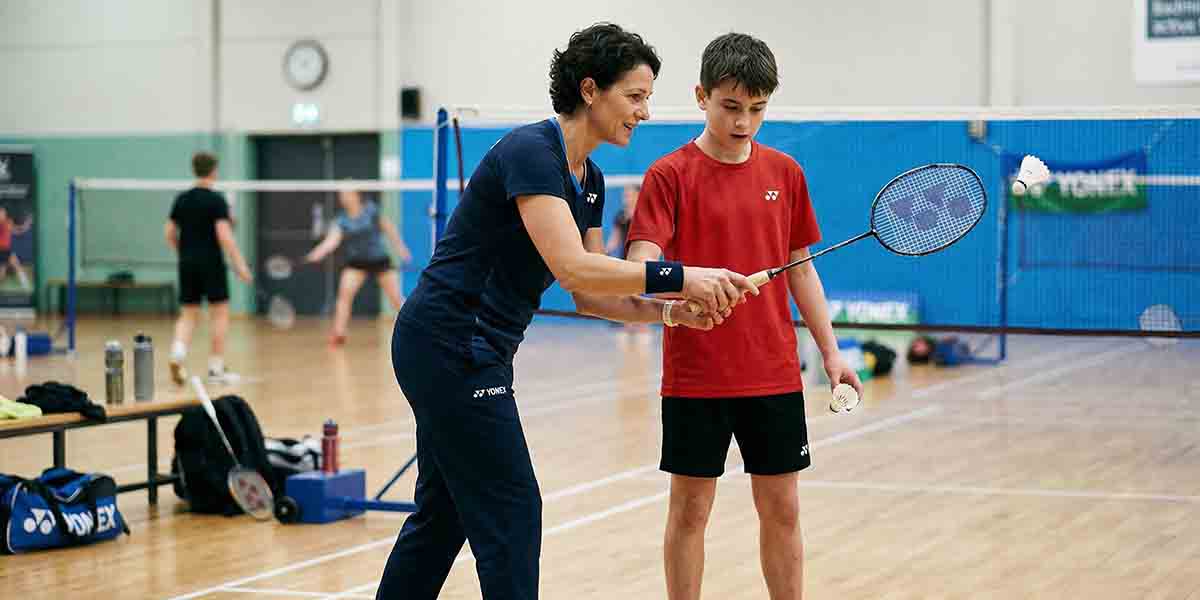
Finding the right badminton coach can completely change the direction of your game. Whether you are just picking up a racket for the first time or you have been competing for years and feel stuck in a rut, the person guiding your development matters more than most players realize.
A good coach does not just correct your footwork or tweak your smash technique — they shape how you think about the game, how you handle pressure, and how far you are willing to push yourself.
The problem is that badminton coaches are not all cut from the same cloth. Some are brilliant technicians who can spot a grip fault from across the court but struggle to explain it in a way that actually sticks. Others have a natural gift for motivation and player development but may not have the competitive background to push advanced players forward. Knowing what you need — and what to look for — before you commit your time and money is worth every minute of effort.
This guide walks you through everything you should consider when choosing a badminton coach, from credentials and teaching style to red flags that tell you to walk the other way.
Start by Getting Clear on Your Own Goals
Before you start scrolling through coaching profiles or asking around at your local club, spend a few minutes thinking about what you actually want from coaching. This sounds obvious, but many players skip this step and end up with a coach who is a poor fit simply because both parties were unclear about expectations from the start.
Are you a complete beginner who just wants to learn the basics and enjoy some social badminton on weekends? Or are you a club player who has hit a ceiling and wants to start competing seriously? Maybe you are an experienced competitor preparing for a specific tournament and need someone to sharpen specific areas of your game. Each of these situations calls for a different type of coach.
Ask yourself the following before you begin your search:
- What is my current skill level, and where do I want to be in 6 to 12 months?
- Am I looking to compete, or is this mainly for fitness and enjoyment?
- How many sessions per week am I realistically able to commit to?
- Do I have a specific weakness — backhand, net play, footwork — that I want to address?
- Is my budget fixed, or do I have some flexibility for the right coach?
Having honest answers to these questions will make it far easier to filter out coaches who are not suited to your situation, and will help you have a productive first conversation with the ones who might be.
| 🎯 What Are You Looking For? | 👉 See Top Picks from Amazon |
|---|---|
| New to badminton? | ⭐ Best Beginner Rackets |
| Want powerful smashes? | ⭐ Best Head Heavy Rackets |
| Play aggressively? | Best Attacking Rackets |
| Prefer ultra-light rackets? | Best Lightweight Yonex Rackets |
| Curious what pros use? | Professional Players’ Rackets |
| Want premium gear? | Most Expensive Badminton Rackets |
| Loyal to Yonex Voltric? | Best Yonex Voltric Series |
Look at Qualifications, but Do Not Stop There
Coaching certifications matter, but they tell only part of the story. In most countries, badminton coaches are certified through the national federation or a recognised sports coaching body. In India, for example, the Badminton Association of India (BAI) runs structured coaching courses. In the UK, Badminton England oversees coach education. In the United States, USA Badminton works alongside general sports coaching frameworks.
A coach who has completed a Level 1 or Level 2 certification has at least demonstrated a foundational understanding of the sport and its teaching principles. Higher levels typically involve more detailed study of biomechanics, player development, and competition preparation. If a coach cannot tell you anything about their training background or gets vague when you ask, that is worth noting.
That said, some outstanding coaches came up through the sport without formal certification — particularly older coaches who built their expertise through years of competitive experience and on-court training. Playing history and certification together paint a clearer picture than either one alone. A former national or state-level player who has also gone through coaching education is likely a strong combination. Someone with no playing background and no coaching qualifications is a much harder sell.
Also check whether the coach holds a current first aid or safeguarding certificate if you are a minor or will be training alongside juniors. Any reputable coach working with young players should have these as standard.
Evaluate Their Experience with Players Like You
A coach who has spent the last decade working with junior elite players may not be the best choice for a 45-year-old who wants to improve their doubles game. Conversely, a recreational coaching specialist may find themselves out of their depth with a state-level teenager pushing for national selection.
When you speak to a potential coach, ask specifically about the types of players they have worked with most. Do they have experience with your age group? Have they coached players at roughly your current level? What results have their players achieved? Have any of them gone on to compete at higher levels if that is your goal?
A good coach will be straightforward about who they work best with. If someone enthusiastically claims to be perfect for all types of players at every level, be cautious. Great coaches tend to know their sweet spot.
Watch Them Coach Before Committing
If at all possible, watch a potential coach in action before you sign up for sessions. Ask if you can observe a group session or even stand courtside during part of a training block. Most confident, established coaches will have no issue with this. If someone is reluctant to let you observe their work, it is fair to wonder why.
While watching, pay attention to these things:
- How do they communicate corrections — are they patient, clear, and constructive, or dismissive and short-tempered?
- Do players seem to enjoy the session, or does the atmosphere feel tense and joyless?
- Are drills well-organised with clear purpose, or does the session feel aimless?
- Does the coach demonstrate techniques themselves, or only describe them verbally?
- Do they pay attention to all players in a group, or focus disproportionately on the strongest ones?
You can learn a great deal from a single session of observation. Trust your instincts. If the energy and environment feel right, that is a meaningful signal.
Assess Their Communication Style
Badminton is a fast, technical sport. The ability to communicate corrections clearly and concisely — both during and after a rally — is one of the most important skills a coach can have. A technically brilliant former player who cannot explain what they know is far less useful than a slightly less decorated coach who can break down footwork patterns or shuttle trajectory in a way that genuinely lands.
Pay close attention during any trial session or initial consultation to whether the coach listens as well as they talk. Do they ask questions about what you are finding difficult? Do they check for understanding after explaining something? Do they adapt their language if you look confused? These are signs of a coach who sees teaching as a two-way process.
Also consider your own learning style. Some players respond best to detailed technical breakdowns. Others need encouragement and energy to stay motivated. Some like to be pushed hard; others shut down when they feel criticised. The best coaching relationship is one where the coach’s natural style broadly matches how you learn — or where they are skilled enough to flex their approach to suit you.
Ask About Their Training Philosophy
Every good coach has a coaching philosophy, even if they do not call it that. Ask them directly: “How do you typically structure a player’s development?” or “What do you focus on in the first few months with a new player?” Their answer will tell you a lot about how they think.
Some coaches prioritise technical fundamentals above all else and will spend months rebuilding a player’s grip or stance before moving on to tactical work. This is not a bad approach — strong fundamentals compound over time — but it requires patience and trust. Other coaches prefer to develop all areas concurrently, weaving technique, tactics, fitness, and match play together from early on.
Neither approach is universally right. What matters is that the philosophy makes sense to you and feels aligned with your goals. If a coach cannot articulate how they plan to develop you, or if their answer sounds like they have not thought about it before, that is worth taking seriously.
Also ask how they measure progress. A coach who tracks specific performance metrics, watches match footage with their players, or sets clear short and medium-term goals is likely to take your development more seriously than one who runs sessions by feel alone.
Consider the Practical Factors
Even a wonderful coach is no use to you if the logistics do not work. Before you get too invested in a particular name, run through the practical side of things honestly.
Location and Schedule
How far are you willing to travel for coaching? A 20-minute drive twice a week is manageable for most people. An hour each way quickly becomes a barrier, especially if you have work, school, or family commitments. Make sure the coach’s available training slots actually fit around your life. An ideal arrangement that constantly clashes with your schedule will not last.
Cost and Value
Coaching fees vary enormously depending on the coach’s background, the region you are in, and whether sessions are individual or group-based. Individual sessions with a high-level coach in a major city can be significantly more expensive than group sessions at a local club. Neither model is inherently better — it depends on what you need and what you can sustain.
Be honest with yourself about what you can afford in the long run. Sporadic coaching sessions because you overcommitted financially will deliver far less than consistent, affordable sessions with a slightly less prestigious coach. Consistency matters more than prestige at most levels.
Speak to Their Current and Former Players
References matter in coaching just as they do in any professional context. If you have the opportunity, speak to players who have trained with the coach you are considering. Ask them what they found most valuable, what the coach is like when a player is struggling, and whether they felt their development was taken seriously.
Pay particular attention to what former players say, especially those who left. Understanding why someone moved on — and whether those reasons would also apply to you — is often more revealing than speaking only to current, enthusiastic students.
Most coaches with nothing to hide will willingly connect you with a few players who can speak to their work. Reluctance to do this, or an inability to produce a single reference, should give you pause.
Red Flags to Watch Out For
Over time, a number of consistent warning signs emerge when evaluating coaches. The following should prompt serious caution:
- Guarantees rapid improvement or unrealistic outcomes in a short timeframe.
- Dismisses your current weaknesses as unchangeable or downplays your potential without evidence.
- Lacks any clear structure to their sessions, relying entirely on improvised drills.
- Speaks negatively about your previous coaches or other players without good reason.
- Is unwilling to explain the reason behind a drill or correction when asked.
- Has no track record of player development beyond vague claims.
- Makes you feel embarrassed or humiliated as a coaching method.
- Pushes you to commit to long-term packages or large upfront payments before you have had any sessions.
None of these points means a coach is worthless, but any combination of them is worth weighing carefully before you invest your time and money.
Try a Trial Session First
A trial session is worth more than any amount of research. Most coaches are happy to offer a single introductory session at a standard or reduced rate before you commit to a package. Take advantage of this whenever it is available.
During the trial, pay attention to how you feel on court. Are you learning something? Does the feedback feel useful and actionable? Do you feel comfortable enough to ask questions when you are unsure? Do you leave the session energised and motivated, or drained and deflated?
After the trial, give yourself a day or two before deciding. Reflect on what you gained from it and whether the coach seemed genuinely interested in your development. A good trial session often makes the decision easy.
The Relationship Matters as Much as the Résumé
All the credentials, experience, and structured sessions in the world will not fully work if the personal dynamic between you and your coach is off. Coaching is a relationship built on trust, honesty, and mutual respect. You need to feel comfortable enough to admit when you do not understand something, to share your frustrations, and to hear difficult feedback without shutting down.
This is especially true for younger players, who need to feel psychologically safe to take risks and make mistakes on court without fear of harsh judgment. But it applies equally to adults. If you dread going to sessions, if you feel belittled or ignored, the coaching will not stick regardless of how technically sound the instruction is.
Look for a coach who genuinely seems interested in you as a player — not just going through the motions of a session. The ones who remember what you struggled with last week, who follow up on how a match went, and who celebrate your small improvements alongside the big ones are the coaches who tend to produce lasting results.
Final Thoughts
Choosing a badminton coach is not a decision to rush. Take your time, do your homework, and trust your judgment as much as the facts in front of you. The right coach for someone else may not be the right coach for you — and that is completely fine. What matters is finding someone who understands where you are now, believes in where you can go, and has the knowledge and the people skills to help you get there.
Give any new coaching relationship a fair amount of time before drawing conclusions. Real improvement in badminton rarely happens overnight. Movement patterns need to be rebuilt, habits need to be unlearned, and new skills need to be pressure-tested in competition before they fully take root. Three to six months is usually a reasonable window to assess whether a coaching arrangement is genuinely working.
And if after giving it a genuine chance you feel the fit is not right, do not be afraid to make a change. Good coaches understand that not every relationship is the right one, and a respectful conversation about moving on is far better than grinding through sessions that are no longer serving your development.
The best investment you can make in your badminton is finding someone who makes you better — not just at the sport, but at the way you approach learning, competition, and growth. That kind of coach is worth searching for.
| 🏸 Need Better Comfort & Performance? | 👉 Explore Top Picks from Amazon |
|---|---|
| Want better grip on court? | ⭐ Best Non-Marking Badminton Shoes |
| Just starting out? | Best Beginner Badminton Shoes |
| Carry gear like a pro? | Best Badminton Bags |
| Confused about string tension? | Best String Tension Guide + Top Strings |
| Need an all-in-one starter kit? | Portable Badminton Racket Sets |
| Protect your eyes during fast rallies? | Best Badminton Glasses |
| Upgrade your court style? | Comfortable Badminton Outfits |




Add comment