
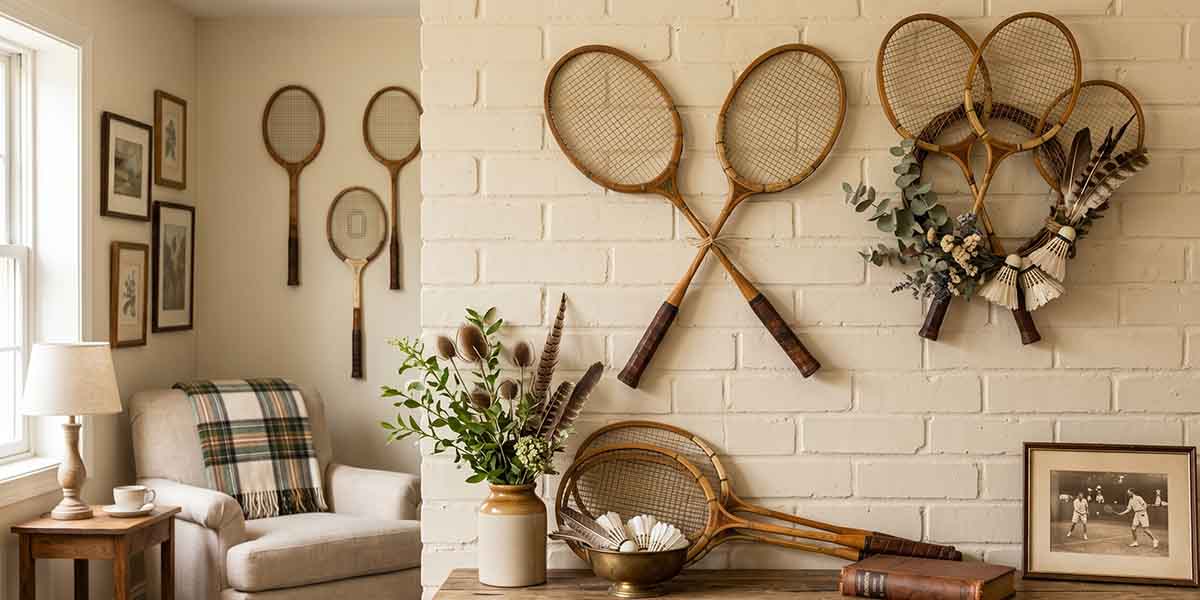
There is something deeply satisfying about giving old things a second life. A wooden-framed badminton racket that once saw summer afternoons in the backyard or competitive matches at the local club carries a kind of quiet character that modern objects rarely possess. The worn grip tape, the faded strings, the patina on the frame — these details tell a story. And when placed thoughtfully in a home, that story becomes part of your interior.
Repurposing vintage badminton rackets as décor is not a new concept, but it has seen a real resurgence as more people lean toward collected, personal interiors over store-bought arrangements. Whether you have a single racket passed down through family or a small stash picked up at flea markets and estate sales, this guide walks you through practical, creative, and genuinely attractive ways to use them.
Why Vintage Badminton Rackets Work So Well as Décor
Before getting into specific ideas, it helps to understand what makes these objects so visually pleasing. Vintage badminton rackets — particularly those made between the 1920s and 1970s — were crafted from ash, beech, or steel. Many had oval or isometric frames that are genuinely elegant in their proportions. The gut or nylon strings created an open grid pattern that adds lightness and texture without visual clutter.
That open grid is particularly useful in décor. It allows light to pass through, it gives you a surface to hang or weave things into, and it creates depth on a wall without making a space feel heavy. Compare that to, say, a vintage tennis racket, which tends to be larger and harder to cluster, or an old cricket bat, which is purely flat. The badminton racket hits a sweet spot between decorative and functional.
| 🎯 What Are You Looking For? | 👉 See Top Picks from Amazon |
|---|---|
| New to badminton? | ⭐ Best Beginner Rackets |
| Want powerful smashes? | ⭐ Best Head Heavy Rackets |
| Play aggressively? | Best Attacking Rackets |
| Prefer ultra-light rackets? | Best Lightweight Yonex Rackets |
| Curious what pros use? | Professional Players’ Rackets |
| Want premium gear? | Most Expensive Badminton Rackets |
| Loyal to Yonex Voltric? | Best Yonex Voltric Series |
Wall Displays: The Most Versatile Approach
Mounting rackets on the wall is the most straightforward use, but there is a lot of room to make it look intentional rather than like a storage solution. The difference between a gallery wall and a mess of hung objects usually comes down to spacing, framing, and grouping.
Solo Statement Piece
A single racket in excellent condition, hung horizontally or at a slight angle above a console table or bench, can anchor a hallway or entryway with minimal effort. Choose a racket with visible character — slight fading, a nicely aged handle, original press still attached — and let it speak without competition. Pair it with a small potted plant and one framed photograph for a composed, unhurried look.
Grouped Arrangements
Three to five rackets arranged as a cluster can form a proper focal point on a larger wall. The key is variety without chaos. Mix wooden and steel frames if you have them. Vary the angles slightly — some vertical, some diagonal. Leave generous space between each piece so the eye can rest. A rough rule: the gap between rackets should be at least half the width of the racket head.
You can also mix rackets with other flat objects — vintage sports photographs, pressed botanical prints, small mirrors, or pennants. The trick is keeping the overall palette tight. Dark wood frames and cream-colored prints alongside natural wooden rackets will look deliberate. Bright colors and clashing styles will look like an accident.
Grid or Row Arrangements
If you have a matched set — say, six identical or near-identical rackets from the same era — a symmetrical grid or straight horizontal row creates a graphic, almost architectural effect. This works best in rooms with clean lines: a modern kitchen, a minimalist study, or a spa-like bathroom. Mount them at equal intervals and at the exact same height for maximum impact.
Using the Strings as a Feature
The strung face of a badminton racket is not just background — it is an opportunity. The grid pattern created by the strings can hold, frame, or display other objects in ways that are both functional and attractive.
Photo Display
Weave small photographs, Polaroids, or printed cards between the strings. This turns the racket into a memory board of sorts — personal, textured, and genuinely decorative. Small black-and-white prints work especially well against natural gut or aged nylon strings. Attach them with small wooden clothespins for an easy way to swap images in and out.
Dried Flowers and Botanicals
Dried flowers, seedheads, or small sprigs of eucalyptus tucked into and around the strings add softness to what could otherwise feel like a hard, sporty object. This combination — structured wooden frame, delicate dried botanicals — has a real quiet beauty to it. Hang the racket vertically and let a few stems trail downward below the frame for a loose, natural effect.
Small Tags, Charms, and Mementos
Tie small objects to the strings using fine twine or narrow ribbon. Luggage tags with handwritten notes, small brass charms, vintage keys, or tiny framed portraits. This creates a layered, gathered quality that feels more like a curated collection than a single decorative piece. It works particularly well in a child’s room or a home library.
Mirror and Glass Arrangements
One of the more unusual — and genuinely striking — applications involves removing the strings from a racket and replacing them with a shaped mirror or a piece of glass. The racket frame becomes the surround, and the result is a wall mirror with real character.
This takes a bit of work. You will need a mirror cut to fit the interior shape of the racket head — most local glass shops can do this if you bring the frame in — and a clear epoxy or mirror adhesive to fix it in place. The handle provides a ready-made hanging mechanism. The finished piece looks handmade in the best way: considered, one of a kind, and far more interesting than anything you could buy off the shelf.
For a more playful variation, use a piece of colored or textured glass instead of a mirror. Amber glass catches light in warm, honey-toned ways that suit a kitchen or dining area. Frosted glass gives a softer, more muted effect suited to a bathroom or bedroom.
Lighting Ideas
Rackets and light work together in unexpected ways. Because the string grid is open, light passes through it and creates interesting shadow patterns on the walls behind. This quality can be exploited deliberately.
String Lights Through the Frame
Weave a short run of warm LED string lights through the strings of the racket. This turns the object into a soft light source — not functional reading light, but the kind of ambient glow that makes a corner feel intentional. Use very fine copper-wire lights rather than chunky plug-in versions for a cleaner look. Battery-operated lights make the installation far simpler.
Pendant Lamp Shade
A more involved project involves mounting two or three rackets around a central pendant fitting to create a hanging lamp shade. The open strings diffuse the light in a dappled, patterned way. This works best in a room where the lamp is hung fairly low — over a dining table or a workspace — so the shadow effect lands where it can be appreciated. Use low-wattage bulbs to avoid the lamp looking harsh.
Functional Uses Around the Home
Not every repurposing idea needs to be purely aesthetic. Vintage rackets can be made genuinely useful in ways that also look good.
Kitchen Pot Rack
Hang two or three rackets horizontally from a ceiling-mounted rail or from a length of copper pipe, and then use S-hooks through the strings to hang pots, pans, and utensils. The visual effect is warm and slightly industrial — the aged wood of the rackets against the bright metal of cookware creates a contrast that feels lived-in rather than staged. Make sure the rackets you use for this are structurally sound, and use appropriate fixings for the weight you are hanging.
Jewelry and Accessories Organizer
Hung on the wall of a bedroom or dressing area, a vintage racket makes an excellent organizer for necklaces, bracelets, and earrings. Hook necklaces over individual strings, weave thin bracelets through the grid, and clip earrings directly to the strings using small clips. The result is both practical and attractive — your jewelry is visible, untangled, and on display.
Herb Garden Holder
In a sunny kitchen or on a covered porch, you can attach small terracotta pots or glass jars to the strings of a racket using wire or twine, then plant herbs directly into them. Mount the racket on the wall at a slight outward angle so the pots sit level. Basil, thyme, and mint grow well in small containers and look beautiful against aged wood framing.
Room-by-Room Placement Ideas
The best placement depends on the room and the mood you are after. Here is how vintage rackets can work in different spaces.
Entryway and Hallway
This is the easiest and most natural home for a vintage racket. The long, narrow proportions of most hallways suit vertical or diagonal hanging. A single well-chosen racket above a coat hook rail or hall table says something about the household without trying too hard. It sets a tone — curious, collected, unhurried — before anyone has stepped further inside.
Living Room
In the main sitting room, rackets can be incorporated into a gallery wall or used to balance other large decorative objects. They work particularly well above a bookshelf, where the mix of intellectual and physical references feels natural. Avoid placing them directly above a sofa unless you are certain the hanging is absolutely secure.
Bedroom
A single racket above the headboard or on a side wall adds character without making the room feel busy. Keep the rest of the walls calmer if you are doing this. A racket with dried flowers woven through the strings suits the quieter atmosphere of a bedroom better than a bare frame would.
Home Office or Study
A grouping of rackets in a study creates the feeling of a gentleman’s library or a collector’s room. Mix them with framed maps, old sporting prints, or globe paperweights. The effect is scholarly and slightly eccentric — which is rarely wrong for a working space.
Bathroom
A small or children’s bathroom benefits from the unexpected charm of a single racket. Hang it on the back of the door or above a towel rail. Keep the rest of the room uncluttered so the object has room to register. Humid environments can affect older wood, so check the condition of the finish and apply a protective coat if needed.
Preparing Vintage Rackets for Display
How much preparation a racket needs depends on its condition and what you want the finished display to look like. Some people prefer the untouched, genuinely aged look — every crack, stain, and faded label kept exactly as found. Others prefer to clean and restore. Neither is wrong. Here is what to consider.
Cleaning Without Stripping
A light clean with a barely damp cloth will remove surface dust and grime without affecting the patina. For wood frames, a small amount of linseed oil or beeswax polish will bring back some warmth and protect the surface without making it look newly refinished. Avoid varnish unless the frame is in very poor condition — a shiny coat destroys the vintage quality immediately.
Dealing with Broken Strings
Broken or missing strings are a decision point. A racket with a few broken strings still looks good on a wall and carries the authenticity of genuine age. A racket with most of the strings missing or completely cut away is better suited to a project that does not rely on the string surface — the mirror project, for instance, or the pendant lamp. If you want the string grid intact for photo display or botanical weaving, look for rackets with the majority of strings still in place.
Restringing
Restringing a vintage racket with natural gut gives it a fresh look while keeping the vintage feel. This is a good option if the frame is sound but the strings are in poor shape. Synthetic strings are cheaper and more durable, but natural gut has a warmth and slight irregularity that looks more appropriate on older frames. A local sports shop or string specialist can do this for you.
Where to Find Vintage Badminton Rackets
Part of the pleasure in this kind of décor is the hunt. Vintage badminton rackets are not rare, but finding ones in the right condition and at a fair price takes a little patience.
- Flea markets and car boot sales are the most reliable source. Sellers often price them low because they do not know there is demand, and you can inspect them closely before buying.
- Estate sales and house clearances frequently turn up sporting equipment from the mid-twentieth century. If you are looking for matched pairs or sets, this is often your best chance.
- Online platforms — eBay, Etsy, Facebook Marketplace — have a wider selection but you are buying blind when it comes to condition. Ask for detailed photographs of the frame joints, the strings, and the handle before committing.
- Charity shops and thrift stores price these low and turn them over quickly. If you visit regularly, you will find good examples over time.
- Sports clubs that have been around for several decades sometimes clear out old equipment. A polite enquiry can occasionally turn up a windfall.
Styling Notes: What Works and What Does Not
A few honest notes from people who have done this for a while:
- Restraint is the key: One or two well-placed rackets will always look better than a wall covered in them. More is not more in this case.
- Mix materials, not eras: Combining wooden rackets from the 1950s with steel-frame rackets from the 1970s can work, but combining them with modern graphite frames looks jarring. Keep things within a roughly consistent period.
- Let the object breathe: Crowding a racket with too many competing decorative objects around it diminishes the impact of both. Give each piece enough wall space to register on its own terms.
- Color harmony matters: The warm tones of aged wood — honey, amber, tobacco — work best against walls in cream, linen, warm grey, or deep green. Bright white walls can make them look stark. Dark walls can make them disappear unless they are lit.
- Authenticity is the point: Avoid painting or heavily altering vintage rackets. The whole value of using these objects is their genuine history. Once you paint them gold or wrap them in macramé, they become craft projects rather than found objects.
A Closing Thought
Good décor comes from objects that have been chosen with some care and placed with some thought. A vintage badminton racket checks both boxes. It is an object with real history, real craftsmanship, and real visual quality — and it has not yet been done to death in the way that, say, old ladders and crates have been.
Whether you hang a single racket above a hall table, weave photographs through the strings, turn the frame into a mirror, or build an entire corner around a collection of them, the result will be personal in a way that readymade décor rarely is. And that, more than anything, is what makes it worth doing.
| 🏸 Need Better Comfort & Performance? | 👉 Explore Top Picks from Amazon |
|---|---|
| Want better grip on court? | ⭐ Best Non-Marking Badminton Shoes |
| Just starting out? | Best Beginner Badminton Shoes |
| Carry gear like a pro? | Best Badminton Bags |
| Confused about string tension? | Best String Tension Guide + Top Strings |
| Need an all-in-one starter kit? | Portable Badminton Racket Sets |
| Protect your eyes during fast rallies? | Best Badminton Glasses |
| Upgrade your court style? | Comfortable Badminton Outfits |






Add comment