
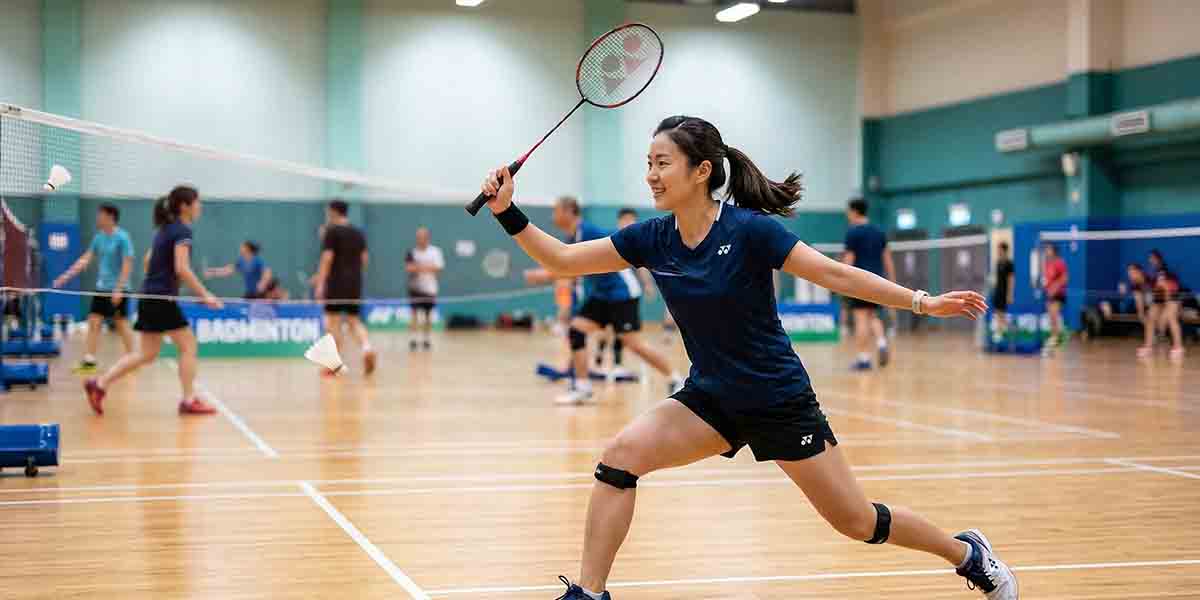
Most players walk onto the badminton court, hit a few casual shots to test the shuttle, and call that a warm-up. Then they wonder why their shoulder feels stiff by the second game or why they pulled a muscle during a routine lunge.
The truth is, skipping a proper warm-up is one of the most common mistakes recreational and competitive players make – and it costs them in performance and eventually in injuries.
The good news is that you do not need a complicated 30-minute ritual to get your body ready. A focused, well-structured 10-minute warm-up is enough to activate the right muscles, loosen the joints, raise your core temperature, and sharpen your reaction time before you even touch a racket. This guide breaks down exactly how to do that, step by step.
Why Warming Up Before Badminton Actually Matters
Badminton is deceptively demanding. From the outside, it looks like a light game of hitting a shuttlecock back and forth. But any player who has competed seriously knows that a typical rally involves explosive sprints, rapid direction changes, deep lunges, overhead smashes, and jumps — sometimes all within a few seconds. Your muscles, tendons, and cardiovascular system need time to shift from their resting state into something capable of handling that load.
A proper warm-up does several things at once. It raises your muscle temperature, which makes the fibers contract more efficiently and reduces the risk of strains. It increases blood flow to working muscles, delivering oxygen and nutrients while clearing waste products. It lubricates your joints, particularly the knees, ankles, hips, and shoulders — all of which take a beating in badminton. And perhaps less obviously, it primes your nervous system, improving coordination and reaction speed before competition.
Skipping this preparation means starting a match with cold, stiff muscles that are more prone to injury and far less responsive than they should be. The ten minutes you invest before play is genuinely one of the highest-return habits you can build.
| 🎯 What Are You Looking For? | 👉 See Top Picks from Amazon |
|---|---|
| New to badminton? | ⭐ Best Beginner Rackets |
| Want powerful smashes? | ⭐ Best Head Heavy Rackets |
| Play aggressively? | Best Attacking Rackets |
| Prefer ultra-light rackets? | Best Lightweight Yonex Rackets |
| Curious what pros use? | Professional Players’ Rackets |
| Want premium gear? | Most Expensive Badminton Rackets |
| Loyal to Yonex Voltric? | Best Yonex Voltric Series |
The Structure of an Effective 10-Minute Warm-Up
The routine below is divided into three phases. The first phase gets your heart rate up and your blood moving. The second phase targets mobility and joint health. The third phase activates the specific muscles badminton relies on and finishes with some light on-court movement. Follow the phases in order — do not skip ahead to the dynamic stretches before you have raised your body temperature, because stretching cold muscles is counterproductive and can cause small tears.
Phase 1: General Cardiovascular Activation (Minutes 1–3)
The goal of this phase is simple: get warm. You want a light sweat forming and your breathing rate to increase noticeably. Nothing strenuous, just enough to shift your body out of rest mode.
Light Jogging or Skipping (60–90 seconds)
Start with a brisk jog around the court or on the spot if space is limited. Keep the pace easy — you should be able to hold a conversation. If you have a skipping rope nearby, two to three minutes of light skipping is excellent at this stage because it also warms up the calves and ankles, which are heavily involved in badminton footwork.
High Knees and Butt Kicks (30–45 seconds each)
Transition from jogging into high knees — lifting each knee up toward your chest with a slight exaggeration — to start engaging your hip flexors and core. Follow this with butt kicks, where you jog while flicking your heels up toward your glutes. Both exercises activate the muscle groups responsible for the explosive movement patterns in badminton without putting any real strain on the joints.
Side Shuffles (30 seconds)
Finish the cardiovascular phase with lateral shuffles across the court baseline. Keep your knees slightly bent and your weight centered, mimicking the ready position you use during a rally. This specifically warms up the inner and outer thigh muscles that are responsible for lateral movement — a badminton fundamental that gets neglected in most generic warm-up routines.
Phase 2: Dynamic Mobility and Joint Preparation (Minutes 3–7)
Now that your body temperature is elevated, this is the right time to work on mobility. The key word here is dynamic — you are moving through a range of motion, not holding static stretches. Static stretching before activity has been shown to temporarily reduce muscle strength and explosiveness, so save the long held stretches for after your session.
Shoulder Circles and Arm Swings (45 seconds)
Stand with your feet shoulder-width apart and begin rolling both shoulders in large, slow circles — forward first, then backward. After ten rotations in each direction, extend your arms out to the sides and swing them across your chest in large horizontal arcs. This loosens the rotator cuff, opens up the chest, and prepares the shoulder joint for the overhead and side-arm strokes you will be making throughout the game. Do not rush this exercise. Players who skip shoulder preparation are far more susceptible to the shoulder pain that eventually sidelines many recreational badminton enthusiasts.
Hip Circles (30 seconds)
Place your hands on your hips and rotate them in wide circles, as if you are using a hula hoop. Go clockwise for 15 seconds, then counterclockwise. The hip joint handles enormous torque during badminton lunges and split steps, and loosening it with circular movement before play can prevent the groin strains and hip flexor issues that players often blame on ‘just getting older.’
Leg Swings — Front to Back and Side to Side (30–45 seconds per leg)
Stand next to a wall or net post for balance and swing one leg forward and backward in a controlled arc, gradually increasing the range of motion over the first few swings. Then turn 90 degrees and swing the same leg across your body and out to the side. Repeat on the other leg. This mobilizes the hip flexors, hamstrings, and adductors — the trio of muscle groups most commonly strained in badminton players. Keep the movement smooth and let momentum do the work rather than forcing the leg to an extreme range.
Ankle Rolls and Calf Raises (30 seconds)
Lift one foot slightly off the ground and rotate the ankle in full circles, then switch directions and repeat on the other side. Follow with 15 to 20 slow calf raises — rising up on your toes and lowering back down — to warm up the Achilles tendon and calf muscles. Ankle sprains are the single most common badminton injury, and this small investment in ankle preparation genuinely reduces that risk.
Wrist Rotations and Finger Stretches (20 seconds)
Extend both arms in front of you and rotate your wrists in circles, then flex and extend the fingers a few times. The wrist joint does a lot of fine work during net play and net kills, and this brief attention to it helps prevent the repetitive strain that builds up over long sessions.
Phase 3: Sport-Specific Activation and Court Movement (Minutes 7–10)
The final phase bridges the gap between your warm-up and the actual game. Here you start mimicking the movement patterns of badminton, ideally with a racket in hand, so that by the time you begin your match your body already knows exactly what is expected of it.
Shadow Footwork (60 seconds)
Shadow footwork is one of the best exercises in badminton training, and it works just as well as a warm-up tool. Stand in the center of the court in the ready position and move to each of the six corners of the court — front left, front right, mid left, mid right, rear left, rear right — before recovering to the center each time. Move at about 60 percent of your full speed. The idea is not to exhaust yourself but to rehearse the split step, the lunge, and the recovery so that your nervous system is already firing those patterns when the match begins.
Gentle Racket Swings and Stroke Rehearsal (60 seconds)
Pick up your racket and go through your main strokes in slow motion — a forehand clear, a backhand push, an overhead smash, and a net drop. You are not trying to hit a shuttle at this point; you are rehearsing the movement patterns and letting your shoulder, elbow, and wrist get comfortable with the racket weight and swing arc. This is especially useful if you have been sitting at a desk all day and your body needs an extra reminder that it is about to do something athletic.
Light Rally with a Partner (60 seconds)
If you have a partner available, finish with a minute of gentle feeding and hitting. Start at the net with easy net exchanges, then gradually move to midcourt clears, keeping everything at low pace and low intensity. This light on-court play ties everything together — your elevated heart rate, your loose joints, your primed muscles — and gives you the feel of the shuttle before you start playing for real.
Quick Reference: The Full 10-Minute Routine at a Glance
Phase 1 — Cardiovascular Activation (3 minutes):
- Light jogging or skipping — 60 to 90 seconds
- High knees — 30 to 45 seconds
- Butt kicks — 30 to 45 seconds
- Side shuffles — 30 seconds
Phase 2 — Dynamic Mobility (4 minutes):
- Shoulder circles and arm swings — 45 seconds
- Hip circles — 30 seconds
- Leg swings front and back, side to side — 60 to 90 seconds
- Ankle rolls and calf raises — 30 seconds
- Wrist rotations and finger stretches — 20 seconds
Phase 3 — Sport-Specific Activation (3 minutes):
- Shadow footwork at 60 percent intensity — 60 seconds
- Racket swing rehearsal without shuttle — 60 seconds
- Light rally with a partner — 60 seconds
Common Warm-Up Mistakes to Avoid
Holding static stretches before playing is probably the most widespread mistake. You will see players at every level doing long hamstring or quad stretches before a match, but research consistently shows this reduces the muscle’s ability to generate force in the short term. Static stretches belong at the end of your session, not the beginning.
Another common error is warming up too intensely. Some players treat the warm-up like a workout in itself and arrive at the match already fatigued. The purpose of a warm-up is preparation, not performance. Keep your effort level moderate — around a five or six out of ten — throughout.
Ignoring specific areas is another trap. Many players warm up their legs adequately but do very little for their shoulders, wrists, and ankles. In a sport with as many overhead movements and lateral cuts as badminton, these joints deserve equal attention.
Finally, rushing through the routine and completing it in two minutes defeats the purpose. Ten minutes is genuinely the minimum. If you are pressed for time, prioritize the cardiovascular phase and the dynamic mobility work over the sport-specific phase, but try not to cut below eight minutes total.
Adjusting the Routine for Different Situations
Cold weather or early mornings: When the temperature is low or you have just woken up, extend the cardiovascular phase by an additional two to three minutes. Your body takes longer to reach optimal temperature in cooler conditions, and muscles that feel warm to the touch can still be physiologically stiff.
If you have a known injury or tight area: Add specific attention to that joint in Phase 2. For example, a player with a history of knee problems should spend extra time on leg swings, quad activation exercises, and gentle squats before moving into footwork.
For competitive matches: Consider adding another two to three minutes of progressive shadow footwork and a short burst of higher-intensity movement in the final 60 seconds before stepping on court. This ensures your heart rate and alertness are at their peak when the first point begins.
For older players: The mobility work in Phase 2 deserves more time as you age, because joint range of motion decreases naturally over the years. Adding hip flexor stretches, thoracic rotations, and additional ankle work will make a noticeable difference in how freely you move during the match.
A Note on Cooling Down After Your Session
The warm-up gets a lot of attention, but a proper cool-down at the end of your session is equally important for long-term injury prevention and recovery. After your final game, spend five to ten minutes doing the static stretches that have no place before play — held quad stretches, calf stretches against the wall, a seated hamstring stretch, and overhead tricep and shoulder pulls.
Finish with some slow, deep breathing and light walking to bring your heart rate down gradually rather than stopping abruptly. This small habit, repeated consistently, makes an enormous difference in how your muscles recover overnight and how you feel during your next session.
Final Thoughts
A 10-minute warm-up is not a luxury reserved for elite players. It is basic preparation that any serious recreational player owes themselves. The routine above is designed to be practical and efficient — no special equipment, no extra space beyond what you already have on court, and no expertise required to follow it.
Once you make this warm-up a habit, two things will happen fairly quickly. First, you will notice that you feel better on court from the very first rally — sharper, more fluid, and less clunky in your footwork. Second, you will find that the little nagging aches and pains that seemed like an inevitable part of getting older or playing regularly start to occur less frequently.
Badminton is a sport you can play well into your 50s, 60s, and beyond — but only if your body holds up. How you treat it in the ten minutes before each match matters more than most players realize.
| 🏸 Need Better Comfort & Performance? | 👉 Explore Top Picks from Amazon |
|---|---|
| Want better grip on court? | ⭐ Best Non-Marking Badminton Shoes |
| Just starting out? | Best Beginner Badminton Shoes |
| Carry gear like a pro? | Best Badminton Bags |
| Confused about string tension? | Best String Tension Guide + Top Strings |
| Need an all-in-one starter kit? | Portable Badminton Racket Sets |
| Protect your eyes during fast rallies? | Best Badminton Glasses |
| Upgrade your court style? | Comfortable Badminton Outfits |



Add comment