
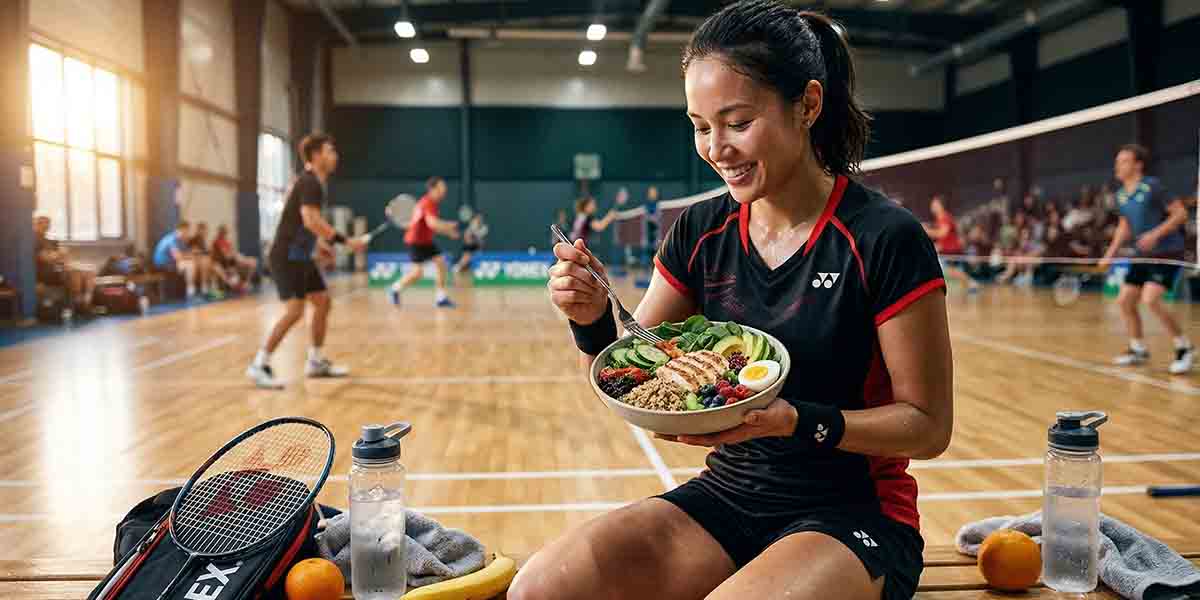
Why Nutrition Matters in Badminton
Badminton is one of the most physically demanding racket sports in the world. A single competitive match can last anywhere from 40 minutes to well over an hour, involving explosive sprints, rapid directional changes, jumping, and overhead striking — all repeated hundreds of times without warning. The sport taxes both the aerobic and anaerobic energy systems simultaneously, placing unique demands on the body that most people underestimate from the sideline.
Unlike sports where athletes move in predictable patterns, badminton requires constant reactive bursts. A shuttlecock can travel at speeds exceeding 400 km/h off a professional smash, meaning players must be ready to explode into movement at any split second. This unpredictability puts the nervous system and muscular system under sustained stress throughout every rally.
Given these physical demands, what you eat — and when you eat it — directly determines how well you play, how quickly you recover, and how consistently you can train. Many amateur players focus entirely on technique and footwork while ignoring the fuel that makes those skills possible. That is a mistake that costs games.
This guide covers everything a badminton player needs to know about nutrition, from the basic science of energy systems to practical meal planning for match days. Whether you are a weekend club player or training for state-level competition, the principles here apply across the board. The specifics of quantity may vary with your body size and training volume, but the fundamentals remain the same.
Understanding Energy Systems in Badminton
How Your Body Produces Energy During Play
The human body runs on adenosine triphosphate, commonly known as ATP. Every muscular contraction — from blinking to jumping — requires ATP. The problem is that the body can only store a tiny amount of ATP at any one time, so it must constantly regenerate it through three overlapping energy pathways.
In badminton, all three systems contribute at different moments within a single match, which is what makes nutrition for the sport so interesting and so important.
The Phosphocreatine System
This is your fastest energy source, firing up immediately when you launch into a sprint or explode into a jump smash. It requires no oxygen and produces energy almost instantaneously, but it burns out within 8 to 10 seconds. The creatine stores in your muscles replenish during brief rest periods between points and between games.
The Glycolytic System
When rallies extend beyond the phosphocreatine window, the body begins breaking down glucose and glycogen for fuel. This process is faster than aerobic metabolism but produces lactic acid as a byproduct. When lactate accumulates faster than the body can clear it, you feel that familiar burning sensation in the muscles and a general heaviness in the legs. This system is central to rallies lasting 10 to 60 seconds.
The Aerobic System
During the recovery periods between rallies, between games, and during lower-intensity exchanges, the body relies on aerobic metabolism. This system is efficient and sustainable but slower to produce ATP. Improving your aerobic base through training means you recover faster between high-intensity efforts — which directly translates to sustained performance in the third game when opponents start fading.
What This Means for Your Diet
Since glycogen — the stored form of glucose — is a primary fuel for the glycolytic system, and since that system does much of the heavy lifting during badminton play, carbohydrates must form the foundation of any badminton player’s diet. Fat and protein matter too, but carbohydrates are what get depleted during match play and what need to be systematically replenished.
| 🎯 What Are You Looking For? | 👉 See Top Picks from Amazon |
|---|---|
| New to badminton? | ⭐ Best Beginner Rackets |
| Want powerful smashes? | ⭐ Best Head Heavy Rackets |
| Play aggressively? | Best Attacking Rackets |
| Prefer ultra-light rackets? | Best Lightweight Yonex Rackets |
| Curious what pros use? | Professional Players’ Rackets |
| Want premium gear? | Most Expensive Badminton Rackets |
| Loyal to Yonex Voltric? | Best Yonex Voltric Series |
Macronutrients: The Building Blocks of Performance
Carbohydrates: Your Primary Fuel
Carbohydrates are broken down into glucose, which is either used immediately for energy or stored as glycogen in the liver and muscles. During a two-hour badminton session, glycogen stores can fall significantly. When they drop too low, players experience what runners call ‘hitting the wall’ — sudden fatigue, mental fog, and a noticeable drop in reaction time and power.
The amount of carbohydrate a badminton player needs depends on training volume and intensity. As a general guide:
- Light training days (1 hour or less): 3–5 grams of carbohydrate per kilogram of body weight
- Moderate training days (1–2 hours): 5–7 grams per kilogram
- Heavy training or competition days: 7–10 grams per kilogram
These figures may seem high to players coming from a low-carbohydrate background, but the sport’s intensity justifies them. Undereating carbohydrates consistently leads to glycogen depletion across training sessions, slower recovery, and diminished performance over time.
Best Carbohydrate Sources for Badminton Players
Not all carbohydrates behave the same way in the body. For daily training, focus on complex carbohydrates that release energy gradually and provide sustained fuel. For pre-match topping up, simpler carbohydrates that digest more quickly can be useful.
- Oats, brown rice, quinoa, and wholegrain pasta for sustained energy
- Sweet potatoes, regular potatoes, and root vegetables
- Fruit, particularly bananas, which also provide potassium
- Legumes such as lentils, chickpeas, and beans for combined carbohydrate and protein
- White rice and white bread in the 2–3 hours before a match for easier digestion
| Food | Carbohydrates (per 100g) | Best Used |
| White rice (cooked) | 28g | Pre-match meal |
| Brown rice (cooked) | 23g | Daily training |
| Oats (dry) | 66g | Breakfast / daily |
| Banana | 23g | Pre-match snack |
| Sweet potato (cooked) | 20g | Daily training |
| Wholegrain pasta (cooked) | 25g | Daily training |
| White bread | 49g | Pre-match, quick fuel |
| Dates | 75g | Mid-match, recovery |
Protein: Repair, Recovery, and Strength
While carbohydrates fuel performance, protein repairs the damage. Badminton involves significant eccentric muscle loading — particularly in the legs during lunging and landing from jumps — which causes microscopic muscle breakdown. Protein provides the amino acids needed to rebuild muscle fibers stronger than before. Without adequate protein, this repair process is compromised, soreness persists longer, and adaptation to training slows down.
Badminton players generally require between 1.4 and 1.8 grams of protein per kilogram of body weight per day. Elite players training twice daily may need to push closer to 2.0 grams. Spreading protein intake across four to five meals and snacks throughout the day is more effective than eating it all at once, as the body can only process a certain amount at a time for muscle protein synthesis.
Quality Protein Sources
- Chicken breast, turkey, and lean cuts of beef or lamb
- Eggs — one of the most bioavailable protein sources available
- Fish such as salmon, tuna, mackerel, and cod
- Greek yoghurt and cottage cheese, which are particularly useful post-training
- Tofu, tempeh, and edamame for plant-based players
- Whey or plant-based protein supplements when whole food intake falls short
The timing of protein matters as much as the total amount. Consuming 20 to 40 grams of high-quality protein within 30 to 60 minutes after training maximises muscle protein synthesis during the anabolic window — the period when the muscle is most receptive to repair signals.
Fats: Overlooked but Essential
Dietary fat was unfairly demonised for decades, but it plays critical roles in athletic health that cannot be ignored. Fat supports hormone production — including testosterone, which influences muscle recovery and strength. It facilitates the absorption of fat-soluble vitamins A, D, E, and K. It provides a dense energy source for lower-intensity aerobic activity. And it is essential for cell membrane integrity throughout the body.
Badminton players should aim for fat to constitute around 25–35% of total caloric intake, with an emphasis on unsaturated fats. Saturated fats do not need to be eliminated, but they should not dominate the diet. Trans fats found in heavily processed foods should be avoided.
- Avocados — rich in monounsaturated fats and potassium
- Olive oil for cooking and dressings
- Nuts and seeds: almonds, walnuts, chia seeds, flaxseeds
- Oily fish: salmon, sardines, and mackerel provide omega-3 fatty acids that reduce inflammation
- Whole eggs, which contain both saturated and unsaturated fats in a balanced ratio
Omega-3 fatty acids deserve special mention for athletes. Found in oily fish and certain plant foods, omega-3s have well-documented anti-inflammatory properties that can accelerate recovery, reduce delayed onset muscle soreness, and support joint health — all of which matter enormously in a high-impact sport like badminton.
Micronutrients: The Vitamins and Minerals Athletes Need
Why Micronutrients Matter More Than You Think
Athletes who train hard and sweat regularly lose micronutrients at a greater rate than sedentary individuals. Deficiencies in even a single key vitamin or mineral can impair performance, suppress immunity, disrupt sleep, and slow recovery. Eating a varied, colourful diet addresses most micronutrient needs, but some deserve specific attention for badminton players.
Iron
Iron is necessary for haemoglobin production, which carries oxygen in the blood. Iron deficiency — even before it reaches clinical anaemia — causes fatigue, reduced endurance, and difficulty sustaining effort during long matches. Female athletes are particularly vulnerable to iron deficiency due to menstrual losses. Athletes who train on hard surfaces can also experience foot-strike haemolysis, where red blood cells are damaged by repeated impact, increasing iron turnover.
Red meat, chicken liver, lentils, spinach, and fortified cereals are reliable iron sources. Pairing non-haem iron sources (plant foods) with vitamin C significantly improves absorption. Conversely, drinking tea or coffee with iron-rich meals reduces absorption due to tannins.
Calcium and Vitamin D
Calcium is the primary mineral in bone, and badminton involves repeated jumping and landing forces that stress the skeletal system. Ensuring adequate calcium intake protects against stress fractures, particularly in the feet and lower legs. Dairy products, fortified plant milks, almonds, and leafy greens are good sources.
Vitamin D works alongside calcium, regulating its absorption and supporting bone mineralisation. It also plays roles in immune function and muscle contraction that are increasingly recognised in sports science research. Many people, particularly those in regions with limited sunlight year-round, are chronically deficient. A blood test is the most reliable way to determine vitamin D status, and supplementation under medical guidance is often appropriate.
Magnesium
Magnesium is involved in over 300 enzymatic reactions in the body, including energy production, protein synthesis, and muscle relaxation. It is lost through sweat and is commonly under-consumed even among people who eat well. Deficiency manifests as muscle cramps, poor sleep, fatigue, and increased injury susceptibility — problems that sound all too familiar to athletes who push hard without paying attention to diet.
Dark leafy greens, nuts, seeds, legumes, and dark chocolate are magnesium-rich foods. Many athletes find that increasing magnesium intake resolves unexplained cramping and improves sleep quality.
B Vitamins
The B vitamin family — including B1, B2, B3, B5, B6, B7, B9, and B12 — collectively supports energy metabolism, red blood cell production, and nervous system function. Since badminton players burn through energy rapidly during training, the demand for B vitamins increases in proportion to training load. B12 deserves attention for plant-based players, as it is found almost exclusively in animal products and deficiency develops gradually but has serious consequences.
Whole grains, legumes, meat, eggs, and dairy provide most B vitamins. Plant-based athletes should supplement B12 or consume fortified foods consistently.
Hydration: The Performance Factor Most Players Underestimate
The Science of Sweat and Performance
Water accounts for roughly 60% of body weight and is involved in every physiological process relevant to sport: temperature regulation, nutrient transport, waste removal, lubrication of joints, and maintenance of blood volume. Even mild dehydration — as little as 2% of body weight — measurably reduces endurance, reaction time, decision-making, and strength.
Badminton generates significant sweat losses, particularly in warm or humid indoor conditions. Players can lose between 0.5 and 2 litres of sweat per hour depending on intensity and environmental conditions. Sweat contains not just water but electrolytes — primarily sodium, potassium, chloride, and magnesium — that must be replaced alongside fluid.
Daily Hydration Guidelines
The old advice of ‘eight glasses a day’ was never grounded in solid science and is too vague to be useful for athletes. A better approach is to use urine colour as a practical guide. Light yellow, similar to pale straw, indicates good hydration. Darker yellow or amber suggests dehydration. Clear urine can indicate over-hydration, which dilutes electrolytes and carries its own risks.
A practical daily hydration target for badminton players is:
- General baseline: 35–40ml of fluid per kilogram of body weight per day
- Add approximately 500ml per hour of moderate training
- Add more in hot or humid conditions
Hydration Before, During, and After Play
Before Play
Begin hydrating several hours before play, not right before stepping onto the court. Drinking 500ml of water two hours before a match and another 250ml roughly 20 minutes before play is a reasonable protocol. Arriving at the court already dehydrated from a poor morning routine is a common and avoidable mistake.
During Play
Drink small amounts frequently rather than large amounts infrequently. Aim for 150–250ml every 15 to 20 minutes during play. In matches lasting more than 60 minutes, plain water is insufficient — an electrolyte drink or sports drink that provides sodium and carbohydrates becomes valuable. This is not a luxury; it is physiology.
After Play
For every kilogram of body weight lost during play, consume approximately 1.5 litres of fluid to account for continued sweat and urine losses during recovery. Weighing yourself before and after training sessions is the most accurate way to track sweat losses and calibrate your post-session hydration.
| Timing | Recommended Action | Notes |
| 2 hours before | Drink 500ml water | Begin the hydration process early |
| 20–30 min before | Drink 250ml water or sports drink | Top up without overloading the stomach |
| During play | 150–250ml every 15–20 minutes | Use electrolytes if session exceeds 60 minutes |
| Immediately after | 250–500ml water or recovery drink | Pair with a recovery snack |
| Recovery period | 1.5L per kg of weight lost | Continue over the next 2–4 hours |
Timing Your Nutrition: Before, During, and After Training
Pre-Training and Pre-Match Nutrition
What you eat in the hours leading up to a training session or match determines your starting energy levels. The goal of pre-performance nutrition is to top up liver and muscle glycogen stores, ensure stable blood sugar, and avoid any gastrointestinal discomfort during play.
A solid pre-match meal should be consumed two to three hours before play. This timing allows for digestion and absorption while leaving the stomach reasonably settled by the time you take the court. The meal should be:
- High in carbohydrates — the primary fuel you will be drawing on
- Moderate in protein — enough to prevent muscle breakdown but not so much that digestion is slowed
- Low in fat and fibre — both slow gastric emptying and can cause discomfort during high-intensity exercise
- Familiar — match day is not the time to experiment with new foods
Practical examples of a good pre-match meal include: rice with grilled chicken and steamed vegetables, pasta with a light tomato sauce and lean protein, or a large bowl of oats with banana and a boiled egg on the side.
The 30–60 Minute Window Before Play
If there is less than an hour before play and you need a small top-up, a quick-digesting snack is appropriate. A banana, a slice of white toast with honey, a handful of dried fruit, or a small sports gel can provide a fast glucose boost without weighing down the stomach. Avoid anything high in fat, fibre, or protein in this window.
Nutrition During Long Training Sessions and Matches
For training sessions or matches lasting more than 60 to 75 minutes, fuelling during activity becomes relevant. At this point, muscle glycogen stores are being depleted at a meaningful rate, and consuming carbohydrates mid-session helps maintain blood glucose, delay fatigue, and preserve performance quality in later stages.
Practical intra-session fuelling options include:
- Sports drinks that provide 6–8% carbohydrate solution — these balance hydration and fuel delivery
- Bananas, which are easy to digest and provide quick glucose alongside potassium
- Energy gels consumed with water
- Dried fruit such as dates or raisins
- White rice balls with a pinch of salt — traditional among Asian badminton players and highly effective
The general carbohydrate intake target during prolonged activity is 30 to 60 grams per hour. Some highly trained athletes can tolerate and benefit from up to 90 grams per hour using multiple carbohydrate sources, but this requires practice and individual tolerance assessment.
Post-Training Recovery Nutrition
The period immediately following training is arguably the most important nutritional window for athletes. Muscle glycogen resynthesis occurs at its fastest rate in the 30 to 60 minutes post-exercise, and muscle protein synthesis is elevated for several hours. Missing this window consistently means slower recovery and compounding fatigue across training weeks.
An effective recovery snack or meal should contain:
- Carbohydrates to replenish glycogen: 1.0–1.2 grams per kilogram of body weight
- Protein to stimulate muscle repair: 20–40 grams of high-quality protein
- Fluids and electrolytes to restore hydration status
- Anti-inflammatory foods where possible — berries, turmeric, ginger, and omega-3 rich foods
Examples of post-training recovery meals and snacks include: chocolate milk (genuinely effective and underrated), Greek yoghurt with fruit and granola, a rice bowl with grilled salmon, eggs on wholegrain toast, or a protein smoothie with banana, oats, and protein powder.
Match Day Nutrition: A Practical Game Plan
Tournament Day Planning
Tournament days present unique challenges. Matches may be scheduled hours apart, or you might find yourself playing three matches across a single day with unpredictable scheduling. Having a clear nutritional strategy in place before the day begins prevents the scramble of trying to figure out eating on the fly between matches.
The Night Before
Carbohydrate loading — eating a larger-than-usual carbohydrate-rich dinner the evening before important competition — has good evidence behind it for endurance sports and also benefits intermittent high-intensity sports like badminton. This is not an excuse for a chaotic restaurant meal. It means eating a generous, familiar, high-carbohydrate dinner that you know sits well. Rice, pasta, or potato-based dishes with moderate protein work well. Go to bed comfortably full but not stuffed.
Morning of the Match
Breakfast should be consumed two to three hours before your first match. Make it substantial enough to top up liver glycogen — which drops overnight — without causing digestive distress. High-fibre foods, very fatty foods, and unfamiliar choices should all be avoided. Something like oatmeal with banana and honey, toast with eggs and a glass of juice, or rice porridge are proven options that many players rely on before competition.
Between Matches
The gap between matches in a tournament is often shorter than ideal. Here is how to manage different scenarios:
- 2+ hour gap: A small, mixed meal is appropriate — rice or pasta with protein and some vegetables. Keep fat and fibre moderate.
- 1–2 hour gap: Focus on carbohydrate-rich snacks. Banana, white bread with jam or honey, sports drink, dates, and small amounts of easy-to-digest protein.
- Less than 1 hour: Stick to quick-digesting carbohydrates only. A gel, a handful of dates, or a sports drink. Avoid anything solid and heavy.
Hydration management between matches is equally important. Drink consistently and begin recovery hydration immediately after each match rather than waiting until you feel thirsty.
Weight Management for Badminton Players
The Weight-Performance Relationship
Carrying excess body weight in badminton is genuinely disadvantageous. Every kilogram of unnecessary mass increases the force required to accelerate and decelerate during directional changes, adds load to the joints during jumping and landing, and increases the aerobic cost of movement. However, the reverse is equally true: being underweight or underfuelled impairs strength, speed, and resilience.
The goal is not to be as light as possible — it is to achieve and maintain a composition where muscle mass supports explosive power and endurance, and body fat is within a range that does not impede movement. For competitive badminton players, this typically means moderate to lean body composition, though exact figures vary considerably by individual.
Sustainable Weight Management Strategies
Crash dieting, extreme calorie restriction, and rapid weight loss all compromise training quality and adaptation. They also increase injury risk, suppress immune function, and can disrupt hormonal balance. A sustainable approach involves:
- Creating a modest caloric deficit of 200–400 calories per day for gradual fat loss, while maintaining carbohydrate and protein intakes sufficient to support training
- Prioritising diet quality over quantity — nutrient-dense foods provide satiety alongside vitamins and minerals that dieting athletes often become deficient in
- Avoiding weight manipulation during tournament periods — this is not the time to diet
- Working with a sports dietitian if body composition is a persistent concern
Avoiding Relative Energy Deficiency in Sport
Relative Energy Deficiency in Sport, known as RED-S, occurs when energy intake is chronically insufficient to meet the demands of training and basic physiological function. It was previously called the Female Athlete Triad, but research has since confirmed that it affects male athletes too. Consequences include impaired bone health, hormonal disruption, reduced muscle strength, increased injury frequency, and psychological effects including depression and disordered eating.
Signs that a badminton player may be experiencing RED-S include persistent fatigue, frequent illness, recurring stress fractures, loss of menstrual function in female athletes, and declining performance despite consistent training. If these signs are present, seeking guidance from a sports medicine doctor and registered dietitian is essential.
Supplements: What Works and What Doesn’t
Approaching Supplements Sensibly
The supplement industry targets athletes relentlessly, making extravagant claims that are rarely supported by the same quality of evidence demanded in mainstream medicine. The vast majority of supplements on the market provide negligible benefit for athletes who are already eating well. A small number, however, have genuine evidence behind them and can provide meaningful advantages in appropriate contexts.
Evidence-Based Supplements for Badminton
Creatine Monohydrate
Creatine is one of the most thoroughly researched supplements in sports nutrition, with a robust body of evidence supporting its effectiveness for improving performance in high-intensity, short-duration efforts. It works by increasing phosphocreatine stores in the muscle, enhancing the capacity of the ATP-phosphocreatine energy system — exactly the system that powers those explosive first-step movements in badminton.
Standard dosing involves a loading phase of 20 grams per day for five to seven days (divided into four doses), followed by a maintenance dose of 3 to 5 grams daily. Some players prefer to skip the loading phase and simply take 3 to 5 grams daily from the start — this achieves the same saturation over three to four weeks. Creatine is safe for healthy individuals, has minimal side effects, and is widely available. Note that some sporting bodies ban certain supplements, so checking anti-doping regulations is advisable for competitive players.
Caffeine
Caffeine is arguably the most effective legal performance-enhancing substance available. It works primarily by blocking adenosine receptors in the brain, reducing the perception of effort and delaying the onset of fatigue. For badminton, research suggests it can improve reaction time, speed, endurance, and mental focus — a rather comprehensive benefit profile.
Effective doses range from 3 to 6 milligrams per kilogram of body weight, consumed 45 to 60 minutes before competition. Coffee, tea, and caffeine supplements all work. Individual sensitivity varies widely — some players are highly responsive while others experience little effect. Anxiety, jitteriness, and disrupted sleep are the main side effects at higher doses. Habitual heavy caffeine users experience reduced benefits and may benefit from periodic reduction in consumption.
Beta-Alanine
Beta-alanine is a precursor to carnosine, a compound that buffers lactic acid in muscle tissue. By raising muscle carnosine levels, beta-alanine supplementation extends the capacity to sustain high-intensity effort before acidosis causes performance to decline. The effect is most pronounced in activities lasting two to four minutes — which aligns well with extended badminton rallies and repeated high-intensity intervals.
The commonly reported side effect is a harmless tingling sensation known as paraesthesia, which some people find uncomfortable. This can be minimised by splitting the daily dose (typically 3.2 to 6.4 grams) across smaller servings throughout the day.
Vitamin D
As noted in the micronutrients section, vitamin D deficiency is common and has genuine performance consequences. Supplementation is appropriate for individuals with confirmed or suspected deficiency, particularly in regions with limited sunlight or for players who train predominantly indoors. Dosing should be guided by blood levels; 1,000 to 2,000 IU daily is a common maintenance dose, though higher doses may be prescribed under medical supervision.
Protein Supplements
Whey protein, plant-based protein blends, and casein supplements are not magic — they are simply convenient, portable protein sources. They are useful when whole food options are not available, when appetite is suppressed post-training, or when a player consistently struggles to meet protein targets through food alone. They are not necessary for athletes who already meet their protein needs through meals.
Supplements With Limited or No Evidence
Players should approach the following with scepticism: most fat burners, amino acid supplements (when protein intake is already adequate), glutamine supplements for immune function, energy drinks as a substitute for proper nutrition, and most proprietary blends with undisclosed ingredient amounts. Save your money and invest it in better food.
Special Considerations for Badminton Players
Nutrition for Young Players
Young badminton players — particularly those in junior development programmes — have nutritional needs that differ from adult athletes. They are growing, which demands sufficient energy and protein above and beyond training needs. Chronic undereating in young athletes can impair growth and development, delay puberty, reduce bone density, and create disordered relationships with food and body image that persist into adulthood.
Parents and coaches should be aware that restricting food for weight management in young players is rarely appropriate and often harmful. Junior athletes should eat enough to support both their training and their growth, which means accepting that body weight and composition will naturally fluctuate during development. Encouraging variety, regular meals, and a healthy attitude toward food is more valuable than any specific protocol.
Nutrition for Female Players
Female badminton players have all the same nutritional priorities as male players, but with some additional considerations. Iron requirements are higher due to menstrual losses. Bone health is particularly important, given that female athletes are at elevated risk of stress fractures and that peak bone mass is largely established during the late teens and early twenties. Adequate calcium, vitamin D, and overall energy intake during these formative years has consequences that extend decades into the future.
Female athletes are also disproportionately affected by RED-S, partly due to social and aesthetic pressures to remain light and lean. Creating a training culture that emphasises performance over appearance, and that supports rather than judges athletes who eat generously, is the responsibility of coaches and sports organisations.
Nutrition During Travel and Away Tournaments
Competing away from home disrupts eating habits, limits food access, and introduces unfamiliar foods that can cause gastrointestinal upset at the worst possible time. Experienced tournament players treat nutrition logistics as seriously as equipment packing.
Practical strategies for managing nutrition while travelling include:
- Packing non-perishable snacks: oats sachets, nut butter, protein bars, dried fruit, nuts, and crackers
- Researching food options at the tournament venue and nearby restaurants in advance
- Travelling with a portable kettle or instant oat sachets for reliable, familiar breakfasts
- Sticking to familiar foods during competition and experimenting with local cuisine only on rest days
- Carrying electrolyte sachets in case sports drinks are not available at the venue
Nutrition and Illness Prevention
Hard training suppresses immune function temporarily — a phenomenon known as the open window hypothesis — making athletes more susceptible to infection in the days following intense competition or training blocks. Several nutritional strategies help maintain immune resilience:
- Consistent adequate energy intake — undereating is one of the strongest predictors of illness in athletes
- Sufficient sleep alongside good nutrition, since the two interact strongly in immune function
- Adequate vitamin C from fruit and vegetables
- Probiotic-containing foods such as yoghurt, kefir, and fermented vegetables for gut health
- Zinc from meat, shellfish, legumes, and seeds
Sample Meal Plans for Badminton Players
Training Day Meal Plan (Moderate Training Load)
Breakfast
Large bowl of oats made with milk, topped with a banana, a tablespoon of honey, and a handful of mixed berries. Two boiled eggs on the side. A glass of orange juice. Total preparation time: 10 minutes.
Mid-Morning Snack
A portion of Greek yoghurt with a drizzle of honey and a small handful of granola. This provides protein for continued muscle repair and carbohydrate to maintain energy through the morning.
Lunch
A generous bowl of brown rice with grilled chicken thighs, stir-fried vegetables in olive oil, and a tahini dressing. A piece of fruit for dessert. This meal covers all macronutrient bases and provides good micronutrient variety through the vegetables.
Pre-Training Snack (1–2 hours before training)
Two slices of wholegrain toast with peanut butter and sliced banana. This combination of carbohydrate and moderate protein sustains energy without being heavy. Accompany with 500ml of water.
Post-Training Recovery
Within 30–45 minutes of finishing training: a protein smoothie made with one scoop of protein powder, a banana, a cup of oats, a cup of milk, and a handful of frozen berries. Easy to prepare, fast to consume, and highly effective for recovery.
Dinner
Baked salmon with sweet potato mash and steamed broccoli. Salmon provides omega-3 fatty acids and protein, sweet potato provides carbohydrates and potassium, and broccoli brings vitamin C and folate. A simple and well-balanced recovery meal.
Evening Snack (Optional)
A small bowl of cottage cheese with pineapple. Cottage cheese is rich in casein, a slow-digesting protein that drips amino acids into the bloodstream during sleep, supporting overnight muscle repair.
Match Day Meal Plan
| Time | Meal / Snack | Purpose |
| 3 hours before match | Rice with grilled chicken, steamed vegetables, glass of juice | Glycogen top-up, protein, hydration |
| 1.5 hours before match | 500ml water | Hydration |
| 30 min before match | Banana + 250ml sports drink | Fast-acting carbohydrate |
| During match (every 15–20 min) | Sports drink or water | Maintain hydration and blood glucose |
| Half-time / between games | Banana, energy gel, or dates | Fuel for next game |
| Within 30 min after match | Chocolate milk or protein smoothie | Begin glycogen and protein recovery |
| 1–2 hours after match | Full recovery meal: rice/pasta with protein and vegetables | Comprehensive recovery |
Building Sustainable Nutritional Habits
Why Consistency Beats Perfection
Sports nutrition literature is full of sophisticated periodisation models, precise nutrient timing protocols, and detailed supplementation stacks. All of that knowledge has value, but it rests on a foundation that is simpler and more important: consistent, sustainable eating habits that you can maintain through competition, travel, busy training blocks, and the ordinary disruptions of daily life.
A player who eats reasonably well every day across a full season will outperform a player who eats perfectly for two weeks and erratically for the other ten months. Building habits — rather than following rigid protocols — is the long-term play.
Practical Habits That Make a Difference
- Cook in batches to ensure healthy food is always available and you are not left eating whatever happens to be convenient
- Keep a stash of easy, portable snacks for training bags: nuts, dried fruit, nut butter sachets, protein bars, and oat sachets
- Eat breakfast without exception on training and match days, regardless of appetite
- Drink water consistently throughout the day rather than only when thirsty
- Plan tournament nutrition as carefully as you plan tournament preparation
- Work with a registered sports dietitian if you have specific goals or recurring problems that general advice does not address
Mindset and Relationship with Food
Athletes sometimes fall into the trap of treating food purely as a performance tool, creating a rigid, anxiety-laden relationship with eating. This approach is counterproductive and unsustainable. Food is fuel, but it is also pleasure, culture, and connection. The best nutritional approach is one that supports performance while also allowing you to eat with your family, enjoy a meal out with teammates, and not feel guilty about an occasional indulgence.
Perfecting your diet is not the goal. Optimising it sustainably, without obsession, is. That distinction matters both for performance and for long-term wellbeing.
Conclusion
Badminton demands a great deal from the body, and the body demands a great deal from nutrition. The link between what you eat and how you perform is not theoretical — it plays out in every training session and every match, in your reaction time, your stamina in the third game, your recovery between tournaments, and your resilience against illness and injury over a full season.
Getting nutrition right does not require perfection or the services of a nutritionist, though professional guidance is valuable when you are serious about competing. It requires understanding the basics — carbohydrates fuel your playing, protein rebuilds your muscles, fat supports your health, micronutrients hold everything together, and hydration underpins all of it — and then translating those basics into consistent, practical daily habits.
Start with the areas that are weakest. If you are regularly undereating carbohydrates, begin there. If you are arriving at training dehydrated, fix that first. If recovery nutrition has been an afterthought, start eating within the post-training window. Small, compounding improvements over months and years produce players who can train harder, recover faster, and perform better when it counts.
The shuttlecock does not care how technically gifted you are if your glycogen is empty and your legs have given out. Feed the machine that powers your game.
Disclaimer
This article is intended for general educational purposes and does not constitute medical or dietary advice. Individual nutritional needs vary based on body size, training volume, health status, and other factors. Consult a registered sports dietitian or qualified healthcare professional for personalised guidance.
| 🏸 Need Better Comfort & Performance? | 👉 Explore Top Picks from Amazon |
|---|---|
| Want better grip on court? | ⭐ Best Non-Marking Badminton Shoes |
| Just starting out? | Best Beginner Badminton Shoes |
| Carry gear like a pro? | Best Badminton Bags |
| Confused about string tension? | Best String Tension Guide + Top Strings |
| Need an all-in-one starter kit? | Portable Badminton Racket Sets |
| Protect your eyes during fast rallies? | Best Badminton Glasses |
| Upgrade your court style? | Comfortable Badminton Outfits |



Add comment