
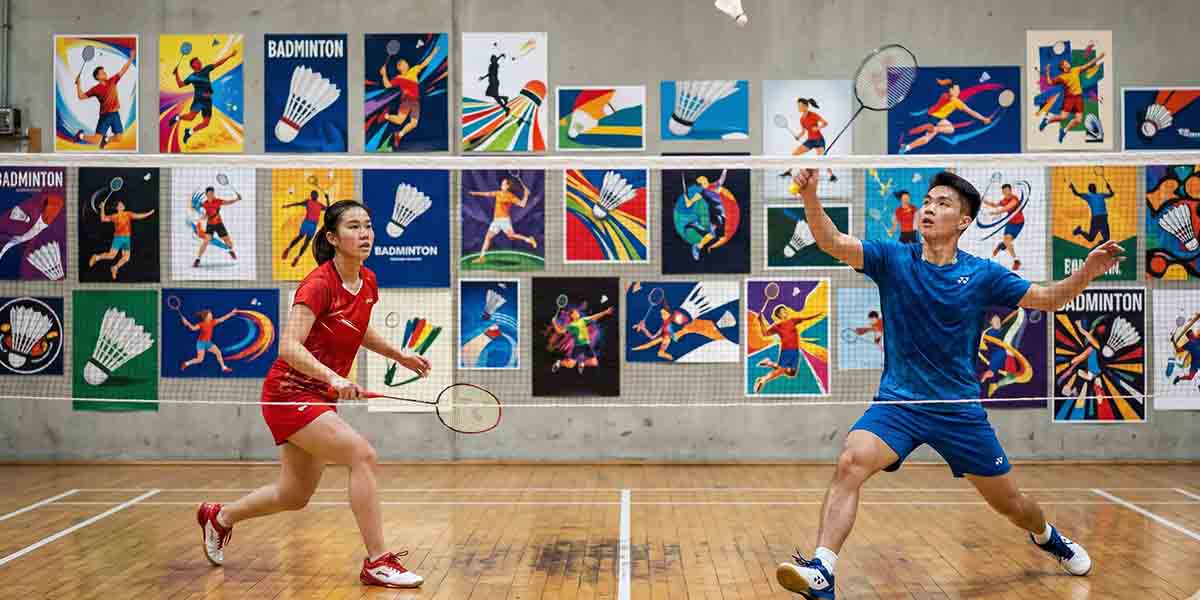
Walk into any sports shop, school gymnasium, or badminton club around the world, and there is a good chance you will spot at least one badminton poster on the wall. These prints do more than fill empty space. They inspire players, reinforce the sport’s culture, and give fans a way to connect with their passion even when they are far from the court.
Whether you are a casual player looking for something motivational to hang in your bedroom, a coach trying to create a professional-looking training facility, or a collector who appreciates fine sports artwork, the right badminton poster can make a genuine difference.
This guide covers everything worth knowing about badminton posters. We look at the different types available, what makes one stand out from the rest, where to find the best options, and how to choose something that suits your personal taste, space, and budget. By the end, you will have a clear picture of what to look for and where to start.
Why Badminton Posters Matter More Than You Think
Most people underestimate the effect that visual surroundings have on performance and mood. Sports psychology has repeatedly shown that the environment in which athletes train can influence their mental state and motivation levels. A well-chosen poster placed in a practice hall or home gym can act as a constant reminder of goals, heroes, and the discipline required to improve.
Beyond performance benefits, badminton posters serve a straightforward purpose for fans. Badminton may not get the same wall-to-wall media coverage as football or basketball in many parts of the world, but its passionate community more than makes up for that. For someone who grew up watching players like Lin Dan, Lee Chong Wei, Carolina Marin, or Viktor Axelsen, a high-quality poster of one of these legends is a meaningful piece of memorabilia.
For clubs and academies, posters carry branding and identity. A hallway decorated with action shots, player profiles, and tournament highlights tells visitors immediately that this is a serious, professional environment. It sets the tone before anyone even picks up a racket.
| 🎯 What Are You Looking For? | 👉 See Top Picks from Amazon |
|---|---|
| New to badminton? | ⭐ Best Beginner Rackets |
| Want powerful smashes? | ⭐ Best Head Heavy Rackets |
| Play aggressively? | Best Attacking Rackets |
| Prefer ultra-light rackets? | Best Lightweight Yonex Rackets |
| Curious what pros use? | Professional Players’ Rackets |
| Want premium gear? | Most Expensive Badminton Rackets |
| Loyal to Yonex Voltric? | Best Yonex Voltric Series |
Types of Badminton Posters
Not all badminton posters are made with the same intention. Understanding the main categories helps you narrow down what you actually want.
Action Photography Posters
These are photographs taken during live matches or training sessions, usually by professional sports photographers. The best action shots freeze a moment that would otherwise be impossible to appreciate with the naked eye — the full extension of a jump smash, the low body position during a diving net shot, the focused expression right before a serve. When printed on quality paper or canvas, these images are genuinely dramatic.
Action photography posters are particularly popular as player tributes and are the go-to choice for fans who want to celebrate a specific athlete. They are also effective in training halls because they show technique in a visually engaging way.
Motivational and Quote Posters
This category blends text with imagery to create something designed primarily to inspire. You will find quotes from famous badminton players, general sporting wisdom, or short phrases about perseverance and dedication. The visual component might be a silhouette of a player, a close-up of a shuttlecock, or an abstract graphic that evokes the speed and intensity of the sport.
These work particularly well in training environments, school sports halls, and youth clubs. Young players respond strongly to clear, punchy messages that remind them why hard work matters. The key is choosing a quote that feels genuine rather than generic — something specific to badminton or to a player who has actually earned their reputation.
Illustrated and Graphic Art Posters
Illustration-based badminton posters take a more artistic approach. Rather than relying on photography, these use drawn or digitally created artwork to capture the sport’s essence. Styles range from clean, minimalist designs — a racket and shuttlecock rendered in flat colour — to detailed, stylised portraits of players, or abstract compositions that play with movement and geometry.
Illustrated posters often work better as home décor because they can be chosen to match a room’s colour palette and style. They tend to feel less like sports memorabilia and more like proper artwork. If you want something that looks great in a living room or home office without screaming “sports fan,” a well-designed illustrated poster is worth exploring.
Tournament and Event Posters
Major badminton tournaments — the All England Open, the BWF World Championships, the Thomas Cup, the Uber Cup, and the Olympic Games — all produce official promotional posters. These are collector’s items for serious fans and often feature graphic design that reflects the host country’s visual identity. Vintage tournament posters from the 1980s and 1990s are particularly sought after because they carry a nostalgic charm that modern digital prints cannot replicate.
If you are interested in building a collection rather than just decorating a wall, tournament posters are the place to start. Authenticity matters here — an original print from a historical event will always carry more value than a reproduction.
Instructional and Educational Posters
A less glamorous but genuinely useful category, instructional posters break down the rules, court dimensions, scoring systems, or basic techniques of the sport. These are standard fixtures in school PE departments and beginner coaching programmes. A well-produced court diagram, for example, can be referenced daily by new players learning the difference between singles and doubles boundaries.
The design quality of instructional posters varies enormously. Some look like they were put together in five minutes with clip art from the early 2000s. Others are genuinely thoughtful, combining clear diagrams with elegant typography. If you are choosing one for a club or school, it is worth spending a little more to get something that looks professional.
What Makes a Badminton Poster Stand Out
There is a significant difference between a forgettable poster that fades into the background and one that genuinely catches the eye and holds attention. Here are the qualities that separate the best from the merely adequate.
Print Quality and Resolution
The most common disappointment with cheap posters is pixelation. A photograph that looks sharp on a phone screen can look terribly blurry when printed large. Always check the resolution of the image before purchasing a print. For a standard A2 size poster, you want an image that is at least 2480 x 3508 pixels. Anything lower will show visible grain or blurring when you get close to the print.
Reputable sellers will always tell you the source resolution or guarantee print quality at the advertised size. If that information is missing, it is usually a sign that the image has been stretched beyond its natural limits.
Paper and Material Choice
The paper a poster is printed on changes how it looks and how long it lasts. Standard poster paper is fine for temporary use, but if you are hanging something permanently, consider the following options:
- Matte photo paper gives a clean, non-reflective finish that works well with photography. It shows colour depth without the glare that can make images hard to see in certain lighting.
- Glossy photo paper makes colours pop and gives a sharp, polished look. It is prone to fingerprints and glare, so it works better in controlled lighting conditions.
- Canvas prints give a textured, gallery-quality feel that works especially well for portrait shots and illustrated artwork. They are more expensive but genuinely impressive when done well.
- Poster board or foam-mounted prints are rigid and can stand on their own or be hung flat without framing. Good for displays and exhibitions.
For a busy sports hall that will see a lot of use and the occasional stray shuttlecock or sweaty hand brushing against the wall, laminated or semi-gloss prints tend to hold up better over time.
Composition and Visual Balance
Good photographic composition is not something that can be faked. A truly excellent sports photograph makes use of natural framing, interesting angles, and the decisive moment to create something that feels alive. Look for posters where the subject is clearly the focal point, where there is a sense of movement or energy even in a still image, and where the background does not compete with the main subject for attention.
For illustrated or graphic posters, balance between text and image matters. A quote should not crowd out the visual, and the visual should not make the text difficult to read. Clean layouts with generous white space tend to age better than busy, cluttered designs.
Colour Accuracy
Court colours, kit colours, and skin tones should all look natural and accurate. Over-saturated or heavily filtered prints may look eye-catching in a thumbnail but become tiring to live with. If you are buying from an online marketplace, look for reviews that specifically mention colour accuracy, since screens and printers can vary significantly.
Top Themes in Badminton Poster Design
Within the world of badminton poster design, certain themes recur because they capture something true about the sport. These are the design concepts that consistently produce the most compelling results.
The Jump Smash
If there is one shot that defines badminton for casual observers, it is the jump smash. The combination of height, extension, and explosive power makes it visually spectacular, and a well-timed photograph of this shot can be genuinely breathtaking. The best jump smash posters capture the peak of the jump — full extension, racket arm raised, whole body coiled — with the shuttlecock visible at the point of contact.
Net Duels
Doubles matches, in particular, produce dramatic net duel moments where players are inches apart, reflexes stretched to their limit. These shots, when captured well, show the intensity and physicality that casual viewers might not associate with badminton. They make excellent posters because they convey the competitive nature of the sport without requiring any knowledge of the specific players involved.
Silhouette and Shadow Work
Silhouette-based designs strip the sport back to its essential shapes — the racket, the shuttlecock, the outstretched arm — and render them against bold, contrasting backgrounds. These are often used in motivational posters because the anonymous figure becomes a stand-in for anyone who plays the sport. Done well, a silhouette poster has a timeless quality that does not date the way a specific player portrait might.
Close-Up Equipment Shots
Macro photography of shuttlecocks, racket strings, grip tape, or feathers can produce surprisingly beautiful abstract images. These appeal to players who appreciate the technical side of the sport. A tight shot of a natural feather shuttlecock against a dark background, for instance, has a delicacy and elegance that matches the sport at its best.
Legends and Icons
Portrait posters of famous players will always sell well to their fan bases. The challenge for designers and buyers alike is finding images that capture something beyond a generic pose — a moment of real emotion, concentration, or celebration. The best player portraits are candid shots or those taken at the peak of a meaningful moment, such as winning a world championship or Olympic gold.
Where to Buy Badminton Posters
The market for badminton posters has expanded significantly over the past decade, largely thanks to print-on-demand platforms and independent artists selling through digital marketplaces. Here is a breakdown of your main options.
Online Print-on-Demand Platforms
Platforms like Redbubble, Society6, and Zazzle allow independent artists and photographers to upload their work and have it printed on demand. This means you are not limited to a small catalogue of mass-produced prints. You can find genuinely original badminton artwork from talented creators around the world, often at reasonable prices.
The downside is consistency. Print quality can vary between individual orders, and since the artist does not always control the printing process, you occasionally end up with a print that looks different from the preview. Reading recent reviews carefully before ordering will save you disappointment.
Specialist Sports Memorabilia Shops
Some sports memorabilia retailers stock officially licensed badminton prints, particularly of high-profile players and major tournaments. These tend to be higher quality and come with authenticity guarantees, making them worth the premium if collecting matters to you. Check whether the print comes with a certificate of authenticity if that is important for your purposes.
Etsy and Independent Sellers
Etsy has become a genuinely excellent source for custom and handmade badminton artwork. You will find everything from hand-illustrated portraits of specific players to personalised prints where you can add a name, a team logo, or a personal message. Many sellers on Etsy also offer digital downloads, meaning you can buy the file and print it yourself locally — which often works out cheaper and faster.
Official Tournament Merchandise
Major tournaments sell official merchandise including prints and posters through their websites and at the events themselves. If you attend a big tournament, it is always worth checking the merchandise stand for something genuinely unique. These prints carry an inherent authenticity because they were produced specifically for a real event that you witnessed in person.
Custom Print Services
If you have a specific photograph in mind — perhaps a shot you took yourself at a local tournament, or an image you have sourced from a photographer — a custom print service can turn it into a high-quality poster. Services like Photobox, Printful, and similar companies offer a range of paper types, sizes, and finishes. This is also the best route if you want something personalised for a gift.
Choosing the Right Size for Your Space
Size is one of the most frequently miscalculated aspects of buying a poster. Something that looks massive in an online preview can turn out disappointingly small in a real room, while a print that looks proportionate on screen might overwhelm a smaller wall.
As a practical guide, here is what different standard sizes actually look like in real spaces:
- A4 (210 x 297mm): Suitable for desk display or as part of a gallery wall. Too small to make an impact on a large wall by itself, but works well grouped with other prints.
- A3 (297 x 420mm): A good mid-size option for bedrooms and offices. Visible as a standalone piece on most walls without being overpowering.
- A2 (420 x 594mm): One of the most popular sizes for sports posters. Makes a genuine statement on any wall and reads well from across a room.
- A1 (594 x 841mm): Better suited to large walls, commercial spaces, and sports halls. At this size, print quality becomes even more important.
- A0 (841 x 1189mm): Exhibition or gymnasium scale. These are statement pieces that require significant wall space and very high image resolution.
Before ordering, physically mark out the dimensions on your wall with tape. It takes two minutes and saves a lot of regret.
Framing Your Badminton Poster
A good frame transforms a poster from a casual print into a finished piece. It protects the paper, gives the image a professional border, and completes the visual presentation. Choosing the wrong frame, however, can undermine even a beautiful print.
Frame Materials
- Wood: Classic and warm. Works particularly well with photography-based posters and any design that uses earthy or natural tones. Available in light natural finishes, dark walnut, and painted black or white.
- Metal: Clean and modern. Suits graphic and illustrated posters with bold colour and contemporary design. Thin metal frames keep the focus on the image rather than the border.
- Plastic: The budget option. Can look cheap up close, but works adequately for less formal settings like changing rooms, storage areas, or temporary displays.
To Mount or Not to Mount
A mount is the thick paper border that surrounds the image inside the frame. It creates breathing space between the print and the frame edge, giving the image room to be read before the eye reaches the border. For photography posters, a white or cream mount usually works best. For graphic posters with strong colours, a coloured mount that picks up one of the print’s tones can look sophisticated.
Unmounted posters in frames can look slightly cheap because the print fills the frame edge-to-edge without any visual padding. If you are serious about presentation, a mount is worth the small additional cost.
Glass vs Acrylic
Standard glass is clear and scratch-resistant but heavy and can shatter. Acrylic (perspex) is lighter, shatter-resistant, and often used in larger frames for safety. For sports environments where a shuttlecock might occasionally land against the wall, acrylic is the sensible choice. UV-protective glazing — available in both glass and acrylic — prevents colour fading over time, which is worth considering for a permanent display.
Designing Your Own Badminton Poster
If you have access to good photographs or a head for graphic design, creating a custom badminton poster can be very rewarding. It also allows you to make something genuinely personal — a poster of your own club, your own team, or a moment that matters to you.
Starting With the Right Image
The image is the foundation of any poster. If you are using your own photography, shoot in the highest resolution your camera allows and try to capture the sport in natural light wherever possible. Artificial gymnasium lighting can produce unflattering colour casts, so knowing your camera’s white balance settings will help. Action shots require a fast shutter speed — at least 1/500th of a second to freeze movement cleanly.
If you do not have photography skills, stock image libraries such as Shutterstock and Getty Images have licensed badminton photographs that can be used for personal or commercial print projects with the appropriate licence.
Design Tools
You do not need to be a professional designer to put together a respectable poster. Tools like Canva offer ready-made sports poster templates that can be customised with your own images, text, and colours. More advanced users can work in Adobe Photoshop or Illustrator, which give full creative control but require learning time.
Whichever tool you use, keep the design clean. Resist the temptation to add too many elements. The best sports posters are usually quite simple — a strong image, clear text if needed, and a cohesive colour palette. Less is almost always more.
Typography
If your poster includes text — a quote, a player name, a club name — the font choice matters more than most people realise. Bold, condensed sans-serif fonts tend to work well for sports graphics because they convey energy and confidence. Script or decorative fonts can work for more artistic pieces but risk looking dated quickly.
Text should be large enough to read from the distance at which the poster will be viewed. On an A2 poster viewed from a metre away, a heading should be at least 60 to 80 point size. Body text or secondary information can be smaller but should never be so small that it requires squinting.
Colour Palette
Limit yourself to two or three main colours. Many strong sports posters work with a primary bold colour, a neutral (white, black, or grey), and one accent colour. You can draw the palette from the main image itself — if the court is green and the player’s kit is red, build the graphic elements around those tones.
Popular Badminton Players to Feature on Posters
Choosing the right player to feature on a poster depends entirely on personal connection and what you are trying to achieve with the display. Here are some names whose posters consistently attract the most interest from the global badminton community.
- Lin Dan: The Chinese legend widely regarded as one of the greatest singles players in history. His two Olympic gold medals and five World Championship titles make him an icon, and photographs from his prime playing years carry real historical weight.
- Lee Chong Wei: The Malaysian player who spent years as world number one and is beloved throughout Southeast Asia. His rivalry with Lin Dan produced some of the most watched matches in badminton history.
- Carolina Marin: The Spanish player who became the first non-Asian woman to win the Olympic gold medal in badminton. Her story of building a world-class career without the established support systems of the sport’s traditional powerhouses makes her a genuinely compelling figure.
- Viktor Axelsen: The Danish player who has dominated men’s singles in recent years. His height, power, and athleticism make him a compelling subject for action photography.
- Saina Nehwal and P.V. Sindhu: Both Indian players have won major international titles and carry enormous followings in India, making them the most sought-after subjects for badminton posters in the subcontinent.
- Kevin Sanjaya Sukamuljo and Marcus Fernaldi Gideon: The Indonesian men’s doubles pairing known as The Minions built a massive following with their combination of outrageous speed and theatrical celebration. Their doubles partnership produced some of the most exciting matches of the 2010s.
Poster Ideas for Badminton Clubs and Academies
If you are outfitting a club rather than a personal space, a few specific approaches tend to produce the best results.
- Club history wall: A timeline of the club’s achievements, past tournament wins, and photographs of former members creates an identity and sense of belonging. New members can see that they are part of something with real history.
- Values and code of conduct: Printed in a clean, professional format, a values statement or player code of conduct reinforces the culture you are trying to build. When expectations are literally on the wall, they become part of the environment rather than something mentioned once and forgotten.
- Role model posters: Select two or three international players whose careers demonstrate values you want to promote — commitment, fair play, resilience — and put their pictures alongside short descriptions of what makes them admirable.
- Technique breakdown series: A set of matching posters showing correct form for different shots — overhead clear, drop shot, net kill — creates a useful visual reference that players can look at between points or during breaks.
- Seasonal team photographs: An annual photograph of the club’s competitive teams, printed and framed, builds year-on-year tradition and gives junior players something to aspire to.
Caring for Your Badminton Posters
Even the best print will deteriorate without proper care. A few simple habits will keep your posters looking sharp for years.
- Keep away from direct sunlight: UV light fades inks over time. If a poster is going on a south-facing wall that gets afternoon sun, use UV-protective glass or acrylic in the frame.
- Avoid humid environments: Bathrooms and kitchens are poor choices for paper prints. Humidity causes paper to warp and can encourage mould growth behind the frame. Sports halls can also be humid, so choose water-resistant materials for those environments.
- Clean the glass regularly: Dust and smudges on the glazing reduce the clarity of the image. A soft, dry microfibre cloth is all you need — avoid anything abrasive or any spray that might drip behind the frame.
- Handle unframed prints carefully: If you are storing prints flat, keep them between acid-free tissue paper to prevent ink transfer and yellowing. Do not stack heavy items on top.
- Roll, do not fold: If you need to transport or store a print without framing it, roll it with the image on the outside to avoid crease marks that are impossible to remove once they set.
Budget Guide: What to Expect at Different Price Points
Badminton posters span a wide price range. Here is a realistic sense of what your money buys at each level.
- Under £10 / $12: Basic poster prints on standard paper, typically A4 or A3. Fine for filling wall space but unlikely to impress up close. Mostly mass-produced designs with limited originality.
- £10–£30 / $12–$40: The sweet spot for most buyers. At this range, you can find quality A2 prints on decent paper, digital downloads from talented independent artists, and occasionally well-designed graphic posters with strong composition.
- £30–£80 / $40–$100: Canvas prints, framed pieces, and higher-end photo prints with professional mounting. Gifts and club displays fit comfortably here. You start to see genuinely impressive quality at this level.
- £80–£200 / $100–$250: Official licensed merchandise, limited edition prints, and large-format professional photography. Collector’s items and significant wall pieces.
- Over £200 / $250: Signed prints, original artwork, vintage tournament posters, and large-format canvas or aluminium prints for commercial spaces. This is collector and curator territory.
Final Thoughts
Badminton posters are a simple pleasure with real value. Whether you are adding something visual to a spare bedroom, building a professional training environment, or starting a collection of sporting artwork, the range available today means there is something suited to almost any taste and budget.
The key is being deliberate about what you want. Think about the purpose — decoration, inspiration, education, or collecting — and let that drive every other decision, from the type of image to the paper quality to the frame. A poster chosen with a clear intention will always look better and mean more than one grabbed at random.
Badminton is a sport that deserves better representation on walls everywhere. It is fast, skilful, athletic, and genuinely beautiful to watch. The right poster can communicate all of that at a glance. Take your time, choose well, and enjoy having something meaningful on your wall that reminds you why you love the sport.
| 🏸 Need Better Comfort & Performance? | 👉 Explore Top Picks from Amazon |
|---|---|
| Want better grip on court? | ⭐ Best Non-Marking Badminton Shoes |
| Just starting out? | Best Beginner Badminton Shoes |
| Carry gear like a pro? | Best Badminton Bags |
| Confused about string tension? | Best String Tension Guide + Top Strings |
| Need an all-in-one starter kit? | Portable Badminton Racket Sets |
| Protect your eyes during fast rallies? | Best Badminton Glasses |
| Upgrade your court style? | Comfortable Badminton Outfits |






Add comment