
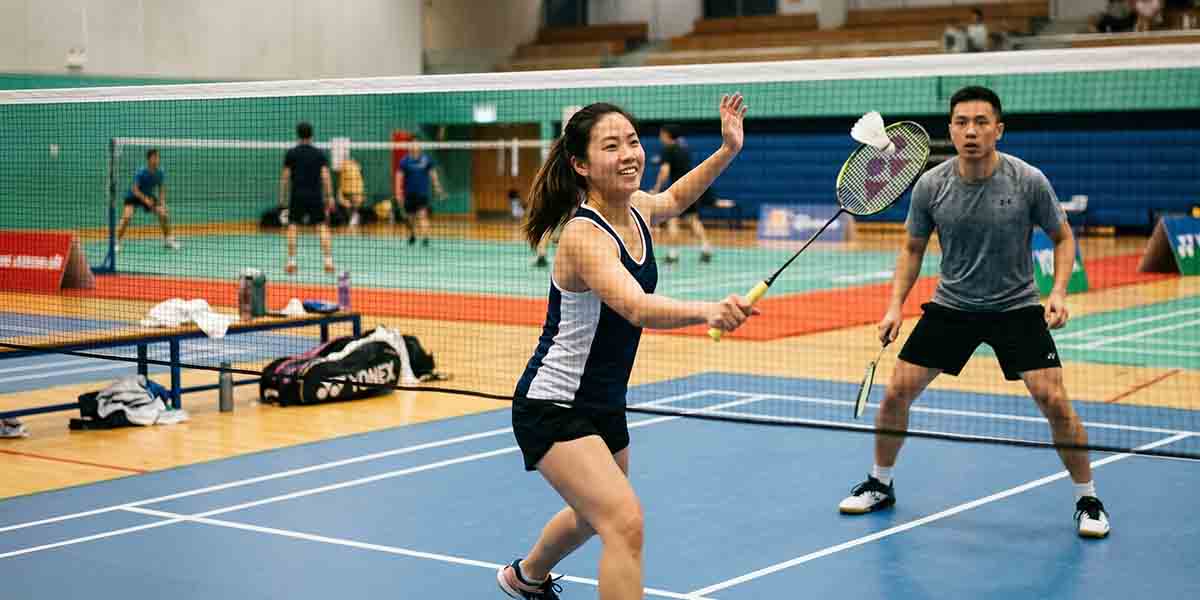
Badminton looks deceptively simple from the stands. Two players, a shuttlecock, a net — how hard can it be? The reality, as anyone who has stepped onto a court for the first time quickly discovers, is that badminton demands quick reflexes, solid footwork, sharp racket control, and a surprising amount of strategic thinking.
The good news is that progress comes fast when you work on the right things early. The tips in this guide cover everything a beginner needs to build a strong foundation — from choosing the right equipment and standing correctly to developing consistent strokes and understanding the basic rules of play. Read through them, keep coming back to them, and watch your game improve faster than you expected.
Equipment and Setup
Tip 1: Pick the Right Racket Weight
For beginners, a racket between 80 g and 90 g (3U or 4U) works best. Lighter rackets are easier to manoeuvre and reduce wrist fatigue during long practice sessions. Avoid very heavy rackets until your technique is solid, because poor swing mechanics with a heavy frame can lead to elbow strain.
Tip 2: Understand String Tension
Most beginner rackets come strung between 20 and 24 lbs. Lower tension gives more power and a larger sweet spot — ideal when you are still learning to hit the shuttle cleanly. Higher tension gives better control but demands better timing. Stick to lower tension while you develop your swing.
Tip 3: Wear Proper Badminton Shoes
Running shoes are not designed for the lateral movements badminton requires. Badminton shoes have thin, non-marking gum rubber soles and reinforced sides that support quick side-to-side changes of direction. Wearing the wrong footwear is one of the fastest ways to pick up a sprained ankle.
Tip 4: Use a Shuttlecock Suited to Your Level
Plastic (nylon) shuttlecocks are far more durable and consistent than feather ones, making them ideal for beginners. They do not respond identically to feather shuttles at higher speeds, but they hold up to mis-hits without falling apart after a few rallies. Once your technique improves, start experimenting with feather shuttles.
Tip 5: Choose the Right Grip Size
Grip the handle and check whether your fingers wrap around comfortably with a small gap between fingertips and palm. A grip that is too thin causes you to squeeze too hard; too thick and you lose feel. Most beginners do fine with a G4 or G5 grip size.
| 🎯 What Are You Looking For? | 👉 See Top Picks from Amazon |
|---|---|
| New to badminton? | ⭐ Best Beginner Rackets |
| Want powerful smashes? | ⭐ Best Head Heavy Rackets |
| Play aggressively? | Best Attacking Rackets |
| Prefer ultra-light rackets? | Best Lightweight Yonex Rackets |
| Curious what pros use? | Professional Players’ Rackets |
| Want premium gear? | Most Expensive Badminton Rackets |
| Loyal to Yonex Voltric? | Best Yonex Voltric Series |
Grip and Basic Technique
Tip 6: Learn the Forehand Grip First
Hold the racket as though you are shaking hands with it — the base knuckle of your index finger should sit on the wider bevel of the handle. This is the forehand grip. It is the most natural starting point and the foundation from which other grips are adapted.
Tip 7: Do Not Use a Frying Pan Grip
The frying-pan grip — holding the racket flat like a pan with the face pointing up — is the single most common beginner mistake. It severely limits your wrist movement, kills power, and makes backhand shots almost impossible. If someone corrects your grip, listen to them.
Tip 8: Master the Backhand Grip
Rotate the racket slightly so that your thumb rests flat against the wider bevel. This thumb-up position gives your backhand shots the leverage they need. Switching smoothly between forehand and backhand grips mid-rally takes practice, but it is worth drilling from day one.
Tip 9: Keep a Relaxed Grip Most of the Time
Gripping the racket tightly throughout a rally is tiring and actually reduces power. Good players keep a relaxed grip between shots and tighten it only at the point of contact. Think of it like cracking a whip — the snap at the end generates the speed, not the constant tension.
Tip 10: Finish Your Swings Properly
Many beginners stop their swing the moment they hit the shuttle. A proper follow-through is what drives the shuttle where you want it. On a clear, your arm should finish naturally across your body. Half-hearted swings produce weak, unpredictable shots.
Footwork Fundamentals
Tip 11: Always Return to the Centre
After every shot, your first priority is to recover to the centre of the court — roughly the mid-court area between the two service lines. Players who hover near the net or stay at the back after hitting leave large areas wide open for their opponent.
Tip 12: Move on the Balls of Your Feet
Flat-footed players are slow players. Stay on the balls of your feet with a slight bend in your knees so you can push off in any direction instantly. This ready position is called the ‘split step’ stance and it is essential for reacting quickly.
Tip 13: Use Chasse Steps for Side Movements
Instead of crossing your feet when moving sideways, use chasse steps — a step-together-step pattern that keeps your body balanced and facing the net throughout the movement. Crossing your feet leaves you tangled and unable to recover.
Tip 14: Lunge Correctly to the Net
When reaching for a net shot, lunge with your racket-side leg forward, keeping your racket arm extended. Push off that front foot to return to the centre. Reaching with your arm alone without stepping forward will cost you control and possibly your balance.
Tip 15: Practice Footwork Drills Without a Shuttle
Shadow footwork — moving to the six corners of the court without actually hitting anything — is one of the most effective drills a beginner can do. Set a timer for 60 seconds and work through the pattern repeatedly. Your on-court movement will improve noticeably within weeks.
Serving
Tip 16: Master the Low Serve for Singles
In singles, the low serve skims just over the net and lands near the front service line. It forces your opponent to lift the shuttle, giving you the attacking position. Practice until you can consistently clear the net by a centimetre or two.
Tip 17: Use the High Serve Strategically in Singles
A high, deep serve that lands near the back boundary forces your opponent to play from as far back as possible. Use it to vary the rhythm and to test whether your opponent has a reliable smash. Predictable serving is very easy to attack.
Tip 18: The Flick Serve Is Your Best Friend in Doubles
The flick serve in doubles travels flat and fast to the back of the service court. A well-disguised flick that looks like a low serve is one of the most effective weapons at the recreational level, catching receivers who crowd the net.
Tip 19: Keep Your Serving Motion Compact
Large, windup serving motions are easy to read. Keep your arm action short and your shuttle hold consistent regardless of which serve you intend to play. Deception comes from the wrist snap at contact, not from a dramatic arm swing.
Tip 20: Do Not Serve Faults
At the beginner and intermediate level, serve faults — shuttles that land outside the service box, or serves where the racket makes contact above the waist — hand free points to your opponent. Prioritise accuracy over aggression when serving.
Core Shots
Tip 21: Build Your Clear Before Anything Else
The overhead clear — a high, deep shot that sends the shuttle to your opponent’s back court — is the most important shot for beginners to develop. It buys time, creates distance, and resets the rally. Everything else builds on top of a reliable clear.
Tip 22: Hit Clears from Behind Your Head, Not Beside It
The shuttle should make contact when it is slightly in front of your hitting shoulder, not level with or behind your ear. Letting it drop too far back removes power and control. Watch where the shuttle is in relation to your body as you prepare to strike.
Tip 23: Learn the Drop Shot Early
A drop shot falls steeply just over the net into the front of your opponent’s court. It contrasts with a clear and forces opponents to sprint forward. Even a slow drop shot with a good arc can win points against beginners who are camped at the back.
Tip 24: Do Not Try to Smash Everything
The smash is exciting, but beginners often attempt it from poor positions and produce weak, high returns that set up their opponent perfectly. Smash when the shuttle is in front of you and above net height. A patient drop shot is usually smarter than an early smash.
Tip 25: Develop a Consistent Net Kill
When the shuttle sits up high at the net, a sharp downward tap — the net kill — ends the rally. Beginners often poke at these opportunities tentatively. Once you reach the net, commit to the shot with a firm wrist snap and direct the shuttle into an open space.
Tip 26: Use the Drive in Doubles
The flat, fast drive travels parallel to the floor and is a key weapon in doubles. It keeps the shuttle low, making it difficult for opponents to attack, and forces mistakes. Practice driving cross-court and straight with a partner until it becomes automatic.
Tip 27: Learn the Lift
When you are forced to play from the front of the court and you cannot attack, the lift sends the shuttle high and deep. It is a defensive shot that resets the rally. Play it early — lifting late means hitting a shuttle below net height, producing a weaker, shorter result.
Tip 28: Aim Your Shots, Not Just Your Swing
Before you hit, know where the shuttle is going. Beginners focus entirely on making contact and think about direction afterwards. Even a rough target — back right, front left — is better than hitting and hoping. This habit builds racket control faster than repetition alone.
Section 6: Tactics and Court Awareness
Tip 29: Play to Your Opponent’s Weakness
Watch where your opponent struggles. Does their backhand fall apart under pressure? Do they move poorly to the front court? Beginners rarely have evenly developed skills, so exploit the weaker side consistently rather than hitting to random spots.
Tip 30: Vary Your Shot Pace
If every shot you hit is at the same pace, your opponent settles into a rhythm and reads the rally easily. Mix fast drives with slow drops, deep clears with tight net shots. Varying tempo is one of the cheapest forms of tactical play available to a beginner.
Tip 31: Attack When the Shuttle Is High
Whenever the shuttle is above net height and on your side of the court, you have an attacking opportunity. Develop the instinct to identify these chances immediately. Players who consistently let attacking opportunities pass find themselves playing defence most of the rally.
Tip 32: Defend When the Shuttle Is Low
When you are scrambling to play a shuttle below net height, your only realistic goal is to keep it in play and recover. Trying to attack from a low shuttle forces errors. Good defensive shots buy time and sometimes create a counter-attack opportunity later.
Tip 33: In Singles, Use the Full Court
A court that is 13.4 metres long and 5.18 metres wide (for singles) is large. Force your opponent to cover it by mixing deep clears with net shots. Playing everything to the same area allows opponents to camp and wait. Diagonal shots are particularly tiring to retrieve.
Tip 34: In Doubles, Rotate with Your Partner
In doubles, you and your partner should communicate constantly about who covers what. A common default is side-by-side when defending and front-back when attacking. Rotating smoothly between these positions prevents gaps and prevents you from colliding.
Tip 35: Watch the Shuttle, Not Your Opponent
It is tempting to watch your opponent’s face or body for cues about where they will hit. But the shuttle itself tells you everything — its trajectory and height dictate what options your opponent realistically has. Track the shuttle from racket to shuttle to your racket.
Physical Preparation
Tip 36: Warm Up Before Every Session
Jumping straight into hard hitting is a reliable way to pull a muscle. Spend five to ten minutes doing light jogging, dynamic leg swings, arm circles, and gentle lunges. Your performance in the first game will be measurably better, and your injury risk drops significantly.
Tip 37: Stretch After, Not Before
Static stretching — holding a position for 20 to 30 seconds — should happen at the end of a session when your muscles are warm and pliable. Stretching cold muscles before play reduces explosive performance and does little to prevent injury. Save the long holds for the cool-down.
Tip 38: Work on Your Wrist Strength
A lot of badminton power comes from wrist snap at the moment of contact. Simple exercises like wrist curls with a light dumbbell, resistance band rotations, and ball squeezing build the wrist and forearm strength that translates directly to harder, more controlled shots.
Tip 39: Build Cardiovascular Base
Badminton rallies can be explosive, but a long match requires sustained cardiovascular fitness. Running, cycling, skipping rope, or swimming two to three times a week improves your endurance so that your technique holds up in the final games of a session when fatigue sets in.
Tip 40: Do Not Ignore Your Non-Dominant Side
Badminton tends to develop asymmetric strength — your hitting side becomes noticeably stronger than the other. Over time this can cause postural issues and overuse injuries. Include exercises that balance both sides: single-arm rows, lateral band walks, and single-leg balance work all help.
Mental Game and Match Habits
Tip 41: Play the Point in Front of You
Beginners often replay a mistake in their head while the next rally is starting. One missed smash does not have to lead to five lost points, but only if you reset mentally between rallies. Take a breath, bounce on your feet, and focus on the incoming serve.
Tip 42: Use Downtime Between Rallies
The few seconds between rallies are valuable. Use them to check your grip, feel your feet, and decide on a serving strategy. Players who stand passively between points often find the match running away from them before they can adjust.
Tip 43: Keep Score in Your Head
Know the score at all times — not just your own tally, but also which side is serving and which service box is in play. Confusion about the score is distracting and occasionally leads to unnecessary arguments that break your concentration.
Tip 44: Be Honest About Fault Calls
In recreational badminton, calling your own faults — shuttle landing out, double hit, net touch — is part of the spirit of the game. Being known as an honest opponent earns respect and makes others want to play with you. It also keeps your practice environment honest.
Tip 45: Watch Better Players Deliberately
Watching elite badminton passively is entertaining. Watching it deliberately — studying footwork patterns, identifying when a player switches grips, noticing where attacks come from — accelerates your learning far beyond just hitting more shuttles. Pick one thing to watch per match.
Common Beginner Mistakes to Stop Making
Tip 46: Stop Reaching for Shuttles You Should Step To
Stretching your arm to reach a shuttle instead of moving your feet to it is one of the most persistent beginner habits. Your arm reach is fixed; your legs can cover ground. Move first, then hit. Every experienced coach in badminton will tell you the same thing.
Tip 47: Stop Hitting Every Shot at Full Power
A mishit at full power travels nowhere useful. A well-placed shot at 70 percent power wins points. Accuracy before power is the correct developmental order for every beginner. Power comes naturally as technique improves — chasing it before then leads to sloppy habits.
Tip 48: Stop Watching the Shuttle After You Hit It
Watching where your shot lands is natural but costly. The moment you make contact, you should already be recovering toward the centre of the court. Admiring your own shot is a reliable way to be caught out of position.
Tip 49: Stop Ignoring Your Backhand
Running around backhands to hit forehands is a short-term solution that becomes a long-term weakness. Practice your backhand clear and backhand net shots consistently. At the club level, opponents who discover you have no backhand will exploit it relentlessly.
Tip 50: Stop Playing Without a Plan
Even a simple plan — serve low, push to the backhand, attack anything that comes back high — is better than hitting and reacting purely on instinct. As your technique develops, your tactical thinking should develop alongside it. Players who think as well as move are genuinely hard to beat.
Final Thoughts
Nobody becomes a competent badminton player overnight, and there is no shortcut around the hours of practice that skill development requires. But the players who improve fastest are not necessarily the most athletic — they are the ones who focus on the right things early, correct bad habits before they become ingrained, and approach every session with genuine curiosity.
Take these fifty tips one section at a time. Pick two or three to consciously work on during your next session, then revisit the list as those habits settle in. The game rewards patience and consistency above everything else. Give yourself both, and you will be surprised how quickly the court starts to feel like a familiar place rather than a confusing one.
Good luck, and enjoy every rally.
| 🏸 Need Better Comfort & Performance? | 👉 Explore Top Picks from Amazon |
|---|---|
| Want better grip on court? | ⭐ Best Non-Marking Badminton Shoes |
| Just starting out? | Best Beginner Badminton Shoes |
| Carry gear like a pro? | Best Badminton Bags |
| Confused about string tension? | Best String Tension Guide + Top Strings |
| Need an all-in-one starter kit? | Portable Badminton Racket Sets |
| Protect your eyes during fast rallies? | Best Badminton Glasses |
| Upgrade your court style? | Comfortable Badminton Outfits |




Add comment